
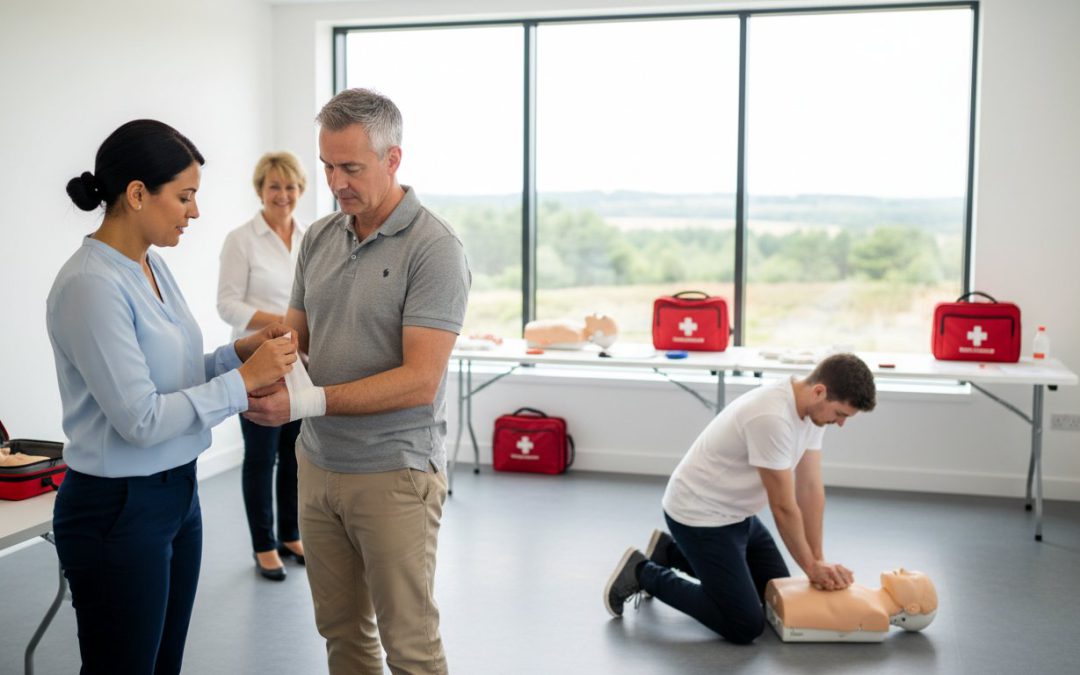
What if the most valuable part of your training isn’t the piece of paper, but the calm you feel when someone actually stops breathing? Knowing how to get a first aid certificate shouldn’t feel like solving a complex legal puzzle. You probably feel a bit lost in the alphabet soup of EFAW and FAW qualifications, or perhaps you’re worried that a day of training will be nothing but dry, dusty PowerPoint slides. It’s also completely natural to worry about the validity of online-only courses, especially since the Health and Safety Executive (HSE) requires practical, in-person assessment for workplace compliance.
We’re here to make the process simple, engaging, and actually fun. This guide explains the exact steps to earn an Ofqual-regulated qualification that gives you the genuine confidence to act in a crisis. We’ll show you how to choose the right level for your specific workplace, what to expect during your practical assessment, and how to ensure your training is 100% legally compliant for 2026. By the time you finish reading, you’ll have a clear, stress-free path to becoming a qualified life-saver.
Key Takeaways
- Identify whether you require a certificate for workplace compliance or personal peace of mind to ensure you select the most appropriate level of training.
- Discover the exact steps of how to get a first aid certificate through Ofqual-regulated providers that offer flexible learning methods to suit your schedule.
- Learn the vital difference between regulated and unregulated courses to avoid the risks associated with “cheap” certificates that lack essential practical assessments.
- Gain an insight into the relaxed, hands-on training environment where the focus is on building your confidence through expert-led, engaging practice.
- Explore how bespoke on-site training provides a hassle-free solution for teams, bringing professional life-saving skills directly to your workplace.
Understanding Which First Aid Certificate You Actually Need
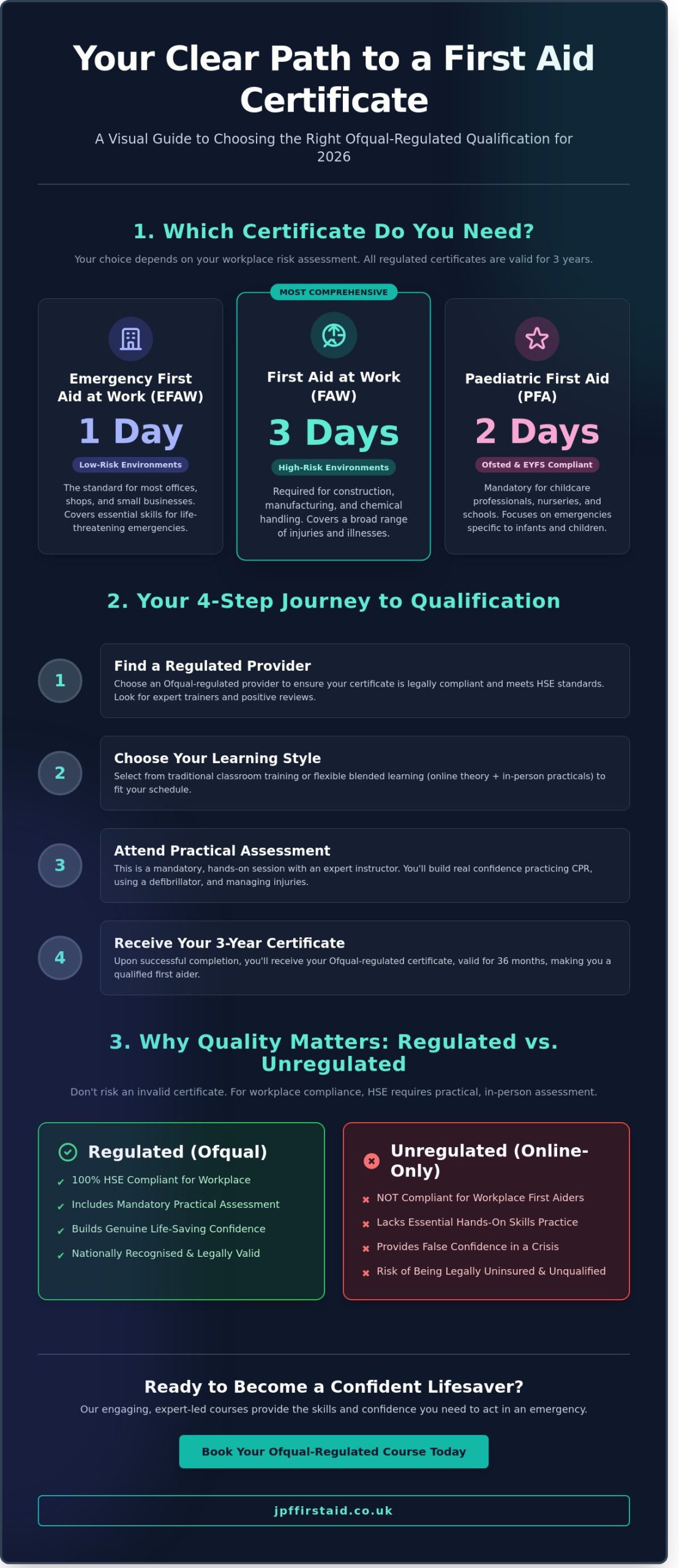
Deciding how to get a first aid certificate starts with a clear look at your daily environment. You don’t want to spend three days in a classroom if a one-day course meets your legal needs, but you also can’t afford to be under-qualified when an emergency happens. Most regulated UK certificates remain valid for three years. After this 36-month period, your qualification expires, and you’ll need to attend a requalification course to maintain your status as a competent first aider.
Your choice depends on whether you’re seeking workplace compliance, meeting professional body requirements, or simply wanting peace of mind for your family. Understanding basic First aid principles is the foundation of every course, but the specific skills you’ll practice vary. You should consider the age group you’re most likely to support. Helping a colleague with a cardiac arrest requires different techniques and confidence than assisting a choking infant in a nursery setting.
Workplace Qualifications: EFAW vs. FAW
The Health and Safety (First-Aid) Regulations 1981 require all UK employers to provide adequate first aid cover. For many small businesses or low-risk environments like shops and offices, the one-day Emergency First Aid at Work (EFAW) course is the standard choice. It provides the essential skills to handle life-threatening situations calmly and effectively.
If you work in a high-risk setting, such as a construction site with heavy machinery or a factory handling chemicals, you’ll likely need the full three-day First Aid at Work (FAW) certificate. This comprehensive training covers a broader range of injuries and illnesses. To decide which is right for you, check your company’s formal risk assessment. This document identifies the specific hazards in your building and dictates the level of training required to keep everyone safe.
Specialist Certificates for Childcare and Schools
If you work with children, your training must meet the standards set by Ofsted and the Early Years Foundation Stage (EYFS) statutory framework. The Full Paediatric First Aid certificate is a two-day, 12-hour course that is mandatory for at least one person to be on-site at all times in early years settings. It’s a deep dive into childhood emergencies that gives you the confidence to act when a child is in distress.
For those in support roles or parents wanting to learn the basics, the one-day Emergency Paediatric First Aid course offers a practical, focused alternative. Schools often find that a blend of training works best. They might train several staff members in workplace first aid to look after the adults, while ensuring the playground and classroom teams hold paediatric qualifications. This tailored approach ensures every person on the premises is in safe, expert hands regardless of their age.
The Step-by-Step Process to Earning Your Qualification
Securing your credentials doesn’t have to be a daunting task. By following a structured approach, you’ll find that how to get a first aid certificate is a straightforward journey designed to build your skills and your confidence. In 2026, the process is more accessible than ever, prioritising both your time and the quality of your training. Whether you’re a business owner or an individual, the path to becoming a lifesaver involves five clear steps.
Finding a Reliable Training Provider
Your first step is to research providers that offer Ofqual regulated qualifications. This ensures your certificate meets the high standards required by UK workplace first aid regulations. Look for multi-award-winning trainers who take a “Reliable Expert Mentor” approach. It’s vital to check for transparent pricing that includes all certification and material costs upfront. Reading reviews is also essential; you want to ensure the training is described as “engaging and fun” rather than a dry, clinical lecture. A positive atmosphere helps you retain life-saving information much more effectively.
Blended Learning vs. Traditional Classroom
You can choose a learning style that fits your 2026 work-life balance. Blended learning is a popular choice for busy professionals, as it moves the theory components online. This often saves you a full day of travel and classroom time. However, you must attend an in-person session for practical assessments. You can’t learn life-saving CPR or how to use a defibrillator just by watching a screen. You need hands-on practice with an expert instructor to ensure your technique is correct and that you feel prepared to act in a real emergency.
Once you’ve identified the right provider and learning method, the final stages of the process are highly logical:
- Book your session: Secure your place and complete any required pre-course reading or online modules. This preparation ensures you arrive at the practical session ready to dive in.
- Attend the training: Participate in practical demonstrations. You’ll work with manikins and medical equipment in a relaxed, supportive environment that focuses on your success.
- Receive your certificate: After a successful assessment of your practical skills, you’ll receive your digital or hard-copy certificate. Most providers now issue digital versions within 5 to 7 working days for immediate compliance proof.
If you’re looking for a stress-free way to train, you can explore our range of flexible courses to see how we can help you gain your qualification. We focus on making the entire process as simple and enjoyable as possible, leaving you with the skills to save a life.
Regulated vs. Unregulated Courses: Why Quality Matters
When you’re researching how to get a first aid certificate, you’ll quickly notice a wide range of prices and formats. It’s tempting to choose the cheapest or fastest option, but there’s a vital difference between a ‘certificate of attendance’ and a regulated qualification. In the UK, the Office of Qualifications and Examinations Regulation (Ofqual) acts as the watchdog for educational standards. Regulated courses are overseen by Awarding Organisations that ensure every trainer follows a strict, evidence-based curriculum. This means your certificate is more than just a piece of paper; it’s a verified mark of competence.
Choosing a regulated route protects you and your employer. Insurers frequently require proof of regulated training before they’ll provide cover for workplace activities. If an emergency happens, having a certificate backed by an official body provides a robust paper trail. You can verify a certificate’s authenticity by looking for the Ofqual logo and a unique learner reference number. Most awarding bodies also provide online portals where employers can check the status of a qualification in seconds, ensuring nobody is cutting corners on safety.
The Gold Standard: Ofqual Regulated Qualifications
Regulated qualifications are the benchmark for safety in the UK. They ensure that the person teaching you has been vetted and that the training materials are up to date with the latest Resuscitation Council UK guidelines. This level of quality assurance is why these certificates carry so much weight within the legal system. Under The Health and Safety (First-Aid) Regulations 1981, employers have a duty to provide “adequate and appropriate” equipment and personnel. Using regulated training is the simplest way to prove you’ve met this legal obligation.
For many businesses, the standard choice is a one-day or three-day course. You can find more detail on specific requirements in our Emergency First Aid at Work guide. These courses don’t just tick a box; they’re designed to be engaging and fun, focusing on building the confidence you need to step forward in a crisis.
The Pitfalls of Non-Regulated Training
A “Certificate of Attendance” simply means you sat through a presentation. It doesn’t guarantee that you’ve understood the life-saving techniques or that you can perform them under pressure. Many “cheap” online-only courses lack any practical assessment, which is a major red flag. You cannot learn effective CPR or how to use a defibrillator by just clicking through slides. In 2026, even niche areas like First Aid for Mental Health are moving toward regulated units to ensure learners receive consistent, safe advice.
- Practical gaps: Online-only certificates often skip the hands-on practice required to save a life.
- Hidden costs: Many employers will reject unregulated certificates, meaning you’ll have to pay twice to get the right qualification.
- Legal risk: Unregulated training may not stand up in court if a first aid incident is investigated by the HSE.
Understanding how to get a first aid certificate that is actually fit for purpose is the first step toward becoming a reliable first aider. We focus on delivering hassle-free, expert-led sessions that leave you feeling prepared, not just certified.
What to Expect During Your First Aid Training Course
Walking into a training room can feel daunting if you haven’t been in a classroom environment for years. You might worry about “getting things wrong” or feel anxious about the responsibility of life-saving skills. At JPF First Aid, we strip away that pressure by maintaining a relaxed and professional atmosphere. Our sessions aren’t dry, clinical lectures. Instead, we use a mix of hands-on practice, group discussions, and visual learning to keep things moving. While you are there to learn how to get a first aid certificate, the most vital outcome is the confidence you build during the day.
We focus on a “can-do” attitude. First aid is about taking action, not achieving perfection in a textbook. In the UK, only about 5% of adults feel they have the skills and confidence to provide first aid in an emergency, according to 2023 data from the British Red Cross. Our goal is to ensure you fall into that confident minority. Our training is designed to be engaging and fun, which helps the information stay with you long after the course ends.
Hands-On Skills You Will Master
You won’t spend the day just watching slides. Practical experience is the backbone of our training. You will spend a significant portion of the session on the floor, practicing techniques until they feel like second nature. You will master:
- CPR and AED Use: You’ll practice chest compressions on adult and paediatric manikins and learn how to operate an Automated External Defibrillator (AED) with ease.
- Catastrophic Bleeds: You will learn how to apply bandages effectively and use pressure to manage severe wounds.
- The Recovery Position: We show you how to safely place an unconscious casualty into the recovery position to keep their airway clear.
Mastering these physical skills is what saves lives. Research from the Resuscitation Council UK shows that early CPR and defibrillation can more than double the chances of survival following a cardiac arrest.
The Assessment Process Explained
The word “assessment” often triggers memories of scary school exams, but first aid qualifications are different. Your trainer uses continuous assessment throughout the day. This means they watch your practical skills as you practice, offering guidance and support until you’re competent. There is no “gotcha” moment. You’ll also complete a multiple-choice question paper to verify your theoretical knowledge, but this is straightforward and based entirely on what you’ve learned during the session.
Success comes down to active participation. If you’re willing to get involved and try the techniques, you’ll find the process smooth and rewarding. We provide First Aid Training You Can Trust, focusing on your ability to act in the real world. By the time you finish, you’ll feel ready to handle a workplace accident or a community emergency with a calm head.
Ready to gain the skills that save lives in a supportive environment? Book your first aid course with JPF First Aid today.
Taking the Next Step with JPF First Aid
Understanding how to get a first aid certificate is the first step toward a safer workplace, but the provider you choose determines how you will actually perform in a crisis. JPF First Aid acts as your hassle-free partner for both individual and group training. We have built our reputation on removing the anxiety often associated with medical response training by replacing it with a calm, “can-do” attitude that puts every learner at ease.
One of our most popular options is our on-site workplace training. We know that transporting a whole team to a training centre is often a logistical nightmare for a business owner. That is why we bring the equipment and expertise directly to your location. It is flexible, it is efficient, and it allows your staff to learn in the environment where they work every day. Our sessions are designed to be engaging, fun, and memorable. We do not believe in dry, clinical lectures. Instead, we focus on practical, hands-on skills that stick with you long after the course finishes.
Why Our Learners Feel More Confident
Confidence is the single most important tool in an emergency. As a multi-award-winning training provider, we have helped thousands of learners move past their fears. John Fogarty provides expert mentorship, sharing real-world insights that you will not find in a standard manual. This personal touch is why our core brand promise is “First Aid Training You Can Trust.”
We pride ourselves on being a reliable expert mentor for every student who walks through our doors. Whether you need a basic refresher or a full three-day qualification, we ensure the experience is relaxed and productive. You can explore our First Aid Courses in 2026 to find the specific programme that meets your legal obligations and personal goals. We make sure you meet all regulatory requirements while actually enjoying the learning process.
Ready to Get Certified?
If you are wondering how to get a first aid certificate without the usual stress, the process is simple. You can head straight to our booking page to secure a spot on one of our upcoming public courses. These are perfect for individuals or small business owners who only need to train one or two people at a time.
For larger organisations, we recommend enquiring about our workplace bundles. These packages are a cost-effective way to ensure your entire team remains compliant with Health and Safety Executive (HSE) guidelines. Simply request a bespoke group quote and we will handle the rest of the logistics for you. We are here to help you save lives with confidence.
Ready to Gain Life-Saving Confidence?
Choosing the right qualification doesn’t have to be a headache. You’ve now seen that the most important step is selecting an Ofqual regulated provider to ensure your certificate is legally robust and recognised across the UK. Whether you’re focused on workplace compliance or paediatric care, the process is straightforward when you have the right mentor. Understanding how to get a first aid certificate is simply the first step toward becoming a capable, calm responder in an emergency.
At JPF First Aid, we’re a multi-award-winning training provider dedicated to making your learning experience enjoyable. Our students have provided 100% “Engaging and Fun” learner feedback because we’ve ditched the dry, clinical lectures for practical, hands-on sessions. We’ll help you build the genuine confidence needed to save a life, rather than just ticking a box. It’s time to turn that theoretical knowledge into a practical skill you’ll carry forever.
Book Your First Aid Course and Get Certified Today
We’re ready when you are, and we’ll even come to your location to make things as easy as possible. You’re in safe, expert hands.
Frequently Asked Questions
How long does it take to get a first aid certificate?
It takes between one and three days to earn your qualification, depending on the specific level of training you require. An Emergency First Aid at Work (EFAW) certificate involves six hours of contact time, which is usually completed in a single day. If you need the more comprehensive First Aid at Work (FAW) qualification, you’ll spend 18 hours learning over three consecutive days.
These durations are strictly regulated by the Health and Safety Executive (HSE) to ensure you have enough time to practice life-saving skills. Our instructors keep the pace steady and logical, so you’ll leave the session feeling confident rather than rushed. We focus on practical, hands-on experience to make every hour count.
Can I get a first aid certificate entirely online?
You cannot get a fully regulated workplace first aid certificate through online study alone because practical, in-person assessments are a legal requirement. The HSE and Awarding Organisations require you to demonstrate physical competence in skills like CPR and using an AED on a manikin. While you can complete some theory via “blended learning,” you must attend a face-to-face session to be certified.
This hands-on approach is the most reliable way to learn how to get a first aid certificate that employers will actually accept. Being in the room with an expert mentor allows you to ask questions and receive immediate feedback on your technique. This builds the genuine confidence you’ll need if you ever have to respond to a real-life emergency.
Do first aid certificates expire?
Yes, most standard UK first aid certificates expire exactly three years from the date they are issued. To maintain your status as a qualified first aider, you must complete a requalification course before this three-year period ends. The Health and Safety (First-Aid) Regulations 1981 recommend that you also attend annual refresher training to keep your skills from becoming rusty.
We suggest booking your renewal at least 90 days before your current certificate lapses to ensure you stay compliant. Our team provides clear, hassle-free reminders to help you manage your certification dates. This proactive approach ensures there is never a gap in your ability to provide life-saving care at your workplace.
What is the minimum age to get a first aid certificate?
Learners must be at least 14 years old to attend a regulated first aid course and earn a formal qualification. While younger teenagers can learn these vital skills, they cannot take full responsibility as a designated first aider in a workplace until they turn 16. This age limit ensures that the individual has the physical strength and maturity to handle emergency situations.
Starting first aid training at 14 is an excellent way for young people to build confidence and enhance their CVs. Our training environment is welcoming and professional, making it an ideal setting for students to learn alongside adults. We make the experience engaging and fun, removing the anxiety often felt by younger learners.
Is there a test to get a first aid certificate?
Yes, you’ll be assessed through a combination of continuous practical observations and a straightforward multiple-choice question paper. Your instructor will watch you perform key tasks, such as placing a casualty in the recovery position or managing a severe bleed, to confirm you’ve mastered the techniques. There’s no need to worry, as our trainers are there to support you throughout the process.
We don’t use high-pressure exam tactics because we want you to feel relaxed and focused on learning. Most learners find the assessment is a natural part of the day that reinforces their new skills. Our goal is to ensure you’re competent and ready to help, not just to tick a box on a test paper.
How much does a first aid certificate cost in the UK?
A one-day EFAW course typically costs between £60 and £120 per person, while the full three-day FAW qualification usually ranges from £150 to £300. These prices vary based on whether you attend a public course or book a bespoke on-site session for your team. Group bookings for up to 12 people often offer the best value for businesses looking to train multiple staff members.
When you’re researching how to get a first aid certificate, remember that the price should include your training manual and the regulated certificate itself. We provide transparent, all-inclusive pricing so you don’t have to deal with hidden admin fees. Investing in quality training ensures your staff receive expert guidance from qualified professionals.
What happens if I fail my first aid assessment?
If you don’t meet the required standard during the initial assessment, you’ll usually be given the opportunity to retake the specific elements you found difficult. Our instructors identify any areas for improvement early in the day, providing extra coaching to help you succeed. It’s very rare for a student to fail completely because our teaching style is so hands-on and supportive.
We believe that everyone has the potential to be a life-saver with the right encouragement. If you’re struggling with a particular skill, like CPR rhythm, we’ll spend extra time practicing with you until it feels like second nature. Your success is our priority, and we’ll work with you to build the competence you need.
Can I renew my first aid certificate before it expires?
You can renew your certificate at any point, and it’s actually best practice to attend a requalification course before your current one runs out. If you hold a First Aid at Work certificate, you’re eligible for a shorter two-day refresher course as long as your qualification is still valid. If you let it expire by even one day, you may have to attend the full three-day course again.
Taking a “hassle-free” approach to renewals keeps your workplace compliant and your skills sharp. Most of our clients book their refresher training two or three months in advance to avoid any last-minute stress. This ensures you remain a trusted, capable first aider without any interruption to your certification status.
Recent Comments