

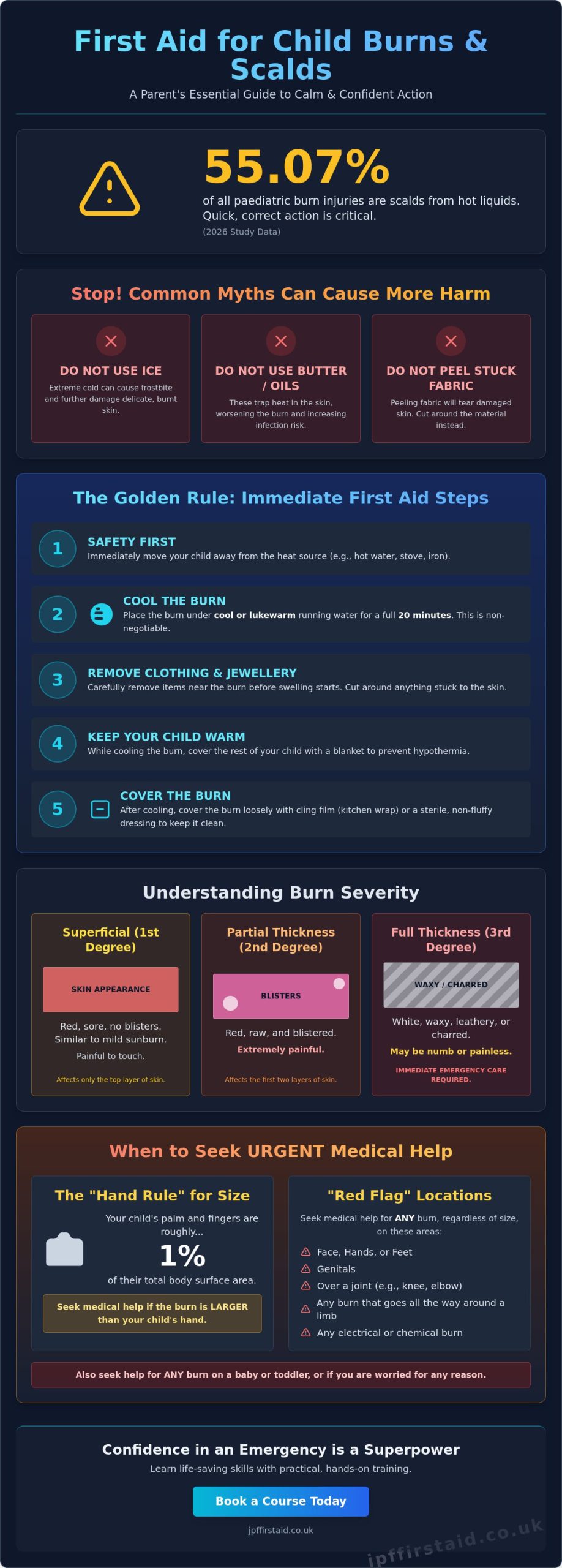
A 2026 study revealed that scalds from hot liquids account for 55.07% of all paediatric burn injuries, often happening in the blink of an eye. When your little one is in pain, your first instinct is to reach for whatever is in the kitchen cupboard, but knowing the correct first aid for burns on a child is about patience rather than products. You might feel a frantic urge to apply butter, oils, or ice, but these common myths can actually trap heat and cause more damage to delicate skin.
It’s completely natural to feel a sense of panic and confusion when an accident happens, especially when you’re worried about permanent scarring. This guide will help you replace that anxiety with a calm, can-do attitude. You’ll learn the exact steps to stop the burning process immediately, including the vital 20-minute cooling rule that medical experts rely on. We’ll also provide clear, practical criteria to help you decide when a burn requires urgent medical intervention, ensuring you act with the confidence of a reliable expert for your family.
Key Takeaways
- Learn how to correctly apply the 20-minute cooling rule to stop the burning process and provide effective first aid for burns on a child.
- Discover how to use a common kitchen staple as a safe, sterile dressing to protect the injury and manage your child’s pain.
- Use the simple “hand rule” to quickly determine if your child’s burn is large enough to need urgent professional medical care.
- Identify the specific “red-flag” body parts that require an immediate medical review, regardless of the burn’s size or appearance.
- Understand why everyday items like a cup of tea remain a serious scald risk to toddlers much longer than you might expect.
Understanding Burns and Scalds: Degrees of Severity
To provide effective first aid for burns on a child, you must first understand exactly what has happened to the skin. While people often use the terms interchangeably, there is a technical difference between a burn and a scald. A burn is caused by dry heat, such as a flame, a hot iron, or the heating element of a modern air fryer. A scald is the result of wet heat, including boiling water, steam, or hot oils. Both injuries damage the skin cells, but the way the heat spreads can vary depending on the source.
Medical professionals use specific categories to describe how deep the damage goes. Understanding the classifications of burns in children helps you communicate clearly with emergency services if you need to call for help. These levels include:
- Superficial (First Degree): This only affects the top layer of skin. It looks red, feels sore, and is typical of mild sunburn or a quick touch of a hot plate.
- Partial Thickness (Second Degree): The heat has reached the second layer of skin. This causes blistering and is usually incredibly painful for the child because the nerve endings are exposed.
- Full Thickness (Third Degree): This is the most serious level. The skin may appear white, waxy, or even charred and leathery. Because the nerves are often destroyed, your child might not actually feel pain in the centre of the wound, but this requires immediate emergency care.
Common Causes of Paediatric Burns in the Home
The kitchen is the most frequent site for accidents. While kettles and hobs are obvious risks, 2026 data shows a rise in injuries from air fryers, which often sit within a toddler’s reach on the worktop. In the bathroom, bath water that is too hot can scald a child in seconds. Hair straighteners are another significant hazard; they can reach 220°C and remain hot enough to cause a deep burn for up to forty minutes after they are unplugged. Outdoors, charging cables and unprotected sockets pose an electrical burn risk that can be deceptively deep.
Why Children’s Skin is More Vulnerable
A child’s skin is significantly thinner than an adult’s, meaning it burns at much lower temperatures and much faster. A hot drink that might only cause you a temporary sting can result in a serious, life-changing injury for a baby. You also have to consider the surface area factor. Because a child is smaller, a burn that covers the size of their own hand represents a much larger percentage of their total body than it would for an adult. This makes them more susceptible to shock and complications. The golden hour for burn treatment is the first sixty minutes after the injury, as this is the critical window where your immediate actions can stop the heat from continuing to destroy deeper tissue. Using the correct first aid for burns on a child during this window is essential for a good recovery.
The 20-Minute Rule: Immediate First Aid Steps
When an accident occurs, the clock becomes your most important tool. Your immediate priority is to stop the burning process and limit the damage to the underlying tissue. First, ensure the environment is safe. Move your child away from the heat source, whether it’s a spilled kettle or a hot hair straightener, to prevent any further injury. Once the danger is removed, you must act quickly to cool the skin. This is the absolute foundation of effective first aid for burns on a child.
Start cooling the burn under cool running water immediately. While older guidelines from sources like the NHS previously suggested fifteen minutes, the 2026 gold standard for paediatric care is a full twenty minutes. This duration is non-negotiable for the best recovery. While you cool the burn, remove any jewellery or clothing near the area before swelling begins. However, if any fabric is stuck to the wound, don’t try to peel it away. Cut around the stuck material to avoid tearing the damaged skin.
It’s vital to remember that young children lose body heat rapidly. While you’re cooling the specific burn site, keep the rest of your child’s body warm and dry with a blanket or layers of clothing. This prevents hypothermia, which is a significant risk during prolonged cooling of large areas. Building this kind of confidence in emergency response is exactly what our practical training sessions aim to provide for parents.
Why 20 Minutes is Non-Negotiable
The science behind the twenty-minute rule is simple but critical. Even after you move your child away from a heat source, the skin continues to “cook” because the heat is trapped in the deeper layers of tissue. Cooling for a full twenty minutes draws that residual heat out. Never use ice, butter, or very cold water. These can constrict blood flow and actually cause more damage, similar to frostbite. If you don’t have access to a tap, using cool bottled water or even milk in an emergency can help start the cooling process while you find a better source. You can find more detailed advice on how to treat burns in children to help you stay calm and focused.
Removing Obstructions and Clothing
Speed is essential when dealing with liquid scalds. If a hot drink spills on a child, nappies and clothing act like a sponge, holding the boiling liquid against the skin and making the burn deeper. Strip these off immediately. For other clothing, use scissors to cut the fabric away from the site rather than pulling it over the child’s head. Removing rings, watches, or restrictive bands is also a priority because limbs can swell quickly after a burn, and these items can become dangerous “tourniquets” that cut off circulation if left in place. Proper first aid for burns on a child requires this balance of rapid cooling and careful obstruction removal.
Aftercare: Dressing the Burn and Managing Pain
After you’ve spent twenty minutes cooling the injury, the next step is protecting the skin from infection while keeping your child comfortable. Effective first aid for burns on a child doesn’t end when the tap is turned off. The goal now is to provide a barrier that doesn’t stick to the raw tissue. This prevents air from hitting the exposed nerve endings, which is often the primary cause of intense, stinging pain after the initial accident.
Household cling film is an ideal temporary dressing. It’s clear, which allows medical professionals to see the burn without removing the dressing. It’s also non-stick, so it won’t cause agony when it’s eventually taken off. You should apply it lengthways over the burn rather than wrapping it tightly around a limb. This is a vital distinction. Wrapping it around a leg or arm can act like a tourniquet if the limb begins to swell, which is a common inflammatory response in the first few hours after a burn.
Burns are incredibly distressing, and managing your child’s pain is a priority. You can give your child age-appropriate doses of liquid paracetamol or ibuprofen to help manage their discomfort. Always check the label for the correct dosage based on their current weight and age. While you wait for medical advice, monitor your child for signs of shock. If they become unusually pale, their skin feels cold or clammy, or their breathing becomes rapid and shallow, you must call for emergency help immediately.
What NOT to Put on a Burn
Old wives’ tales suggest applying butter, toothpaste, or oils, but these are dangerous. These substances trap heat inside the skin and significantly increase the risk of infection. Avoid using adhesive bandages or “fluffy” cotton wool, as the fibres will stick to the wound and require painful removal. Finally, never pop blisters. They act as a natural, sterile barrier that protects the new skin growing underneath. A 2026 study on paediatric recovery showed that intact blisters reduce the risk of secondary infections by 40% compared to those that were intentionally burst.
Using Cling Film Correctly
To keep the area as clean as possible, pull off and discard the first few centimetres of the cling film roll before use. This ensures the part touching the burn hasn’t been handled or exposed to dust. If the injury is on a hand or foot, a clean, clear plastic bag is a great alternative that stays in place easily. Remember, cling film is only a temporary measure for the cooling and transport phase before a professional medical review. It should never be left on for a long period as it can trap bacteria if not replaced by a proper medical dressing.
When to Seek Urgent Medical Help
Deciding whether to head to Accident and Emergency (A&E) or manage a minor injury at home is one of the most stressful parts of providing first aid for burns on a child. To make this easier, we use the “Hand Rule”. If the burn is larger than the size of your child’s own palm, it needs professional medical review immediately. This is a simple, visual way to assess the total surface area affected without needing a ruler or complex calculations in a high-pressure moment.
Certain locations on the body are also automatic triggers for a hospital visit. Any burn to the face, neck, hands, feet, or genital area must be seen by a doctor. These areas are prone to complications, such as airway swelling or restricted movement due to scarring. You should also perform the “Whiteness Test”. If the skin looks charred, leathery, or waxy white, it indicates a deep injury that requires specialist care, even if your child says it doesn’t hurt as much as you’d expect. This often happens because the heat has damaged the nerve endings.
Chemical and electrical burns are particularly deceptive. An electrical burn from a socket might look like a tiny mark on the surface, but the current often causes significant internal damage that you can’t see. Similarly, chemicals can continue to react with the skin long after the initial contact. Both of these scenarios require an immediate trip to A&E to ensure your child is safe and stable. If you want to feel truly prepared for any household accident, our comprehensive first aid training can give you the skills to handle these high-pressure moments with a calm, can-do attitude.
999 vs. 111: Making the Right Call
Knowing which number to dial can save vital minutes. You should call 999 immediately if your child has difficulty breathing, has become unconscious, or has suffered a massive burn. Smoke inhalation is a serious risk if the injury happened in an enclosed space. For smaller blisters, concerns about the healing process, or if you’re simply unsure about the severity, 111 is the correct choice. Our paediatric first aid training covers these triage skills in depth, helping you make the right call with total confidence when it matters most.
Signs of Infection to Watch For
Infection is a common complication that can appear several days after the initial accident. Watch for spreading redness around the site, increased swelling, or if your child develops a high temperature. If the wound begins to smell or produce pus, it’s a clear sign that bacteria have entered the area. It’s also a good time to check your child’s tetanus vaccination status, as deep burns can sometimes pose a risk. If you notice any of these signs, contact your GP or visit a minor injuries unit for a professional assessment. Effective first aid for burns on a child means staying vigilant during the entire healing process, not just the first twenty minutes.
Prevention and the Power of Confidence
While knowing the exact steps for first aid for burns on a child is essential, creating a home where these accidents are less likely to happen is your first line of defence. Modern homes are full of “hot zones” that require a proactive approach to safety. For example, a cup of tea made fifteen minutes ago might feel lukewarm to you, but it’s still hot enough to cause a serious scald on a toddler’s thin skin. This “Hot Drink” rule is a simple but effective way to remember that heat lingers much longer than we usually realise. By understanding these risks, you can stay one step ahead of potential accidents.
Securing the kitchen and bathroom is about more than just installing gates. It’s about changing daily habits to ensure your little ones stay safe in an environment filled with modern appliances. You can explore our regulated first aid courses to learn more about comprehensive safety skills that go beyond just immediate response. We focus on practical, real-world scenarios that help you identify hazards before they become emergencies.
Creating a Burn-Safe Home Environment
In the kitchen, always use the back hobs when cooking and turn pan handles inward so they can’t be grabbed by curious hands. In the bathroom, always run cold water before the hot and check the temperature with your elbow or a thermometer. A safe bath temperature for a child is between 37°C and 38°C. Don’t overlook modern electrical hazards. Children often chew on live charging cables, which can lead to horrific mouth burns. Keep all device chargers out of reach and unplugged when they aren’t in use, especially as 2026 data shows an increase in lithium-battery related incidents in family homes.
Why Paediatric First Aid Training Matters
There is a significant difference between adult and child first aid. Children have different physiological needs, and their smaller bodies react to injuries much faster than ours. Formal training is the only way to replace the natural instinct to panic with a sense of “competent calm”. Hands-on practice is vital because it builds muscle memory. When a real emergency happens, you won’t “freeze” because your body already knows the movements of effective first aid for burns on a child. This confidence is the greatest gift you can give your family.
Empower yourself to protect your family with skills that last a lifetime. Our sessions are designed to be engaging, practical, and entirely focused on your success as a first aider. Book a first aid course today and gain the confidence to handle any situation with ease. You’ll leave our training not just with a certificate, but with the peace of mind that you can act effectively when it matters most.
Empower Yourself with Life-Saving Confidence
Acting quickly in an emergency is about more than just knowing a few steps; it’s about having the “competent calm” to execute them when your child needs you most. You now know that the 20-minute cooling rule is the absolute gold standard for first aid for burns on a child, and that household cling film is your best tool for protecting a wound before a medical review. By using the “Hand Rule” to assess severity, you can make clear, logical decisions even when emotions are running high.
While reading a guide is a great start, nothing replaces the hands-on practice found in a professional setting. As a multi-award-winning training provider, JPF First Aid delivers Ofqual regulated qualifications that are expert-led, engaging, and genuinely fun. We strip away the clinical jargon to give you practical skills you’ll actually remember. Gain the confidence to save a life, book your First Aid Training today. You deserve the peace of mind that comes from being prepared for whatever life throws your way. We’re here to help you become the reliable expert your family relies on.
Frequently Asked Questions
Can I put ice on my child’s burn if it looks really red?
No, you should never use ice or ice-cold water on a burn. Ice is far too cold for damaged tissue and can cause further injury by restricting blood flow or even causing frostbite. Stick to cool running water for a full twenty minutes to safely draw the heat out of the skin. This is the most effective way to provide first aid for burns on a child while protecting the delicate layers of their skin.
Is it okay to use antiseptic cream on a fresh burn?
You must avoid using antiseptic creams, lotions, or greasy substances like butter on a fresh injury. These products act as a seal that traps heat inside the skin, which can actually make the burn deeper and more painful. Creams also make it much harder for a doctor or nurse to accurately assess the wound if you need to visit a minor injuries unit or A&E.
What should I do if my child’s clothes are stuck to the burn?
If clothing is stuck to the wound, leave it in place to avoid tearing the skin away. You can continue the cooling process by running cool water directly over the fabric for the full twenty minutes. If you need to remove other parts of the garment, use scissors to carefully cut around the stuck area rather than pulling the fabric over your child’s head or limbs.
How long does it take for a child’s burn to heal?
A superficial burn that only causes redness usually heals within three to seven days. More significant injuries that involve blistering, known as partial thickness burns, typically take between fourteen and twenty-one days to recover fully. If the wound doesn’t show clear signs of healing within forty-eight hours, it’s best to have it checked by a healthcare professional to ensure there are no complications.
Should I cover a minor burn with a plaster?
Standard adhesive plasters are not suitable for burns because the sticky parts can tear the fragile skin or burst protective blisters when removed. Instead, use household cling film applied lengthways or a clean, clear plastic bag for injuries on the hands or feet. This protects the area from infection while allowing for the natural swelling that occurs after a burn accident.
What is the “Hand Rule” for measuring burn size in children?
The “Hand Rule” is a simple triage tool where your child’s own palm and fingers represent roughly 1% of their total body surface area. If the burn is larger than the size of their hand, it’s a clear sign that they need a professional medical review. Using this visual guide helps you provide better first aid for burns on a child by giving you a concrete way to measure severity.
Can a sunburn be considered a serious burn for a baby?
Yes, a blistering sunburn on a baby is a medical emergency. Because an infant’s skin is so thin, they can become dehydrated or develop heatstroke much faster than an older child or adult. If your baby has any blistering from the sun or appears unusually lethargic, you should seek urgent medical help immediately to prevent serious complications.
What are the signs that a burn is becoming infected?
You should watch for spreading redness around the wound, increased swelling, or a foul smell. If the burn starts to produce yellow or green pus, or if your child develops a high temperature over 38°C, these are clear indicators of an infection. Staying alert for these symptoms in the days following the injury is a vital part of the recovery process for any paediatric burn.
Recent Comments