

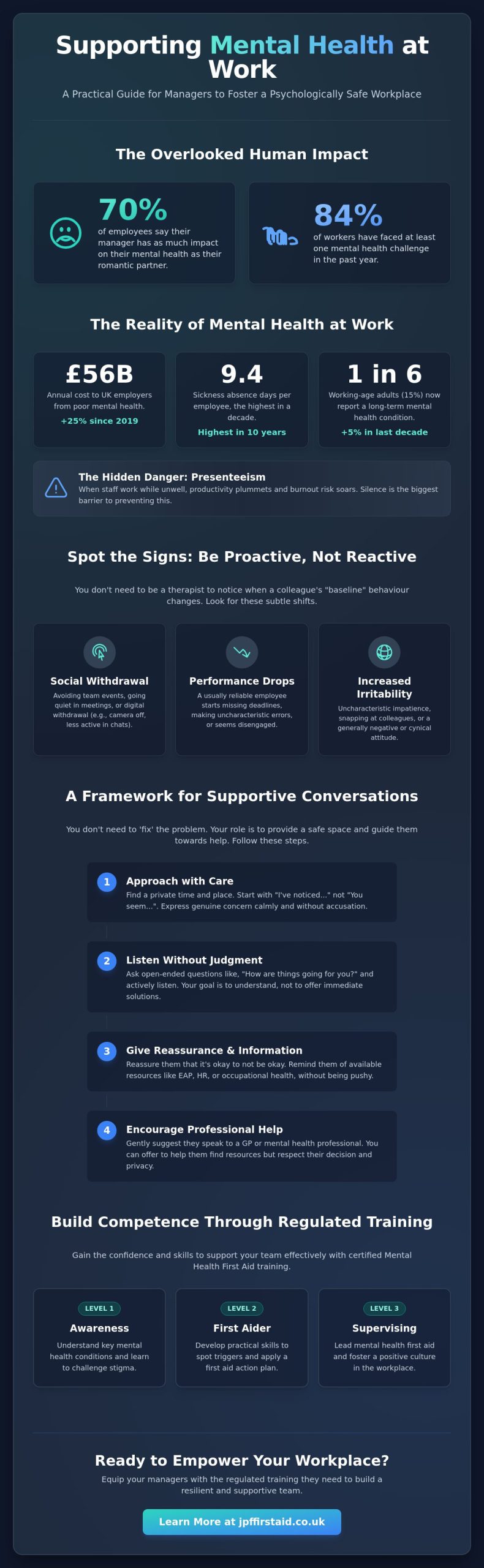
Did you know that 70% of employees say their manager has as much impact on their mental health as their romantic partner? It’s a staggering statistic that highlights why learning how to support mental health in the workplace is no longer just an HR checkbox; it’s a vital life skill. You might worry about saying the wrong thing or overstepping legal boundaries, especially with UK regulators now requiring risk assessments to include workplace stress. It’s natural to feel overwhelmed when 84% of workers have faced a mental health challenge in the last year.
We understand that you want to be there for your team but fear making a situation worse. You need clear, actionable steps rather than vague theories. This guide provides practical, evidence-based strategies to help you foster a supportive environment and gain the confidence to assist colleagues facing challenges. We’ll walk through a clear framework for having supportive conversations, how to spot early warning signs before a crisis occurs, and exactly when to signpost to professional help.
Key Takeaways
- Understand why psychological safety is a critical priority in 2026 as hybrid work and digital burnout become more prevalent.
- Learn to spot subtle physical and behavioural changes in your colleagues so you can offer help before a situation reaches a crisis point.
- Discover actionable, top-down strategies on how to support mental health in the workplace by building a culture of regular, meaningful check-ins.
- Gain a clear, step-by-step framework for approaching a distressed colleague; you don’t need to ‘fix’ the person to provide vital support.
- Build your confidence and competence through regulated training, from Level 1 Awareness to Level 3 Supervising qualifications.
Why Supporting Mental Health in the Workplace is Essential in 2026
In 2026, knowing how to support mental health in the workplace is no longer an optional “extra” for HR departments. It’s a fundamental part of your safety toolkit. We’ve moved past the days when mental health was only discussed during a crisis. Today, it’s about a proactive commitment to every person on your team. Proactive support means checking in before the cracks show. It’s about creating an environment where a colleague feels comfortable saying they’re struggling without fearing for their job security. With the rise of hybrid work and the constant pressure of digital burnout, the boundaries of the traditional office have dissolved. This shift requires a new approach to workplace wellness programs that prioritises psychological safety alongside physical health. When you invest in this support, you’ll see a genuine “human ROI” through improved staff retention and stronger team morale.
The Reality of Mental Health at Work Today
The numbers tell a clear story. Poor mental health currently costs UK employers approximately £56 billion every year; that’s a 25% increase since 2019. We’re seeing sickness absence rates hit 9.4 days per employee, the highest level in over a decade. Recent data shows that 15% of working-age adults now report a long-term mental health condition. This represents a 5% increase over the last decade, showing that the scale of the challenge is growing. However, the most hidden danger is presenteeism. This happens when staff show up for work while they’re struggling but cannot function effectively. It leads to a massive drop in productivity and a higher risk of long-term burnout. Silence remains the biggest barrier. When people don’t feel safe to speak up, small issues snowball into major crises.
Your Legal and Ethical Responsibilities
You have a clear “Duty of Care” to protect your employees from both physical and psychological harm. Under the Equality Act 2010, mental health conditions that have a substantial, long-term effect on daily life are often classified as disabilities. This means you’re legally required to make “reasonable adjustments” to support those staff members. In 2026, UK regulators have intensified their focus on these existing laws. Risk assessments must now explicitly include workplace stress and psychosocial risks like bullying or excessive workloads. Treating a panic attack with the same urgency as a physical injury isn’t just the right thing to do; it’s a legal expectation. Understanding how to support mental health in the workplace helps you meet these obligations while building a culture of trust and reliability.
Identifying the Early Warning Signs of Mental Ill-Health Among Colleagues
You don’t need to be a doctor or a trained therapist to notice when something isn’t right with a teammate. In fact, you’re often in the best position to help because you see your colleagues’ “baseline” behaviour every day. This baseline is simply the way a person normally acts, speaks, and works. When someone deviates from these usual patterns, it’s a signal that they might be struggling. Since 84% of employees faced at least one mental health challenge last year, these signs are likely appearing in your team right now. Noticing them early is the most effective way to start learning how to support mental health in the workplace before a situation reaches a crisis point.
Spotting these red flags in a remote or hybrid environment requires a bit more intentionality. You can’t rely on “watercooler moments,” so you have to look for digital withdrawal. This might look like a colleague who used to be active in group chats suddenly going dark or someone who always kept their camera on during meetings suddenly preferring to stay off-screen. The Surgeon General’s Framework for Workplace Mental Health highlights that social support and connection are essential for a healthy culture. When those connections start to fray, it’s time to pay closer attention.
Behavioural Changes to Watch For
Behavioural shifts are often the first things you’ll notice in a professional setting. They usually manifest as changes in how a person handles their workload or interacts with the team. Keep an eye out for:
- Social Withdrawal: Avoiding team lunches, skipping optional meetings, or becoming uncharacteristically quiet during collaborative projects.
- Performance Drops: A previously high-performing staff member might start missing deadlines, making simple mistakes, or appearing to lose their professional “spark.”
- Increased Irritability: Uncharacteristic emotional outbursts or a sudden sensitivity to constructive feedback can indicate that a person’s “cup” is already full.
Physical and Emotional Red Flags
While you aren’t diagnosing anyone, certain physical and emotional cues are strong indicators of internal distress. These often leak out in small, daily moments:
- Signs of Fatigue: A colleague might look constantly exhausted, mention they aren’t sleeping well, or show significant changes in their appetite or weight.
- Language Cues: Listen for expressions of hopelessness, such as “I just can’t see a way through this” or “It doesn’t matter what I do.”
- Feeling Overwhelmed: If a minor task that would usually take five minutes causes a colleague to panic or shut down, they’re likely dealing with a much larger mental load than they’re letting on.
Recognising these signs is the first step in knowing how to support mental health in the workplace. It moves you from a place of uncertainty to a place of action. If you’re worried about what to do next, taking a short mental health awareness course can provide the practical tools and confidence you need to start that first, vital conversation.
Creating a Mentally Healthy Workplace Culture: Practical Strategies
Building a supportive culture isn’t about hanging a poster in the breakroom or sending a one-off email. It’s about the small, daily actions that prove you value your team’s wellbeing as much as their output. A truly healthy culture starts from the top. When leadership models healthy boundaries, like not sending emails at 10 PM or openly taking lunch breaks, it gives everyone else permission to do the same. This top-down approach is one of the most effective ways to show your team how to support mental health in the workplace through lived experience rather than just policy. Implementing evidence-based strategies for supporting employee mental health ensures your efforts are grounded in psychological science rather than guesswork.
One practical tool we recommend for every team member is a Wellness Action Plan (WAP). These are personalised documents that help employees identify what keeps them well at work and what might cause them to struggle. It’s a proactive way to start a conversation before problems arise. For deeper cultural integration, you can explore our full guide on mental health first aid. This resource helps you move beyond basic awareness toward a more robust, team-wide support system.
Normalising the Conversation
Stigma often thrives in silence. While 72% of workers feel comfortable supporting a colleague, only 42% feel comfortable discussing their own mental health. You can bridge this gap by using non-clinical, everyday language. Instead of asking about “symptoms,” ask a colleague if they feel “under the pump” or “a bit overwhelmed.” When leaders share their own challenges with stress or burnout, it humanises the issue and builds trust. Organising regular awareness days or informal lunch-and-learn sessions can also keep the conversation alive without it feeling heavy or clinical.
Practical Adjustments for Wellbeing
Flexibility is a powerful tool for preventing burnout. With 66% of employees reporting feelings of burnout in 2026, small adjustments can make a massive difference. Consider allowing flexible start times for those attending therapy or simply needing extra rest after a difficult week. You can also create “quiet zones” in the office where phone calls and loud conversations are discouraged, providing a sanctuary for focused work. Finally, ensure every staff member knows exactly how to access your Employee Assistance Programme (EAP). It shouldn’t be a hidden benefit; it should be a well-known resource that people feel encouraged to use. Employees who feel their mental health is supported are twice as likely to avoid burnout or depression, making these small changes a wise investment for any business.
Step-by-Step: How to Approach and Support a Colleague in Distress
Knowing how to support mental health in the workplace often comes down to one courageous conversation. You might feel a heavy weight of responsibility. It’s vital to remember that you aren’t a therapist. Your role is to provide a safe space and listen. Think of yourself as a first responder for the mind. You’re there to stabilise the situation and guide the person toward professional care. While 72% of workers say they’re comfortable supporting a colleague, many hesitate because they don’t have a clear plan of action. You don’t need to “fix” their problems; you just need to be present.
Creating the right environment is your first priority. You can’t have a meaningful talk in a busy corridor or during a rushed five-minute gap between meetings. Find a private space where you won’t be interrupted. Give the person your full attention by practicing active listening. This means listening to understand their perspective rather than listening to formulate your next response. Sometimes, just being heard is the most powerful support you can offer. It validates their experience and reduces the feeling of isolation that often accompanies mental ill-health.
The Opening: How to Start the Conversation
Start with open-ended questions that invite more than a one-word answer. You might say, “I’ve noticed you haven’t been your usual self lately, how are you really?” The “Two-Question Rule” involves asking someone how they are twice, which signals that you are genuinely interested in the real answer rather than a polite social reflex. If they insist they’re “fine” despite obvious signs of distress, don’t force the issue. Simply reassure them that your door is always open and you’re ready to listen whenever they feel like talking.
During the Chat: Dos and Don’ts
Your body language says as much as your words. Keep your posture open and maintain relaxed eye contact to show you’re present. These small cues build the trust necessary for an honest discussion. Follow these simple guidelines during your chat:
- Do: Use non-judgmental body language and give them plenty of space to speak without interruption.
- Don’t: Offer platitudes like “cheer up” or “it could be worse,” as these can make a person feel dismissed.
- Don’t: Compare their struggle to your own experiences; everyone’s journey is unique.
You must also be clear about the boundaries of confidentiality. While you should respect their privacy, you have a duty to involve others if you believe their safety or the safety of others is at risk. Transparency about this from the start helps maintain trust.
The final step is signposting. Once they’ve shared their feelings, ask what they think would help or if they’ve spoken to a professional. You can guide them toward your company’s Employee Assistance Programme (EAP), their GP, or a mental health charity. If you want to gain the specific skills to handle these moments with total confidence, consider enrolling in a First Aid for Mental Health (Level 2) course.
Empowering Your Team with Regulated Mental Health First Aid Training
While empathy is a great starting point, true confidence comes from competence. You might feel ready to listen, but having a formal qualification ensures you have a structured plan when a colleague is in crisis. Understanding how to support mental health in the workplace becomes much easier when you follow a regulated framework. JPF First Aid’s mental health courses are designed to be interactive and reassuring. We move away from dry, clinical lectures and focus on practical skills that you can use immediately. This training doesn’t just help the person in distress; it empowers the First Aider by removing the anxiety of doing the wrong thing.
Integrating mental health support with your existing safety protocols is a smart move for any 2026 business. Just as you wouldn’t leave a physical injury untreated, psychological harm needs immediate attention. Mental health training perfectly complements your emergency first aid at work requirements. By treating both with the same level of priority, you create a holistic safety net for your team. You aren’t just checking boxes; you’re building a culture where every aspect of a person’s wellbeing is protected.
Why Formal Qualification Matters
Choosing Ofqual regulated courses ensures that the advice and techniques you learn are safe, evidence-based, and compliant with national standards. There is a significant psychological benefit for the First Aider in having a clear, step-by-step action plan. It replaces uncertainty with a capable, calm attitude. When you build a network of qualified MHFAiders across your organisation, you ensure that support is always accessible, regardless of which department or shift a person is working on. This collective competence reduces the pressure on individual managers and spreads the responsibility of care across a trained, reliable team.
Choosing the Right Level for Your Role
We offer different levels of training to suit different responsibilities within your business. It’s about finding the right fit for your specific needs:
- Awareness of First Aid for Mental Health (Level 1): This is ideal for all staff members. It creates a baseline of understanding and helps everyone recognise the signs of mental ill-health.
- First Aid for Mental Health (Level 2): This course is for those who want to take a more active role. You’ll learn how to provide support, start conversations, and signpost colleagues to professional help.
- Supervising First Aid for Mental Health (Level 3): This is essential for managers and supervisors. It focuses on the wider wellbeing strategy and how to lead a mentally healthy team.
By selecting the appropriate training level, you ensure your team has the specific tools they need to succeed. Learning how to support mental health in the workplace is an investment in your people that pays dividends in loyalty, productivity, and a genuinely positive atmosphere.
Take the Next Step Toward a Mentally Healthy Workplace
Creating a supportive environment is a continuous commitment that transforms your team’s daily experience. You now have the tools to identify early warning signs and the framework to approach colleagues with confidence. By implementing proactive strategies like Wellness Action Plans and modelling healthy boundaries, you move beyond simple compliance toward a culture of genuine care. Learning how to support mental health in the workplace is one of the most valuable investments you can make for your staff’s long-term wellbeing and your business’s success.
We’re here to ensure you feel capable and prepared. As a multi-award-winning training provider, our experienced expert mentors deliver Ofqual regulated qualifications in a relaxed, interactive environment. We focus on practical skills that empower you to act decisively when it matters most. Equip your team with the skills to save lives—book a Mental Health First Aid course today. You’ve already taken the first step by learning the strategies in this guide. Now, let’s turn that knowledge into the life-saving competence your team deserves. You’re in safe hands with us.
Frequently Asked Questions
How do I start a conversation about mental health without being intrusive?
Focus on observed changes in behavior rather than making assumptions about their feelings. You might mention specific patterns like a change in meeting participation or missed deadlines. By framing your concern around work-related observations, you create a natural opening. Use open-ended questions and let the person lead the pace of the discussion. This approach shows you care about their wellbeing without overstepping personal boundaries or making the colleague feel cornered.
What should I do if a colleague refuses help but is clearly struggling?
You must respect their autonomy while keeping the door open for future support. If there’s no immediate risk of harm, don’t force the conversation or try to fix them. Continue to offer a supportive environment and check in periodically. However, if their behavior significantly impacts safety or team performance, you may need to escalate the issue following your internal HR policies regarding performance or conduct. Your role is to offer the path to help, not to force it.
Are there legal risks to talking to an employee about their mental health?
There are no legal risks to showing concern, provided you maintain confidentiality and follow the Equality Act 2010 guidelines. You should avoid asking for a specific diagnosis or pressuring them to disclose medical details. Instead, focus on how you can provide reasonable adjustments to support them in their role. Documenting your offers of support helps demonstrate that you are meeting your duty of care as an employer and protecting the business from potential claims.
What is the difference between workplace stress and a clinical mental health condition?
Workplace stress is often a reaction to specific pressures like deadlines, while a clinical condition is a diagnosed illness that affects daily life over a long period. Stress can lead to mental ill-health if it isn’t managed properly. Learning how to support mental health in the workplace involves recognizing when temporary stress is becoming a more persistent issue. This is when a colleague might require professional medical intervention or formal adjustments to their daily responsibilities.
How can I support a colleague’s mental health while working remotely?
You can support remote colleagues by scheduling regular, non-work-related video calls to maintain a social connection. Pay close attention to changes in their digital communication patterns, such as a sudden lack of engagement in group chats or emails. Encourage them to set clear boundaries between work and home life to prevent digital burnout. Proactive outreach is essential because you can’t rely on seeing them in person to spot subtle changes in their mood or energy.
Is mental health first aid training mandatory for UK businesses in 2026?
While not strictly mandatory in the same way as physical first aid, UK regulators now explicitly require employers to manage psychosocial risks like stress. This means your risk assessments must cover mental health. Many businesses choose to train staff in First Aid for Mental Health (Level 2) to demonstrate they are meeting these legal obligations. It provides a clear, documented path for supporting employees and managing workplace hazards effectively while building a safer, more reliable team culture.
How do I look after my own mental health while supporting others?
You must set clear boundaries to protect your own wellbeing while assisting your team. Supporting others can be emotionally draining, so it’s vital to recognize your own limits and seek support from your own manager or an EAP. Practicing what you’ve learned about how to support mental health in the workplace applies to you, too. Ensure you take regular breaks, maintain your own hobbies, and don’t take on the role of a therapist for your colleagues.
Recent Comments