

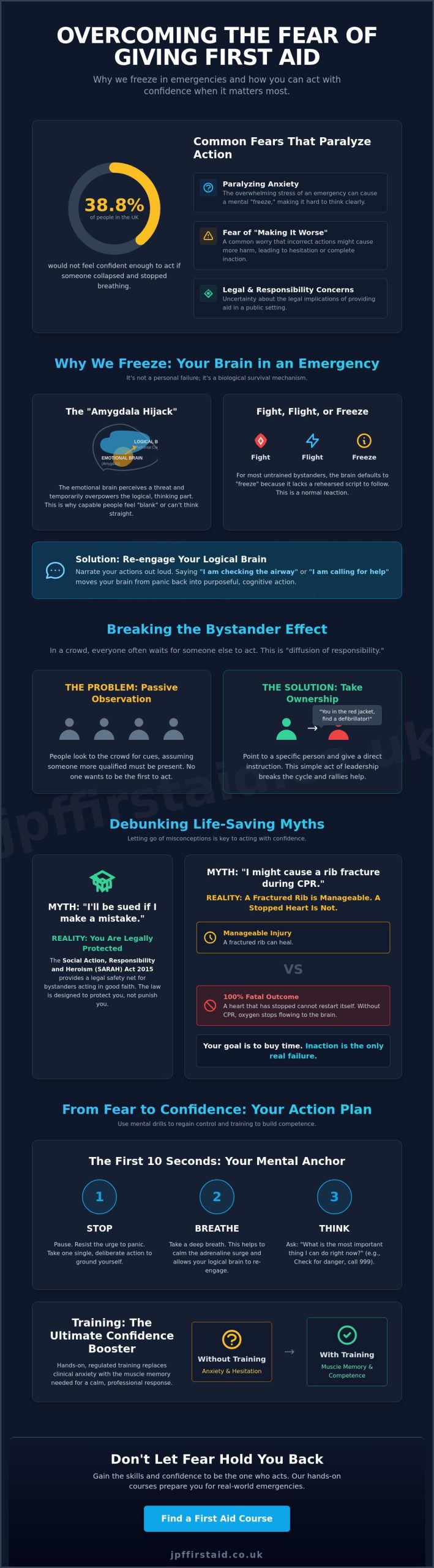
Did you know that 38.8% of people in the UK wouldn’t feel confident enough to take action if someone collapsed and stopped breathing? This statistic highlights a common struggle: the paralyzing anxiety that takes over during high-stress moments. It’s completely natural to worry about making a situation worse or feel confused about your legal responsibilities, but overcoming fear of giving first aid is the most important step you can take toward saving a life.
We understand that the thought of “freezing” during an emergency is daunting. You’ve likely worried about the legal implications of stepping in or felt a sense of guilt just thinking about potential inaction. This guide is designed to dismantle those psychological and legal barriers so you can act with certainty. We’ll explore the UK legal safety net, including the Social Action, Responsibility and Heroism Act 2015, and share practical techniques to manage your physical response to stress. By the end, you’ll have the mental anchors needed to step forward as a confident, capable responder.
Key Takeaways
- Understand why your brain “freezes” during high-stress moments and how to recognize the social cues that often stop people from helping.
- Gain peace of mind by exploring how the SARAH Act 2015 provides a legal safety net for bystanders acting in good faith.
- Discover why overcoming fear of giving first aid starts with choosing imperfect action over the greater risk of doing nothing at all.
- Learn practical psychological anchors like the “Stop-Breathe-Think” method to regain control during the first ten seconds of an emergency.
- See how hands-on, regulated training replaces clinical anxiety with the muscle memory needed for a calm and professional response.
The Psychology of Panic: Why We Freeze in Emergencies
When your heart starts racing and your palms get sweaty at the sight of an accident, you aren’t failing. You are experiencing a biological survival mechanism known as the “amygdala hijack.” This occurs when the emotional centre of your brain perceives a threat and temporarily overpowers your logical prefrontal cortex. It’s the reason why even the most capable people can feel “blank” when they see someone in distress. Understanding this process is the first step toward overcoming fear of giving first aid. Instead of trying to be “fearless,” which is often impossible in high-stress moments, your goal should be a managed response. This means acknowledging the fear while using specific mental anchors to stay functional and focused on the task at hand.
The Fight, Flight, or Freeze Response
During an emergency, your body releases a massive surge of adrenaline. While this prepares you for physical survival, it often compromises your fine motor skills. You might find it hard to dial a phone number or open a first aid kit with shaking hands. For many untrained bystanders, the brain defaults to “freeze” because it doesn’t have a rehearsed script to follow. This reaction is entirely normal and doesn’t mean you aren’t cut out for helping. You can bridge this gap by narrating your actions out loud to yourself. Saying “I am checking the airway” or “I am calling for help” helps move your brain from a state of panic back into a state of purposeful, cognitive action. It forces the logical part of your mind to re-engage and overrides the instinct to stand still.
Breaking the Bystander Effect
In crowded areas, a strange phenomenon often occurs where everyone waits for someone else to step forward. This is known as the Bystander effect. It isn’t caused by a lack of compassion, but by a “diffusion of responsibility.” People look to the crowd for permission to act, assuming that someone more qualified must be present. You can break this cycle by taking psychological ownership of the scene immediately. Instead of shouting for “someone” to help, point to a specific person and give a direct instruction, such as “You in the red jacket, go find a defibrillator.” This simple act of leadership often triggers a chain reaction, giving others the “permission” they need to assist you. overcoming fear of giving first aid becomes much easier when you realize that your first small action will likely rally an entire team of helpers to your side. You don’t have to do everything alone; you just have to be the one to start.
Debunking the “Making It Worse” Myth
One of the biggest hurdles in overcoming fear of giving first aid is the nagging thought that you might cause more harm than good. It’s a common worry, but it’s often based on a misunderstanding of what first aid actually is. You aren’t expected to be a surgeon or a clinical expert. Your role is simply to act as a bridge between the incident and the arrival of professional paramedics. When you focus on the intent to save a life, the pressure to be perfect begins to fade. The human body is remarkably resilient, and in a life-threatening situation, the risks associated with intervention are far lower than the risks of walking away.
The legal system recognizes this reality too. The Social Action, Responsibility and Heroism (SARAH) Act 2015 provides a clear framework to support those who intervene. It’s reassuring to know that UK law protects first aiders who act heroically or for the benefit of others during an emergency. If you act in good faith to help someone, the law is designed to protect you, not punish you. This legal safety net is there to ensure that your first instinct to help isn’t suppressed by a fear of litigation.
The Reality of CPR and Rib Fractures
A specific fear many people share is the sound or sensation of a rib cracking during CPR. While this can happen, it’s vital to put it into perspective. A fractured rib is a manageable injury that can heal; a heart that has stopped beating cannot. The Resuscitation Council UK provides clear guidance that effective chest compressions require significant depth to be successful. You aren’t “breaking” the person; you are manually pumping their heart to keep oxygen flowing to their brain. You’re buying them time. Practicing these techniques in a relaxed setting, like our Adult, Child and Baby First Aid sessions, helps you get used to the physical pressure required so you don’t hesitate when it matters most.
Inaction is the Only Real Failure
The most dangerous thing you can do at an emergency scene is to wait for the ambulance without taking action. Evidence suggests that survival rates for out-of-hospital cardiac arrests drop by approximately 10% for every minute that passes without intervention. If you wait ten minutes for a crew to arrive, the chances of a positive outcome are slim. This is why we teach the concept of “First Aid First.” It prioritizes immediate, basic life-saving steps over the fear of making a mistake. In the hierarchy of emergency care, doing something imperfectly is infinitely better than doing nothing perfectly. Your intervention, however small it feels to you, is the victim’s best chance at survival.
The Legal Safety Net: Understanding UK Protection
Many people hesitate to help because they fear the courtroom as much as the emergency itself. It’s a common concern, but the reality of the UK legal landscape is incredibly supportive of those who step forward. When it comes to overcoming fear of giving first aid, understanding the “Reasonable Person” standard is vital. The law doesn’t expect you to perform like a consultant surgeon. It simply asks if you acted as a sensible person with your level of training would have acted in that specific, high-pressure moment. This standard is designed to protect you from the “perfection trap” that often leads to inaction.
One of the most reassuring facts you can hold onto is that there has never been a successful civil claim brought against a bystander who provided first aid in an emergency in the UK. The legal system is built to encourage, not punish, those who try to save lives. Judges recognize that emergencies are chaotic and that decisions must be made in seconds. They look at the intent and the context of the situation, rather than searching for minor technical errors in your technique.
The SARAH Act: Your Hero Shield
The Social Action, Responsibility and Heroism (SARAH) Act 2015 is a specific piece of legislation that acts as a safeguard for everyday heroes. When a court considers a claim of negligence, this act requires them to look at the bigger picture. They must consider whether you were acting for the benefit of society or helping someone in an emergency. It effectively tells the court to give weight to your bravery and good intentions. This means that if you are acting in good faith to help someone in distress, the law is heavily weighted in your favour from the very start.
Duty of Care vs. Moral Obligation
It’s helpful to distinguish between a moral choice and a legal requirement. For the general public in the UK, there is no legal “duty to act.” You aren’t breaking the law if you choose not to intervene when you see a stranger in trouble. However, once you do start providing care, you have a duty to not make the situation worse through gross negligence. This is why basic training is so empowering; it gives you the simple, safe steps that keep you well within the boundaries of “reasonable care.”
The rules change slightly in a professional setting. If you are a designated first aider at your place of employment, you do have a formal duty of care to your colleagues during your working hours. Our guide to Emergency First Aid at Work explains these workplace responsibilities in detail. Knowing exactly where your legal obligations begin and end is a massive part of overcoming fear of giving first aid, as it replaces vague worry with clear, professional boundaries.
Practical Mental Drills to Build Reflexive Confidence
Confidence isn’t a personality trait you’re born with; it’s a skill you build through repetition. When an emergency happens, your logical mind needs a place to land. This is where mental anchors come in. By using the “Stop-Breathe-Think” method during the first 10 seconds of an incident, you give your brain the vital window it needs to process information. This brief pause prevents you from rushing in blindly or standing still in a daze. It’s a foundational technique for overcoming fear of giving first aid because it shifts you from a reactive state to a controlled, professional one.
You can also prepare your brain long before an accident occurs by playing “What If” games. When you’re in a cafe or at a train station, briefly imagine what you’d do if someone collapsed. Where is the nearest exit? Where is the defibrillator? This type of mental rehearsal creates neural pathways that your brain can access under pressure. It’s the difference between starting from scratch during a crisis and simply hitting “play” on a pre-recorded plan.
The DR ABC Mental Framework
The DR ABC acronym is the gold standard for a reason. It provides a steady, step-by-step path through the chaos. Following this sequence ensures you don’t skip vital steps while under stress:
- Danger: Check the surroundings. This grounds you in reality and ensures you don’t become a second casualty.
- Response: A simple “Are you alright?” breaks the freeze and gives you immediate data.
- Airway, Breathing, Circulation: These steps provide a logic-driven checklist that overrides panic.
When you have a rehearsed script, you don’t have to “think” about what to do next. You simply follow the sequence. This structured approach is a key part of overcoming fear of giving first aid, as it replaces uncertainty with a clear, actionable list.
Communication as a Calming Tool
Verbalizing your actions is a powerful psychological tool. If you tell the casualty, “I’m going to tilt your head back now to help you breathe,” it does two things. It reassures them that they are in safe hands, and it keeps you focused on the physical task. It’s much harder for panic to take hold when you’re busy explaining the process out loud. Similarly, giving direct instructions to bystanders, like “You, call 999 and tell them we have an unconscious person,” helps you manage the scene effectively. Remember that call handlers are trained to talk you through every step, providing an extra layer of support until the professionals arrive.
If you want to practice these drills in a supportive, hands-on environment, our Basic Life Support Qualifications provide the perfect space to build that reflexive muscle memory.
How Regulated Training Replaces Fear with Competence
You can read every guide on the internet, but the true secret to overcoming fear of giving first aid lies in muscle memory. When your hands have already practiced the depth of a chest compression on a manikin, your brain doesn’t have to work as hard to find the right rhythm during a crisis. At JPF First Aid, we’ve designed our training to be the opposite of a dry, academic lecture. We focus on interactive sessions that feel more like a conversation with a mentor than a clinical exam. This relaxed atmosphere helps lower your baseline anxiety, making it much easier for information to stick.
Our goal is to move you from a state of “I think I know what to do” to a firm sense of “I know I can handle this.” Holding a formal qualification isn’t just about workplace compliance; it’s a psychological badge of honour. It serves as a constant reminder that you have the skills to protect those around you. This long-term empowerment is often the most rewarding part of the process for our learners. You aren’t just gaining a certificate; you’re gaining the ability to remain calm while others might panic.
The Value of Hands-On Practice
By choosing regulated first aid courses, you are investing in a memory bank that you can draw from when stress levels are high. Reading about CPR is a world away from the physical sensation of performing it. Scenario-based learning allows you to experience the noise and minor chaos of a real emergency in a safe, controlled environment. You get to make mistakes, ask questions, and refine your technique until it becomes second nature. This normalisation of the physical tasks is what ultimately prevents the “freeze” response we discussed earlier.
Choosing the Right Course for Your Needs
Picking the right level of training is the final step in overcoming fear of giving first aid. If you’re a parent or caregiver, a paediatric first aid course provides the specific skills needed to help infants and children, which often carries its own unique set of anxieties. For those in a professional setting, workplace qualifications ensure you understand your specific duty of care. We also recognise that the physical act is only part of the story. Integrating mental health first aid into your skillset helps you manage the emotional aftermath of an incident, both for yourself and the casualty. Don’t wait for an emergency to find out if you’re ready. Taking the step to book a course is the moment you secure your confidence for good.
Ready to Step Forward with Confidence?
You now understand that the “freeze” response is just biology, not a personal failure. By recognizing the robust legal protections of the SARAH Act and leaning on structured frameworks like DR ABC, you’ve already started the process of overcoming fear of giving first aid. The shift from being a bystander to a lifesaver doesn’t happen overnight. It happens when you decide that imperfect action is infinitely better than doing nothing at all. You have the power to change an outcome, provided you have the right mental anchors to keep you steady during those first critical seconds.
We’re here to help you turn that theoretical knowledge into practical, life-saving skill. As a multi-award-winning training provider, we offer Ofqual regulated qualifications delivered by an experienced trainer who prioritizes your psychological empowerment. Our sessions are designed to be interactive, relaxed, and entirely focused on your success. Build your confidence with a multi-award-winning first aid course and take the first step toward being the person who knows exactly what to do when it matters most. You are more capable than you think, and with the right training, you’ll be ready to act with certainty.
Frequently Asked Questions
Can I be sued for giving first aid in the UK if I make a mistake?
No, you cannot be successfully sued in the UK for providing first aid in good faith. The legal system is designed to support bystanders who step forward. Courts use the “Reasonable Person” standard to judge your actions based on your level of knowledge and the emergency context. There has never been a successful civil claim against a bystander for helping in an emergency in the UK.
What is the most common fear people have about giving first aid?
Most people cite the fear of causing more harm as their primary barrier to intervention. This often stems from a worry about causing physical damage, such as rib fractures during CPR. In reality, the most dangerous thing you can do is wait for help without acting. The risk of inaction far outweighs the risk of providing imperfect but well-intentioned care.
Is it better to do nothing if I am not 100% sure what to do?
Doing nothing is rarely the safer choice in a life-threatening situation. For every minute that passes without CPR, the chance of survival decreases by about 10%. Taking imperfect action is the most effective way of overcoming fear of giving first aid while giving the casualty their best chance. You aren’t expected to be perfect; you are simply the bridge to professional help.
How can I stop my hands from shaking during an emergency?
Shaking hands are a natural result of adrenaline, and you shouldn’t try to fight them. Instead, focus on large muscle movements and speak your actions out loud to ground yourself. This helps your brain move from a state of panic to one of controlled, cognitive task management. Narrating your steps keeps you focused on the process rather than the physical symptoms of stress.
Does the Good Samaritan Law protect me if I am not trained?
Yes, the SARAH Act 2015 protects any individual who acts heroically or for the benefit of others. You don’t need a certificate to be covered by this legal shield. The law focuses on your intent to help rather than your formal level of training. This ensures that a lack of a formal qualification doesn’t stop a willing bystander from saving a life.
What happens if I perform CPR on someone whose heart hasn’t stopped?
Performing CPR on a person whose heart is still beating is very unlikely to cause significant injury. If the person is unconscious and not breathing normally, you should start chest compressions immediately. The Resuscitation Council UK confirms that the risk of withholding CPR from someone who needs it is much greater than the risk of performing it on someone who does not.
How often should I refresh my first aid training to stay confident?
Most regulated first aid certificates are valid for three years. However, many people find that their confidence begins to dip after just 12 months. Booking an annual refresher or a shorter course like Basic Life Support Qualifications is a great way to keep your skills and your confidence at their peak. Regular practice ensures that your response remains reflexive rather than forced.
What is the “freeze” response and how can I break it?
The “freeze” response is a biological reaction where the brain’s emotional centre takes over the logical mind. It’s a common hurdle when overcoming fear of giving first aid. You can break this by focusing on one tiny, physical task. Checking the area for danger or calling for help provides the cognitive spark needed to move past the initial shock and into purposeful action.
Recent Comments