

As UK summers get warmer, enjoying the sunshine also comes with a new sense of caution. Imagine the scene: someone collapses at a family barbecue. Are they simply dehydrated, or are they experiencing life-threatening sun stroke? That moment of hesitation is terrifying, filled with the fear of making a mistake when every second counts. It’s a common anxiety, but one you can be prepared for.
This guide is designed to cut through the confusion and replace that fear with calm, practical confidence. We’re not here to give you a complex medical textbook; we’re here to give you a clear, simple action plan. You will learn how to instantly recognise the critical ‘red flag’ symptoms that separate heat exhaustion from a true sunstroke emergency. We’ll provide you with the essential, step-by-step actions to take immediately while you wait for 999 to arrive, ensuring you can provide the best possible care when it matters most.
Key Takeaways
- Understand why sunstroke is a life-threatening medical emergency where the body’s core temperature becomes dangerously high.
- Learn to spot the crucial neurological signs, such as confusion or agitation, that distinguish severe sun stroke from other heat-related illnesses.
- Discover the two most critical first aid steps you must take immediately after calling 999 to help a casualty.
- Identify which individuals, including the very young and elderly, are most vulnerable to heat emergencies and how to protect them.
- Build the real-world confidence to act decisively in an emergency through practical, hands-on first aid training.
What is Sunstroke? Understanding Heat-Related Emergencies
When the summer sun is at its peak, it’s crucial to understand the risks of heat-related illnesses. The most severe of these is sun stroke, a life-threatening condition that demands immediate medical attention. Known medically as Heat stroke, this emergency occurs when your body’s internal thermostat can no longer regulate your temperature. Your core temperature can quickly rise above 40°C (104°F), leading to a catastrophic failure of your body’s cooling mechanisms. This isn’t just a case of feeling unwell; it can cause rapid damage to the brain, heart, kidneys, and muscles, and can be fatal if not treated urgently.
Sunstroke vs. Heat Exhaustion: The Critical Difference
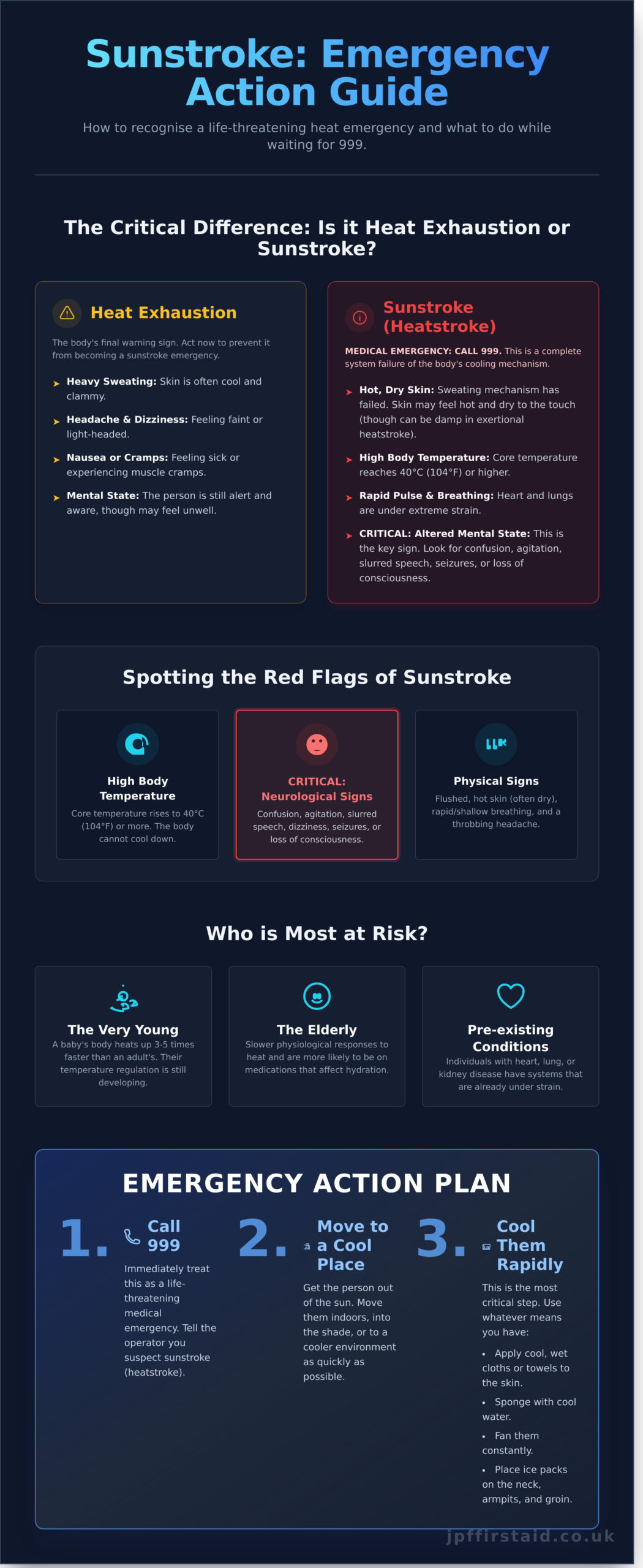
It’s vital to know the difference between heat exhaustion and sunstroke. Think of heat exhaustion as the body’s final warning sign, while sunstroke is a complete system failure. A person with heat exhaustion will likely be sweating heavily, but someone experiencing sun stroke may have hot, dry skin as their ability to sweat has failed. The most definitive red flag, however, is a change in mental state. If someone is confused, agitated, slurring their speech, or loses consciousness, you must treat it as a medical emergency.
Why UK Heatwaves are Increasingly Dangerous
Here in the UK, we’re not always prepared for extreme heat. Our homes and infrastructure are typically designed to retain heat, which becomes a significant problem during a heatwave. This is compounded by the ‘humidity factor’. When humidity is high, the sweat on your skin cannot evaporate effectively, robbing your body of its primary method for cooling down. This is why a humid 28°C day can feel far more dangerous than a dry 32°C day. Hyperthermia is a failure of thermoregulation, where the body absorbs more heat than it can release, reaching critical levels. Knowing how to respond gives you the confidence to act effectively when it matters most.
Spotting the Red Flags: Symptoms of Heatstroke
When the sun is high, knowing the difference between feeling a bit hot and a genuine medical emergency is vital. Sun stroke, also known as heatstroke, is a serious condition that requires immediate action. Recognising the symptoms quickly allows you to act with confidence while waiting for professional help to arrive.
The most telling signs involve a dangerously high body temperature (40°C or 104°F and above) and significant changes in the central nervous system. Look for:
- Physical Signs: Flushed, hot skin; rapid, shallow breathing; and a throbbing headache or nausea.
- Neurological Signs: These are the most critical clues. The person may become confused, agitated, or dizzy. They might slur their words, lose consciousness, or even have a seizure. These symptoms indicate the brain is being affected by the heat.
You might expect someone who is overheating to be sweating heavily, but this isn’t always the case. In classic heatstroke, the body’s temperature-regulating system fails, and the person may have hot, dry skin. This is a major red flag. However, if heatstroke is caused by intense exercise, the skin may still be damp.
Classic vs. Exertional Sunstroke
It’s helpful to know there are two main types. Classic sun stroke typically affects vulnerable people like the elderly or infants during a heatwave. Exertional heatstroke is caused by intense physical activity in hot weather and can affect even fit, healthy individuals. Regardless of the cause, the emergency response is the same: cool the person down as quickly and safely as possible.
Symptoms in Children and Infants
Young children are particularly at risk, as their bodies can heat up three to five times faster than an adult’s. Beyond the usual signs, look for extreme irritability, a refusal to drink, unusual lethargy, and a weak cry. Gaining the skills to handle these situations is key, which is why a dedicated paediatric first aid course can give you the confidence you need. Recognising these signs is the first crucial step, and knowing the correct Heatstroke: First aid response can make all the difference.
Who is Most at Risk? Identifying Vulnerability
While a heatwave can affect anyone, some people are far more susceptible to developing heat exhaustion and the more serious condition of sun stroke. Understanding these vulnerabilities is the first step in prevention, allowing you to take extra care of yourself and those around you. Key risk factors include:
- Age: The very young and the elderly have less efficient internal thermostats. A baby’s body is still developing its ability to regulate temperature, while older adults may have slower responses to heat changes and are more likely to be on medication.
- Pre-existing Conditions: If you live with heart, lung, or kidney disease, or conditions like diabetes, your body already works harder. Extreme heat adds significant strain, making it much more difficult to cope.
- Medications: Certain common drugs, such as diuretics (‘water pills’), beta-blockers for blood pressure, or some antidepressants, can interfere with your body’s natural cooling mechanisms or hydration levels.
- Occupation and Lifestyle: Those who work outdoors, like construction workers and gardeners, or in hot, poorly ventilated environments like kitchens or foundries, face a much higher daily risk.
The Role of the Workplace First Aider
As an employer, you have a legal duty under the Health and Safety at Work Act to ensure the welfare of your staff, which includes managing thermal comfort. A designated first aider, equipped with the right skills, is your first line of defence. Our practical Emergency First Aid At Work course prepares your team to confidently handle seasonal risks. Implementing simple measures, like scheduled ‘Heat Breaks’ and accessible hydration stations in your West Midlands workplace, can make a life-saving difference.
Sunstroke Risks in Schools and Nurseries
Protecting children is paramount. Nurseries and schools must be vigilant during warm weather, especially during sports days or outdoor play. It’s vital to manage activities to avoid the peak UV hours (11 am – 3 pm), create designated ‘cool zones’ in shaded areas, and enforce mandatory water breaks. Staff trained in paediatric first aid can spot the early signs of heat stress, such as irritability or flushed skin, and intervene long before it has the chance to escalate into a dangerous case of sun stroke. Knowing the correct first aid for heatstroke is an essential skill for anyone caring for children.
Immediate First Aid for Sunstroke: A Step-by-Step Response
When you suspect someone has sun stroke, you are dealing with a serious medical emergency. Your immediate actions while waiting for professional help can be life-saving. Stay calm, act quickly, and follow these practical steps to provide crucial first aid.
The goal is simple: call for help and cool the person down as fast as possible.
- Step 1: Call 999 Immediately. This is the most important step. When you call, state clearly that you suspect heatstroke or sunstroke. Give your precise location and answer the operator’s questions.
- Step 2: Move to a Cooler Place. Get the person out of direct sunlight without delay. Move them to a shaded area, an air-conditioned room, or the coolest available space.
- Step 3: Remove Excess Clothing. Loosen or remove tight or unnecessary clothing. This exposes as much of their skin to the air as possible, which helps the body to release heat.
- Step 4: Begin Rapid Cooling. Your aim is to lower their body temperature. You can do this by:
- Sponging or spraying them with cool (not cold) water.
- Covering them with a cool, damp sheet.
- Placing cold packs or wet cloths on their neck, armpits, and groin, where major blood vessels are close to the skin’s surface.
- Step 5: Fan Vigorously. While their skin is damp, fan them continuously. You can use a handheld fan, a piece of cardboard, or have others help. This airflow increases evaporation and speeds up the cooling process.
Managing an Unconscious Casualty
If the person loses consciousness, check that they are still breathing. If they are breathing normally, place them in the recovery position. This simple action is vital because it helps keep their airway open and clear, preventing them from choking if they vomit. Continue cooling them and monitor their breathing closely until the paramedics arrive.
What NOT to do in a Heat Emergency
Knowing what to avoid is just as important as knowing what to do. In a case of suspected sun stroke, please remember:
- Do NOT give aspirin or paracetamol. These medications are designed to fight fever from illness, not environmental heatstroke, and may cause harm.
- Do NOT give fluids to drink if the person is confused, vomiting, or losing consciousness, as this creates a serious choking risk.
- Do NOT use ice-cold water, especially for older casualties or children. The extreme cold can cause blood vessels to constrict, which traps heat, and may induce shivering that raises their core temperature.
Handling emergencies with confidence is a skill you can learn. Our practical, on-site training gives you the knowledge to act effectively when it matters most. Learn more about our first aid courses today.
Building Confidence: Why Training is the Best Prevention
Reading a guide on the signs of sun stroke is an excellent first step, but it’s only half the battle. When faced with a real emergency, theory can quickly be forgotten. This is the crucial difference between reading and doing; hands-on practice in a controlled training environment builds the muscle memory and calm assurance needed to act decisively when it matters most.
At JPF First Aid, we believe that learning life-saving skills shouldn’t be a chore. We make our courses engaging and fun, using practical scenarios that feel real but are completely safe. By moving beyond slideshows and creating an interactive atmosphere, we help you absorb and retain critical information, ensuring you know precisely what to do in a medical emergency.
This practical approach has a powerful psychological benefit: it helps overcome the “bystander effect.” When people feel uncertain, they often hesitate, assuming someone else will take charge. Our training empowers you with the skills and confidence to be that person who steps forward. You won’t just have a certificate; you’ll have the self-belief to apply your knowledge effectively.
For businesses, we make this essential training hassle-free. We offer bespoke, on-site first aid courses directly to your workplace in Birmingham, Cannock, and across the West Midlands, tailored to the specific risks your team might face.
Regulated Qualifications for Peace of Mind
When you train with us, you can be certain your qualification meets all legal requirements. Our courses are Ofqual regulated, providing you with a nationally recognised certificate. For designated workplace first aiders, our Level 3 qualification is the industry standard. Led by our expert mentor John Fogarty and his team, you’ll receive guidance that is not only compliant but also practical, reliable, and delivered with genuine care.
How to Book Your Course Today
Getting your team qualified is simple. We offer flexible training options to suit your needs, including classroom-based, blended learning, and on-site courses. You can book individuals onto our scheduled public courses or contact us for a private group quote tailored to your business. Take the most important step in protecting your team and your customers. Book your first aid training with JPF First Aid today.
From Awareness to Action: Your Next Step in Sun Safety
Understanding the dangers of extreme heat is the first step, but knowing how to act is what truly saves lives. We’ve covered the critical signs of heatstroke and the immediate steps you must take-like moving the person to a cool place and calling 999. Remember, swift, confident action is paramount when dealing with a medical emergency like sun stroke.
Reading a guide builds knowledge, but practical training builds the confidence to use it. As a multi-award-winning provider, our Ofqual regulated qualifications are delivered in an engaging and fun classroom atmosphere. We empower you with the hands-on skills to respond effectively when it matters most, turning uncertainty into decisive action.
Ready to build that confidence? Empower your team with life-saving skills-book a first aid course today and be the person who knows exactly what to do when it matters.
Frequently Asked Questions About Sun Stroke
Is sunstroke the same as heatstroke?
While the terms are often used interchangeably, there is a technical difference. Heatstroke is the broader medical term for a dangerously overheated body, which can be caused by various factors. Sunstroke is a specific type of heatstroke caused directly by prolonged, excessive exposure to the sun. In both cases, the body’s temperature control system fails, and it becomes a serious medical emergency requiring immediate action. Both conditions share the same life-threatening symptoms and first aid response.
Can you get sunstroke on a cloudy day?
Yes, you absolutely can. It’s a common misconception that cloud cover protects you completely. Harmful UV rays can penetrate clouds, and your body can still overheat due to high ambient temperature and humidity, even without direct, bright sunshine. Always be mindful of the temperature, how long you’re outdoors, and how you’re feeling, regardless of whether the sun is visible. Staying hydrated and taking regular breaks in the shade is crucial on any warm day.
What are the first signs of sunstroke to look out for?
The initial signs of sun stroke can develop quickly and should never be ignored. Look out for a throbbing headache, dizziness, confusion, and a lack of sweating despite the heat. The person may also feel nauseous, have muscle cramps, and develop a high body temperature (40°C or above). Their skin might feel hot and dry to the touch. Recognizing these early symptoms is key to getting the person help before their condition worsens significantly.
How long does it take to recover from sunstroke?
Recovery time depends entirely on the severity of the condition and how quickly treatment was administered. For milder cases of heat exhaustion that are caught early, a person might feel better within a day or two with rest and rehydration. However, severe sunstroke is a medical emergency that can require days or even weeks in hospital. It can cause damage to internal organs, and full recovery can sometimes take months. Prompt medical attention is vital.
Can sunstroke happen indoors?
By its strict definition, sunstroke is caused by the sun, so it typically occurs outdoors. However, the more general condition of heatstroke can certainly happen indoors. This is common in spaces without air conditioning or proper ventilation during a heatwave, such as a hot car, a stuffy flat, or a factory floor. The body overheats due to the high ambient temperature, leading to the same dangerous symptoms and requiring the same urgent medical response.
What should I do if someone with sunstroke stops breathing?
If someone stops breathing, it is a critical emergency. Your first action must be to call 999 immediately and clearly state that the person is not breathing. If you are trained in CPR, you should begin chest compressions and rescue breaths straight away. Continue CPR until the paramedics arrive and take over. This is a situation where having practical first aid training gives you the confidence and skills to provide life-saving assistance while waiting for help.
Is sunstroke a medical emergency even if the person is still conscious?
Yes, it is always a medical emergency. A person’s condition can deteriorate with alarming speed, even if they are conscious and talking. Sunstroke signifies that the body’s internal systems are failing, which can lead to seizures, organ damage, or loss of consciousness without warning. You should always call 999 for expert medical assessment. While you wait, focus on cooling the person down as quickly and safely as possible.
Should I give someone with sunstroke water to drink?
If the person is conscious, alert, and able to swallow, you can give them small sips of cool water. However, you must never try to force fluids if they are confused, drowsy, or unconscious, as this creates a serious risk of choking. Avoid caffeine or alcohol. The primary focus of first aid for sunstroke is rapid cooling of the body, so prioritise moving them to a cool place and applying cool water or wet cloths to their skin.
Recent Comments