

Why do some providers charge £95 for a course while others quote well over £300 for the same regulated qualification? If you’ve spent your morning scrolling through tabs of conflicting prices, you aren’t alone. It’s frustrating to find a rate that looks perfect, only to discover hidden fees for certificates or manuals at the final checkout. You simply want to know how much does first aid training cost uk wide in 2026 so you can protect your team without overstretching your budget.
We agree that pricing should be as straightforward as the life-saving skills we teach. This guide provides a transparent breakdown of 2026 market rates, showing you exactly what to expect for individual places and how to unlock substantial savings through group bookings. You’ll gain the clarity needed to choose a regulated provider who makes training engaging rather than a clinical chore. We’ll walk through the specific costs for EFAW and FAW certifications, highlight the common hidden extras to avoid, and explain how on-site training can slash your overall investment while building genuine confidence in your staff.
Key Takeaways
- Understand how much does first aid training cost uk in 2026, with typical individual delegate rates ranging from £110 to £260 depending on the specific qualification required.
- Learn the key factors that drive pricing, from course duration and trainer expertise to the essential differences between regulated Ofqual qualifications and non-regulated options.
- Compare pricing across workplace, paediatric, and mental health first aid to ensure you are meeting specific legal requirements like Ofsted or EYFS standards.
- Identify potential “hidden” costs such as VAT, certification fees, and manuals to ensure the price you are quoted is transparent and fits your budget.
- Discover the long-term value of investing in engaging, high-quality training that builds life-saving confidence while protecting your business from the high costs of non-compliance.
The Baseline: Average Costs for UK First Aid Courses in 2026
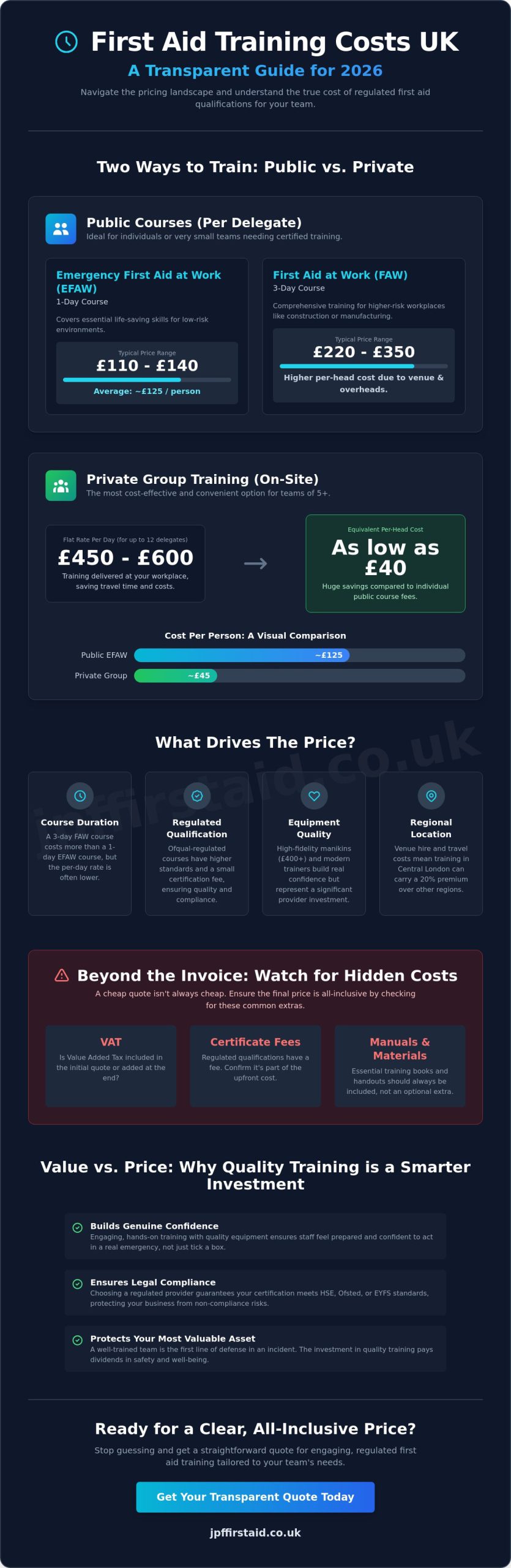
When you’re looking to book a course, the first question is usually how much does first aid training cost uk businesses and individuals. In 2026, general price ranges for individual delegates typically fall between £110 and £260 depending on the specific qualification and course length. These figures reflect the latest training standards and the rising administrative costs associated with maintaining high-quality, regulated certifications. Whether you’re a small business owner or a professional looking to upskill, understanding these baseline figures helps you budget effectively for safety compliance. On average, a 1-day Emergency First Aid at Work course in the UK costs approximately £125 per person in 2026.
The total price you pay often depends on the delivery model you choose. Public courses charge a “per-person” fee, which is ideal for individuals or very small teams. However, if you have a group of five or more staff members, a “flat-rate” private quote usually offers better value. This distinction is vital for managing your training budget while ensuring your team gains the confidence to act in an emergency. We believe that professional training should be accessible and straightforward, allowing you to focus on learning life-saving skills without hidden financial surprises.
Individual Delegate Fees for Public Courses
For those attending a public session, you should expect to pay between £110 and £140 for a 1-day Emergency First Aid at Work (EFAW) session. If your workplace requirements demand the more comprehensive 3-day First Aid at Work (FAW) course, prices usually range from £220 to £350. These fees are higher on a per-head basis because they include the cost of venue hire, specialized equipment maintenance, and the trainer’s travel overheads. Learning the core First aid principles in a public setting is an excellent way to gain regulated qualifications while meeting professionals from other industries. It’s a structured, reliable way to ensure you’re fully compliant with Health and Safety Executive (HSE) guidelines.
The Flat-Rate Advantage of Private Group Training
If you have a team to train, private on-site sessions are often the most cost-effective and convenient choice. These sessions typically start from £450 to £600 per day for up to 12 delegates. By choosing a group rate, you can reduce the per-head cost to as low as £40 or £50, which is a significant saving compared to public fees. This model provides a “hassle-free” solution where the training comes to you, delivered right at your own business premises. It eliminates staff travel time and ensures the practice scenarios are tailored to your specific work environment. It’s an engaging and fun way to build team confidence while keeping your how much does first aid training cost uk queries answered with clear, transparent pricing.
Key Variables: What Actually Drives the Price of First Aid Training?
Understanding how much does first aid training cost uk requires looking under the bonnet of the training provider’s operations. You’ll find that several factors influence your final quote, ranging from the length of the session to the location of the classroom. For instance, a 3-day First Aid at Work course isn’t simply triple the price of a 1-day Emergency First Aid session. Providers have fixed overheads like insurance, equipment maintenance, and admin that apply regardless of the course length. When these costs are spread over three days, the “per day” rate often drops, providing better value for comprehensive training.
Equipment quality also plays a massive role in the price you pay. High-fidelity manikins that provide real-time feedback and modern AED trainers are significant investments for a provider. A single professional-grade manikin can cost upwards of £400, and a full kit for a class of twelve can exceed £4,000. These tools are essential for building your confidence, as they allow you to feel exactly how much pressure is needed for effective CPR. Regional price weighting also shifts the needle. Due to venue hire and travel costs, training in Central London often carries a 20% premium compared to rates in the North of England or the Midlands.
Regulated Qualifications vs. Attendance Certificates
You’ll often choose between “regulated” qualifications and “attendance” certificates. Regulated courses are overseen by awarding organisations like Ofqual. These carry a small additional fee, usually between £5 and £15 per person, to cover registration and the physical certificate. While non-regulated training might seem like a bargain, it carries hidden risks. Under the Health and Safety (First-Aid) Regulations 1981, employers must ensure their training provider is competent. Regulated courses provide a “hassle-free” audit trail, meaning you don’t have to spend hours performing due diligence on the trainer’s curriculum or qualifications to satisfy an inspector.
Calculating the Break-Even Point for Your Team
For many businesses, the “magic number” is four. If you need to train four or more staff members, booking a private, on-site session is almost always more cost-effective than sending individuals to an external public course. When you send staff away, you aren’t just paying the course fee. You’re also paying for their travel time, mileage, and potentially lunch expenses. By having a trainer come to you, you eliminate these extras and keep your team in a familiar environment. This approach allows for a bespoke experience where the trainer can focus on your specific industry risks, whether that’s heavy machinery in a factory or paediatric emergencies in a nursery. If you’re unsure which route is best for your workplace, our team can help you find bespoke first aid solutions that fit your budget and compliance needs.
Pricing Breakdown by Qualification Type
The total you’ll pay for training depends on the specific risks in your environment and the level of responsibility your staff will hold. When calculating how much does first aid training cost uk, you have to look at the duration and depth of the syllabus required by law. A basic course for a small office costs significantly less than a comprehensive medical qualification for a construction site foreman or a nursery manager.
Workplace Compliance: EFAW vs. FAW
Most UK businesses choose between Emergency First Aid at Work (EFAW) and the full First Aid at Work (FAW) qualification. An EFAW course lasts one day and typically ranges from £70 to £120 per person. It’s ideal for low-risk settings. If your business operates in a high-risk sector like manufacturing or heavy engineering, you’ll likely need the 3-day FAW course, which costs between £180 and £300. Understanding your legal obligations for first aid at work is the first step in choosing the right path and avoiding unnecessary spending.
You can keep costs down by managing your renewals effectively. Re-qualification courses for the 3-day FAW certificate usually take two days and cost about 25% less than the initial training, provided you renew before your current certificate expires. Many savvy managers also look for bundling opportunities. Combining your session with fire marshal training often reduces the total daily rate per head and minimizes staff downtime. It’s a practical way to tick two compliance boxes in a single booking.
Specialist Training: Paediatric and Mental Health
Paediatric training is a strict requirement for the early years sector. These courses must meet Ofsted and EYFS standards, which adds a layer of regulatory oversight to the price. Expect to pay between £100 and £160 per person for a full 12-hour paediatric certificate. Our paediatric first aid course Cannock is a benchmark for regulated childcare training. It provides the exact blend of practical skills and compliance that nursery managers and childminders need to stay legal and confident.
The market for mental health first aid is growing rapidly as more businesses recognize the value of emotional support. These courses often command a premium because of the specialized nature of the instructors. A full 2-day qualification usually costs between £200 and £350. To save money, some organizations opt for distance learning modules for the theoretical awareness parts. This can lower the per-head cost by 15% to 20% compared to fully face-to-face classroom sessions while still delivering the core knowledge your team needs to support their colleagues.
Beyond the Invoice: Hidden Costs and Budget-Saving Strategies
When you start comparing quotes, calculating how much does first aid training cost uk requires looking past the initial sticker price. A headline figure of £250 might seem like a bargain; however, additional fees can quickly push that total higher. You need to know exactly what your invoice covers to ensure your business stays compliant without overspending your annual safety budget.
VAT is the most common surprise for many small business owners. Most commercial training providers must charge the standard 20% VAT. If a quote is “plus VAT,” a £500 group booking actually costs you £600. Always confirm if the price is inclusive before you commit. You should also check if the price includes the physical training manual and the regulated certificate. Some providers charge an extra £10 to £15 per person for these essential items, which adds up fast if you’re training a team of twelve.
Downtime represents the largest “hidden” expense. If you send an employee on a three-day First Aid at Work course, you aren’t just paying the course fee. You’re also paying their salary while they aren’t working. If an staff member earns £150 per day, that’s £450 in lost productivity. This is why blended learning has become the gold standard for efficiency. By moving the theory portion online, you can reduce classroom time by up to 33%, saving your business significant money while keeping your team’s skills sharp.
Watch Out for These Hidden Extras
Budget carefully for logistics. If you book an on-site course but your office is in a remote location, trainers may charge for travel and subsistence. Standard HMRC mileage rates of 45p per mile are common additions. Don’t forget the cost of failure; ask if re-sits are included. While 98% of learners pass our engaging sessions first time, some providers charge full price for a second attempt if a student struggles with the practical assessment.
Smart Ways to Reduce Your Training Spend
- Bundle your requirements: Booking your annual First Aid, Fire Safety, and Manual Handling training as a single package can often trigger “bundle discounts” of 10% or more.
- Switch to blended learning: This approach cuts a three-day course down to just one or two days in the classroom, which reduces your total expenditure on staff cover by roughly 30%.
- Host a community course: If you only have two staff members who need training, talk to the business next door. By partnering with neighbours to fill a private 12-person course at your premises, you can split the daily trainer rate and lower the cost per head significantly.
We believe that high-quality training should be transparent and accessible. If you want a clear, all-inclusive quote that builds your team’s confidence without any hidden surprises, contact JPF First Aid today for a bespoke training solution.
Value vs. Price: Why Regulated Training is a Smarter Investment
When you are researching how much does first aid training cost uk, it is tempting to simply pick the cheapest quote on the list. However, price and value are rarely the same thing in health and safety. Choosing a provider based solely on a low headline figure can leave your business vulnerable to the high costs of non-compliance. In 2023/24, the HSE issued £43.9 million in total fines to businesses for safety failings. Compared to those figures, the investment in high-quality, regulated training is a fraction of the potential legal cost.
Regulated training ensures your staff meet the necessary standards to actually save a life when it matters most. It’s about more than just a certificate; it’s about the confidence to act under pressure. At JPF First Aid, we believe that training should be practical and focused on the skills that make a difference in those first vital minutes of a medical emergency.
The ROI of a Confident First Aider
Investing in emergency first aid at work training provides a tangible return on investment by reducing the severity of workplace accidents. According to HSE data, 35.2 million working days were lost due to work-related ill health and non-fatal injuries in 2022/23. A confident first aider can often manage a minor incident on-site, preventing it from escalating into a major medical emergency that requires long-term sick leave or costly litigation.
Beyond the balance sheet, there’s a significant morale boost for your team. When employees see that you’ve invested in their wellbeing with high-quality training, it builds trust. They feel safer knowing that their colleagues are equipped to help them if something goes wrong. This peace of mind is an intangible benefit that cheap, “tick-box” exercises simply cannot provide.
Choosing JPF First Aid for National Excellence
We’ve all sat through “death by PowerPoint” sessions that leave learners checking their watches. JPF First Aid takes a different approach. Our award-winning training is designed to be engaging and fun, stripping away the clinical jargon to focus on hands-on experience. We want your team to leave feeling empowered, not exhausted. We make the process easy for you by offering hassle-free, on-site group sessions across the UK. We come to your venue, work around your schedule, and ensure your business stays compliant without the stress.
Before you make a final decision based on how much does first aid training cost uk, use this checklist to ensure you’re getting true value:
- Regulation: Is the training Ofqual regulated?
- Engagement: Does the provider promise a practical, hands-on experience?
- Convenience: Can they come to your site to save you travel costs?
- Expertise: Are the trainers experienced professionals who can answer real-world questions?
- Support: Is the booking process straightforward and transparent?
Don’t settle for the lowest bid when lives and legal compliance are on the line. Choose a partner that prioritizes your team’s confidence and your company’s safety. Get a bespoke group training quote from JPF First Aid today.
Invest in Life-Saving Skills for Your Workplace
Navigating the 2026 landscape of health and safety requires a balance between your budget and the quality of instruction. You’ve seen that while basic courses might start at a lower price point, the real value lies in Ofqual regulated qualifications that guarantee legal compliance. Factors like group size and on-site delivery will influence your final quote, but choosing an accredited provider ensures you don’t face hidden retraining fees later. Understanding how much does first aid training cost uk helps you plan your annual budget, but the true return on investment is the confidence your team gains to save a life.
At JPF First Aid, we believe training shouldn’t be a dry box-ticking exercise. As a multi-award-winning provider, we deliver expert-led sessions that are practical, relaxed, and tailored to your specific environment. We focus on building genuine skills so your staff feel ready to act when it matters most. You’ll get high-quality, regulated certification that meets all HSE requirements without the stress.
Book your engaging and fun first aid training with JPF First Aid today to ensure your workplace is safe, compliant, and prepared for any emergency. We’re here to help you turn a legal requirement into a positive, life-changing experience for your team.
Frequently Asked Questions
How much does a 1-day first aid course cost in the UK?
A 1-day Emergency First Aid at Work course typically costs between £70 and £120 per person when booking an individual place. These prices vary depending on your location and whether the training provider is a national organisation or a local independent specialist. When you consider how much does first aid training cost uk wide, remember that this fee usually includes your manual, certification, and all practical equipment used during the day.
Is it cheaper to do first aid training online?
Online first aid courses are often cheaper, with prices ranging from £20 to £50, but they rarely meet HSE or Ofsted compliance standards for workplace first aiders. Most UK regulations require a practical, face-to-face assessment to ensure you can perform life-saving techniques like CPR correctly. While digital theory is a helpful introduction, hands-on training gives you the “can-do” attitude and physical skills needed for real emergencies.
How much is a paediatric first aid course for Ofsted?
A full 12-hour Paediatric First Aid course designed for Ofsted registration typically costs between £100 and £170 per person. You can choose between a 2-day classroom session or a blended learning option to suit your schedule. These courses cover specific emergencies involving infants and children, ensuring you meet the 2024 EYFS statutory framework requirements for early years settings and schools.
Do first aid course prices include VAT?
Whether first aid course prices include VAT depends entirely on the training provider’s tax status. Large national training organisations almost always add 20% VAT to their advertised rates, whereas many smaller, local providers aren’t VAT registered. This can make a significant difference to your total bill if you’re an individual or a non-VAT registered charity. Always check if the quoted price is inclusive or plus VAT before you confirm your booking.
Can I save money by booking a group first aid session?
Booking a group session is the most cost-effective way to train your team, as daily rates often range from £400 to £600 for up to 12 learners. This significantly reduces the cost per person compared to individual bookings at a public venue. We come to your site, making the process hassle-free and tailored to your specific environment. It’s a great way to build collective confidence while keeping your “how much does first aid training cost uk” budget under control.
What happens if I need to renew my first aid certificate?
To renew a 3-year First Aid at Work certificate, you’ll need a 2-day requalification course, which usually costs between £120 and £190. You must complete this before your current certificate expires to remain legally compliant. For the 1-day Emergency First Aid at Work qualification, there isn’t a shorter “refresher” version. You simply attend the standard 1-day course again every three years to keep your skills sharp and your knowledge current.
Are there any grants available for first aid training in the UK?
Grants for first aid training are sometimes available through specific industry bodies like the CITB for construction firms or via local council “Skills Support” initiatives. Some small businesses in England have accessed up to 100% funding for staff development through regional growth hubs or the European Social Fund. It’s worth checking with your local Chamber of Commerce to see what financial support is currently open to your business.
Is a more expensive first aid course always better?
A higher price tag doesn’t guarantee better training; the key is ensuring the course leads to a regulated qualification. You’re looking for training you can trust, so check that the provider is accredited by an awarding body like Qualsafe or FAQ. The best value comes from instructors who make the sessions engaging and fun while focusing on practical, life-saving competence rather than just reading from a slide deck.
Recent Comments