

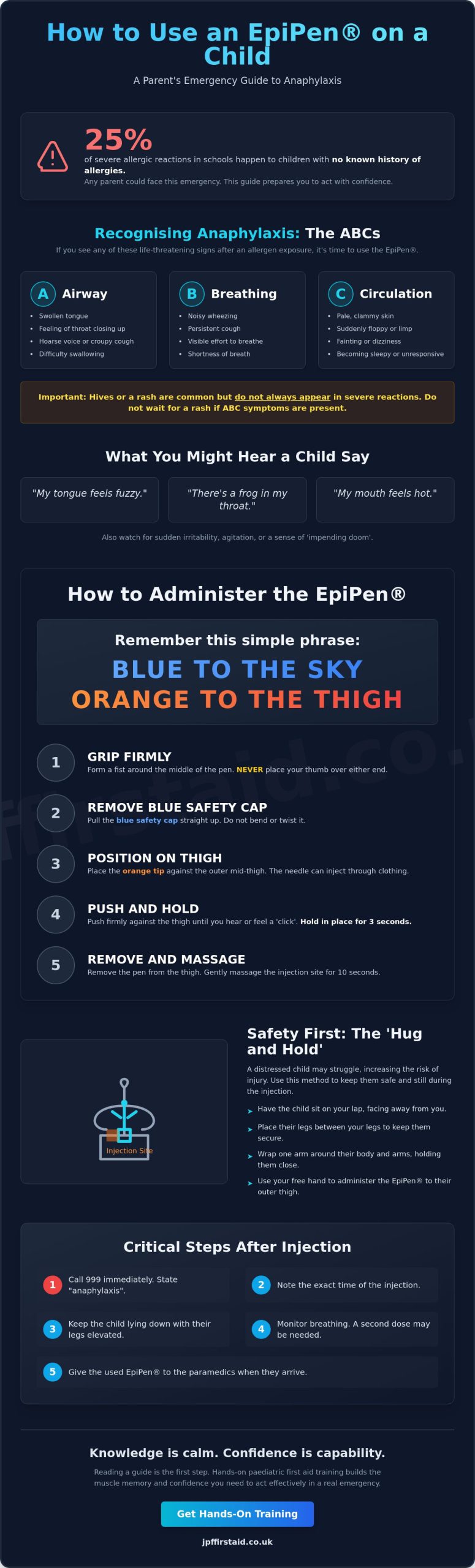
Did you know that 25% of severe allergic reactions in schools happen to children with no known history of allergies? This startling figure means that any parent or carer could suddenly find themselves needing to know how to use an epipen on a child without a moment’s notice. It’s perfectly natural to feel a wave of anxiety when you look at that device in your medical kit. You might worry about misidentifying the symptoms of anaphylaxis or feel a deep fear of causing your child pain with the needle during a high-stress crisis.
We understand that in a high-pressure emergency, your main goal is to protect your little one while staying as calm as possible. This guide is designed to replace that panic with a sense of quiet confidence. You’ll learn the exact, safe steps to administer the injection, how to recognize the tell-tale signs of a severe reaction, and what essential steps to take during the critical recovery window after the shot. We’ll walk through a clear, memorable sequence of actions that ensures you’re ready to act as a capable, steady hand when it matters most.
Key Takeaways
- Learn to identify the critical ‘ABCs’ of anaphylaxis so you can spot the signs of a severe allergic reaction before every second counts.
- Master the ‘Blue to the Sky, Orange to the Thigh’ mnemonic to gain clarity on exactly how to use an epipen on a child when you’re under pressure.
- Discover the ‘Hug and Hold’ positioning method to safely steady a struggling child and prevent needle injuries during the injection.
- Understand the immediate steps to take after the shot, including how to communicate with emergency services and monitor for secondary reactions.
- Find out how hands-on paediatric training can bridge the gap between reading a guide and feeling truly capable in a real-life emergency.
Recognising Anaphylaxis in Children: When to Reach for the EpiPen
Anaphylaxis is more than just a standard allergic reaction. It’s a severe, life-threatening systemic response that affects the entire body. While a mild allergy might cause a few itchy spots, anaphylaxis moves quickly and can compromise a child’s ability to breathe or maintain a steady heartbeat. Understanding how to use an epipen on a child begins with the confidence to recognise this emergency the moment it starts. You don’t need to be a doctor to identify the danger; you just need to know what to look for.
First aid experts use the ‘ABC’ method to categorise these life-threatening signs. Airway issues include a swollen tongue or a sensation of the throat closing up. Breathing problems often appear as noisy wheezing, a persistent cough, or visible effort to take a breath. Circulation refers to the child’s heart and blood pressure; they might look pale, feel clammy, or suddenly become floppy and faint. If you notice any issues in these three areas after your child has been exposed to a known or suspected trigger, it is time to act.
One of the biggest mistakes people make is waiting for a visible rash to appear. While hives are common, they don’t always show up during a severe reaction. If you wait for ‘certainty’ or for a rash to spread, you may lose precious minutes. Using an Epinephrine autoinjector is a safe and necessary step when ABC symptoms are present. It’s always better to administer the medication and let the paramedics take over than to hesitate while a reaction worsens.
How Children Describe an Allergic Reaction
Young children often lack the vocabulary to say they’re having an allergic reaction. Instead, they use descriptive, sensory language. You might hear them say “my tongue feels fuzzy” or “there’s a frog in my throat.” Some kids might complain that something is stuck or that their mouth feels “hot.” Pay close attention to sudden behavioural shifts too. A child might become unusually irritable, agitated, or go strangely quiet. Older children may even express a sense of ‘impending doom’, a genuine feeling that something is very wrong, which is a significant clinical sign of anaphylaxis.
Skin, Stomach, and Respiratory Signs
While the ABCs are your priority, other physical signs can point toward a systemic reaction. Look for widespread redness or swelling of the lips and eyes. Interestingly, the gut is often involved in anaphylaxis. Sudden vomiting or intense abdominal pain after an allergen exposure is considered a systemic symptom and should be taken seriously. From a respiratory perspective, listen for a hoarse voice or a cough that sounds ‘croupy’. These are clear indicators that the airway is becoming restricted, meaning you should follow the steps for how to use an epipen on a child immediately.
Step-by-Step Guide: How to Administer an EpiPen to a Child
When you’re facing an emergency, your brain can feel like it’s moving in slow motion. That’s why we use the simple mnemonic: ‘Blue to the Sky, Orange to the Thigh.’ This phrase is your anchor. It ensures that even in a moment of high stress, you know exactly which way the device should face. Learning how to use an epipen on a child is less about medical expertise and more about following a calm, structured sequence of actions.
Adrenaline is a powerful medication, and the EpiPen is designed to deliver it quickly and safely into the large muscle of the thigh. This site is chosen because it allows the medication to enter the bloodstream rapidly while staying clear of bones or major joints. By following the steps below, you’ll ensure the child receives the full dose they need to reverse the symptoms of anaphylaxis.
Preparing the Child and the Pen
Your first move is to get a firm grip. Wrap your hand around the middle of the device in a solid fist. It’s vital that you never put your thumb over either end. If the pen is upside down and you accidentally trigger it with your thumb, you’ll receive the adrenaline instead of the child. Once your grip is secure, pull the blue safety cap straight up. Don’t bend or twist it; a clean, vertical pull is all it takes to prime the device for use.
While you prepare the pen, try to keep the child as still as possible. The orange tip is where the needle will emerge, and this must be pointed toward the outer mid-thigh. You don’t need to remove their clothing; the needle is designed to fire through denim or school trousers easily. If you’re feeling unsure, remember that many parents find that practising with a trainer device during a first aid course builds the muscle memory needed to act without hesitation.
The Injection Process
Hold the EpiPen at a 90-degree angle to the outer thigh. You don’t need to swing your arm from a distance; simply place the orange tip against the leg and push firmly. You’ll hear a distinct ‘click’ when the spring-loaded needle activates. This sound is your confirmation that the process has started. Keep the pen held firmly in place for a full three seconds. Counting ‘one-one-thousand, two-one-thousand, three-one-thousand’ at a steady pace ensures the medication is fully delivered.
Once you’ve finished the count, pull the pen straight out. The orange cover will automatically extend to safely shield the needle. To finish, use your hand to massage the injection area for about 10 seconds. This helps the adrenaline absorb into the muscle more effectively. Keep the used device nearby so you can give it to the ambulance crew when they arrive, as they’ll need to record the exact time the dose was given.
Safety and Positioning: Managing a Distressed Child
Most guides on how to use an epipen on a child assume the patient will sit perfectly still. In reality, a child experiencing anaphylaxis is often terrified, confused, and physically struggling. This distress can make the injection feel much more daunting for a parent or carer. Your priority is to ensure the needle enters the muscle safely without “flicking” or scratching the skin due to sudden movement. Using your own body weight to create a stable environment is the most effective way to manage this tension.
The “Hug and Hold” method is a reliable technique for solo carers. By sitting the child on your lap and wrapping your legs around theirs, you can immobilise their lower body while leaving the outer thigh accessible. If a second adult is present, ask them to focus entirely on steadying the child’s shoulders and providing verbal comfort. This allows you to focus solely on the injection site. Remember that you must only ever inject into the outer mid-thigh. Never attempt to inject into a vein, the buttock, or the hands and feet. The adrenaline needs the large muscle of the thigh to be absorbed correctly and safely.
You can successfully administer the dose through clothing, which saves vital seconds. However, take a split second to feel for obstructions. Thick seams, zips, buttons, or items in pockets like toy cars or coins can block the needle or cause it to bend. A quick swipe of the hand over the thigh ensures the path is clear before you commit to the firm, decisive movement required to trigger the device.
Physical Restraint Techniques for Carers
To perform a safe restraint, sit on the floor or a firm chair with the child facing away from you. Wrap your non-dominant arm around their torso and use your legs to pin their legs down. This “sandwich” position prevents them from kicking out when they feel the initial sting. If you’re working with a second person, they should stay at the child’s head level to keep them calm. A firm and quick movement is essential. Hesitation often leads to more distress for the child, so aim for a swift, confident action to get the medication delivered as fast as possible.
Avoiding Common Administration Errors
The most frequent error occurs during the initial moments of panic. You must never flip the blue safety cap off with your thumb. If the pen is held the wrong way, this action can cause an accidental discharge into your own finger, leaving you unable to help the child. If you push the pen against the leg and it doesn’t click, don’t keep pushing. Pull it back and check the blue safety cap again. It must be pulled straight up and completely removed for the internal spring to work. If the needle fails to deploy, stay calm, re-check the cap, and try again with a firmer jab.
After the Injection: Emergency Protocol and Recovery
Administering the dose is a huge milestone, but the emergency isn’t over yet. Once you’ve completed the steps for how to use an epipen on a child, you must immediately shift your focus to professional medical support. Dial 999 or 112 right away. Even if the child seems to recover instantly, the adrenaline is only a temporary measure. When the operator answers, clearly state the word “Anaphylaxis” (pronounced anna-fill-axis). This specific term triggers a high-priority response, ensuring an ambulance is dispatched with the right equipment to handle a severe systemic reaction.
Keep the used device in your hand or close by. The paramedics will need to see it to verify the dose and the exact time it was given. While you wait for help to arrive, stay close and offer constant reassurance. Your calm presence is just as important as the medication itself. To feel fully prepared for these high-stakes moments, consider booking one of our Emergency Paediatric First Aid courses, where we practice these scenarios in a relaxed, hands-on environment.
The Recovery Position for Anaphylaxis
How you position your child after the injection is critical and often overlooked. You should lay the child flat on their back and raise their legs. This position helps maintain blood pressure and ensures blood flow reaches the heart and brain. There’s one exception: if the child is struggling to breathe or is vomiting, you can sit them up slightly or turn them onto their side to keep the airway clear. However, you must never allow the child to stand up or walk, even if they claim to feel better. Standing can cause a sudden, dangerous drop in blood pressure that leads to heart complications.
Monitoring for a Second Wave
Adrenaline works fast, but its effects can wear off. You need to watch for a “biphasic” reaction, which is when symptoms return after an initial period of improvement. This second wave can happen even hours later, which is why every child who receives adrenaline must be observed in a hospital for at least four to six hours. If the child’s symptoms don’t improve or if they begin to worsen again after 5 to 15 minutes, you should administer a second EpiPen in the opposite leg. Following the same protocol for how to use an epipen on a child ensures the second dose is just as effective as the first.
Building Confidence: Why Paediatric First Aid Training is Essential
Reading a guide is a vital first step, but it’s only the beginning of your journey toward emergency readiness. Knowledge alone doesn’t always translate into action during a crisis. True confidence comes from the physical act of practicing the movements until they become second nature. Learning how to use an epipen on a child is an empowering skill that stays with you, but it requires a bridge between theory and the real world. You want your hands to move automatically even when your heart is racing.
Preparation also involves your daily habits. Many parents adopt the “Phone, Keys, Wallet, EpiPen” mantra before leaving the house. This routine ensures the device is never left behind in a different bag or at home. You should also create a formal Allergy Action Plan. This document includes your child’s photo, their specific triggers, and clear instructions for carers. It should be kept with the medication and shared with every nursery, school, or club your child attends. This clear communication removes the guesswork for others who might be responsible for your child’s safety.
Moving from Theory to Practice
Trainer devices are one of the best tools for building confidence. These are needle-free replicas that allow you to practice the “Jab and Hold” technique without any risk or cost. Using these trainers helps build muscle memory, ensuring you won’t hesitate when a real emergency occurs. It’s also a great way to educate the whole family. Siblings, grandparents, and babysitters should all know how to use an epipen on a child so that a safety net exists wherever the child goes.
We recommend refreshing your essential life-saving skills at least once a year. Skills can fade over time, and a quick refresher ensures you stay up to date with the latest protocols. Our paediatric first aid training sessions are designed to be interactive and relaxed. We focus on practical application rather than just theory, giving you the chance to ask questions and handle the equipment in a supportive environment.
Legal and Compliance Requirements for Schools
Schools have a unique responsibility when it comes to allergy management. Under current UK guidance, schools can keep “spare” adrenaline auto-injectors for use in emergencies. This is a vital safety net, especially since 25% of severe reactions in schools occur in children with no prior allergy diagnosis. Programs like the EpiPen4Schools initiative provide up to four free auto-injectors to qualifying schools annually, ensuring they are prepared for the unexpected.
JPF First Aid supports these national safety standards by providing tailored training for childcare providers and school staff. Having a designated first aider who is confident in anaphylaxis management is a legal requirement in many settings, but it’s also a moral one. We help teams move beyond simple compliance to a place of genuine competence. This ensures that every child in their care is protected by a team that knows exactly how to act when every second counts.
Empower Yourself with Practical Life-Saving Skills
You now have the foundational knowledge to recognise the critical ‘ABC’ signs of anaphylaxis and follow the ‘Blue to the Sky, Orange to the Thigh’ protocol. By understanding the importance of proper positioning and the ‘Hug and Hold’ technique, you’ve taken a significant step in overcoming the anxiety that often surrounds medical emergencies. However, reading about how to use an epipen on a child is just the beginning of your journey toward true competence.
Real confidence is built through hands-on practice in a supportive environment. As a multi-award-winning training provider, we specialise in delivering Ofqual regulated first aid qualifications that focus on real-world application. Our expert instruction ensures you leave with more than just a certificate; you’ll leave with the psychological empowerment to act decisively when your child needs you most. Book a Paediatric First Aid Course to build your life-saving confidence today. You don’t have to face these fears alone. We’re here to help you become the steady hand your family relies on.
Frequently Asked Questions
Can I use an EpiPen through a child’s clothing?
Yes, you can safely administer the injection through most common fabrics. The needle is specifically designed to penetrate materials like denim, school uniforms, and thick leggings without losing its effectiveness. Before you jab, do a quick sweep with your hand to ensure you aren’t hitting a thick seam, a zip, or a bulky item like a toy or coins in the child’s pocket.
What happens if I accidentally inject an EpiPen into my own thumb?
You must seek immediate emergency medical treatment at the nearest A&E if this happens. Adrenaline is a powerful vasoconstrictor, which means it can dangerously restrict blood flow to small areas like fingers or thumbs. While you wait for help, try to stay calm and ensure another adult takes over the care of the child who is experiencing the original allergic reaction.
Do I still need to call 999 if the child feels better after the injection?
Yes, you must always call 999 or 112 after using adrenaline. Even if the child appears to have recovered fully, the effects of the medication are temporary and symptoms can return in a second wave. Paramedics need to assess the child and transport them to a hospital, where they’ll typically be observed for at least four to six hours to ensure their safety.
What is the difference between an EpiPen and an EpiPen Jr?
The primary difference is the amount of adrenaline contained within the device. Part of knowing how to use an epipen on a child is ensuring you have the correct dose for their body weight. The EpiPen Jr delivers 0.15 mg of adrenaline and is intended for children weighing between 15kg and 30kg. The standard EpiPen delivers 0.3 mg and is for those weighing over 30kg.
How long do I need to hold the EpiPen against the child’s thigh?
You need to hold the device firmly against the outer thigh for exactly three seconds. This ensures that the full dose of adrenaline is successfully delivered into the muscle. Use a steady, audible count like “one-one-thousand, two-one-thousand, three-one-thousand” to keep yourself on track. Once the count is finished, you can safely remove the device and begin massaging the area.
What should I do if I accidentally hit a bone during injection?
Complete the injection as planned and follow all standard post-injection protocols. The needle is designed to deliver medication into the muscle, and while hitting a bone is rare when targeting the outer mid-thigh, it won’t prevent the adrenaline from working. Focus on keeping the child still and ensuring the emergency services are on their way to provide a professional assessment and further care.
Can a child be taught to use an EpiPen on themselves?
Yes, many children can learn how to use an epipen on a child themselves as they gain maturity and coordination. Most experts suggest introducing this skill between the ages of 7 and 12, depending on the individual child’s development. Teaching them to self-administer builds their confidence and provides an extra layer of safety for times when they might be away from their primary carers.
How do I know if an EpiPen has expired or is still safe to use?
Check the expiration date printed on the side of the device and inspect the liquid through the clear viewing window. The adrenaline should be completely clear and colourless. If the liquid looks cloudy, discoloured, or contains any visible particles, the pen isn’t safe and needs to be replaced immediately. It’s a good habit to set a calendar reminder a month before the expiry date arrives.
Recent Comments