

That late-night fever. The unusual cry. The sudden rash. As a parent or first aider, your mind immediately races: is this just a common bug, or could it be something more serious? The fear of mistaking a life-threatening illness for the flu is a heavy weight, leaving you second-guessing every decision. This guide is here to lift that weight. Understanding the specific meningitis symptoms is the first step towards acting with confidence, not fear. We know the anxiety that comes with assessing a sick child or adult, which is why we’ve created this clear, practical guide to help you tell the difference.
In the moments that matter, clarity is everything. Here, you will find a straightforward checklist of early warning signs across all ages-from babies to adults. We’ll show you exactly what to look for, how to perform simple checks like the glass test, and provide the crucial next steps to take in an emergency. Our goal is simple: to replace your uncertainty with the calm, life-saving confidence you need to make the right call, right away. Let’s get you prepared.
Key Takeaways
- Understand the “classic triad” of symptoms in adults and older children to help you act quickly in an emergency.
- Discover why the signs in babies are different and learn to recognise the one specific cry that should never be ignored.
- Learn a common myth about the meningitis rash and why waiting for it to appear before acting on other meningitis symptoms can be a fatal mistake.
- Get a clear, step-by-step first aid plan for what to do if you suspect meningitis, including exactly what to say when you call 999.
What is Meningitis and Why is Early Recognition Critical?
Meningitis is a serious infection that causes inflammation of the protective membranes-called the meninges-that surround your brain and spinal cord. While the term may sound familiar, understanding its potential severity is the first step towards protecting yourself and your loved ones. Recognising the early meningitis symptoms is not just important; it can be the difference between a full recovery and life-altering complications. For a comprehensive overview of meningitis and its causes, it’s clear that swift action is paramount.
This urgency is often referred to as the “Golden Hour.” When it comes to bacterial meningitis, receiving treatment within the first few hours significantly reduces the risk of long-term damage, such as hearing loss, brain injury, or even limb loss. Even now, in 2026, with fantastic advances in medicine and robust UK vaccination programmes, cases still occur. Staying vigilant and trusting your instincts is as crucial as ever.
Bacterial vs. Viral Meningitis: What You Need to Know
Meningitis is primarily caused by either a virus or bacteria. In the initial stages, the symptoms can look almost identical, often starting with a fever, headache, and feeling unwell. However, bacterial meningitis is a life-threatening medical emergency that can become critical within hours. Because you cannot tell the difference at home, our advice is clear: treat any suspected case as bacterial meningitis until a doctor proves otherwise.
The Speed of Progression
One of the most dangerous aspects of meningitis is how quickly it can progress. A person can go from feeling a bit “off” or having flu-like symptoms to being critically ill in a very short space of time. Waiting at home to see if more “classic” symptoms develop, like the well-known rash, is a risk you should never take, as the rash is often a late sign. This is why we at JPF First Aid stand by a simple philosophy: it is always better to be safe and seek help.
Identifying Meningitis Symptoms in Adults and Older Children
In adults and older children, the first signs of meningitis can be deceptive, often mimicking a severe case of the flu. However, knowing what to look for is a critical first aid skill, as the condition can progress with alarming speed. Recognising these key meningitis symptoms empowers you to act decisively and seek the urgent medical help that can save a life. It’s crucial to remember that the symptoms may not appear in any specific order, and not everyone will experience all of them.
The “Classic Triad” and Beyond
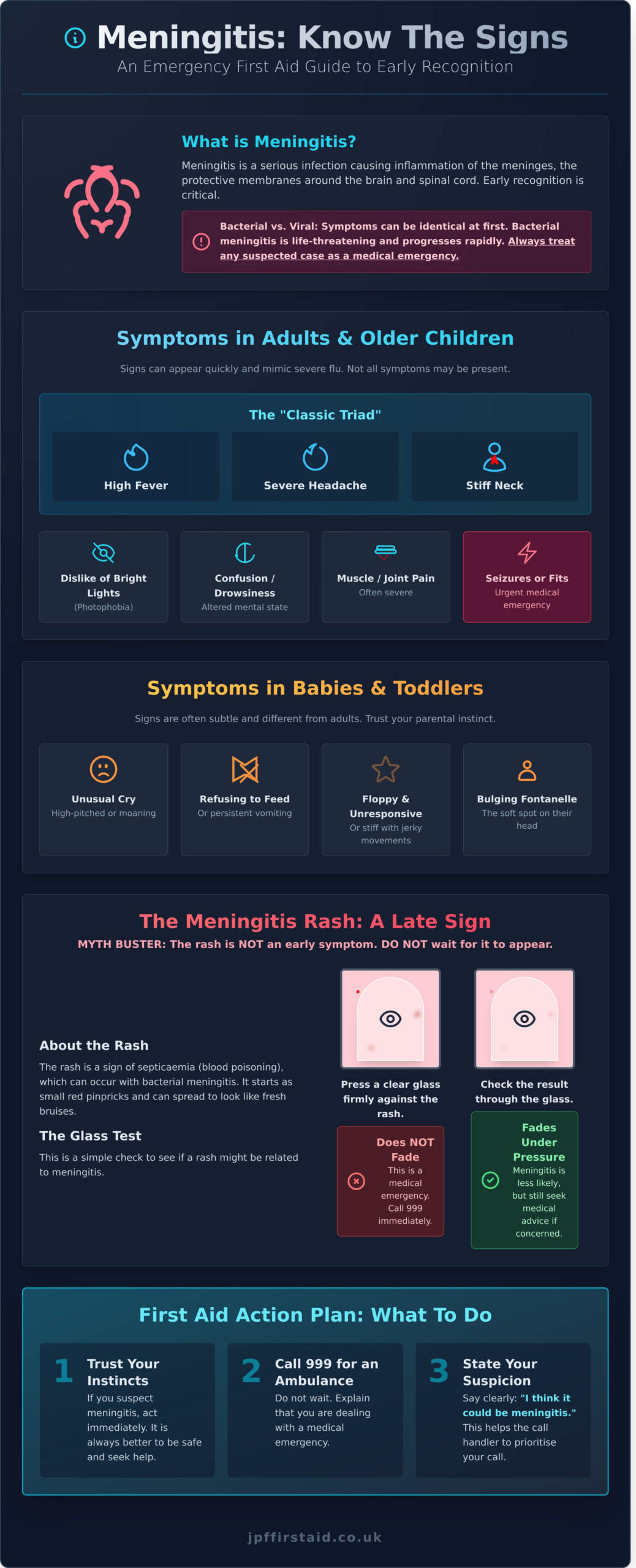
Medical professionals often refer to the ‘classic triad’ of symptoms: a high fever, a severe headache, and a stiff neck. The headache is typically relentless and intense, often described as “the worst headache I’ve ever had.” Neck stiffness (nuchal rigidity) makes it difficult or impossible to touch your chin to your chest. Beyond this, look for intense muscle or joint pain and a severe dislike of bright lights (photophobia) or loud noises (phonophobia). While many associate meningitis with a rash, this is often a late-stage symptom-do not wait for it to appear. The signs can also differ significantly in younger children; the NHS provides excellent guidance on Meningitis symptoms in babies and the glass test.
Neurological Warning Signs
Because meningitis directly affects the brain and spinal cord, neurological symptoms are critical red flags that demand immediate attention. Watch for signs of confusion or an ‘altered mental status’. This could be a friend or colleague who seems unusually drowsy, irritable, isn’t making sense when they talk, or is disoriented. Other serious indicators include:
- Seizures: A seizure or fit in someone who does not have a history of epilepsy is a medical emergency.
- Difficulty Waking: This is one of the most urgent warning signs. If a person is unresponsive or you cannot rouse them, you must call 999 for an ambulance immediately. This is not a symptom to ‘wait and see’ on.
Spotting the Signs: Meningitis Symptoms in Babies and Toddlers
As a parent, your instinct is your most powerful tool. When it comes to spotting meningitis in babies and toddlers, this is especially true, as they often don’t display the “classic” signs seen in adults, such as a stiff neck or a dislike of bright lights. Instead, the meningitis symptoms in this age group can be more subtle and easily mistaken for a less serious illness.
One of the most distinctive signs is a change in their cry. You may notice a high-pitched, moaning cry that is different from their usual cry for hunger or comfort. Other key indicators include persistent vomiting or a complete refusal to feed. Your baby might also seem floppy and unresponsive, or conversely, become stiff with jerky movements. While the full list of potential Meningitis Symptoms can be complex, trusting your gut feeling that something is seriously wrong is the first critical step.
Behavioural Changes in Infants
A baby with meningitis may be inconsolable, and you might find that being handled makes their crying worse. Look out for a vacant, staring expression or a lack of interest in their surroundings. Another significant warning sign is extreme lethargy; if your baby is unusually sleepy, floppy when picked up, or very difficult to wake for a scheduled feed, it signals a need for immediate medical attention.
Physical Red Flags for Parents
There are several physical signs you can check for. Gently feel the soft spot on top of your baby’s head (the fontanelle). When your baby is calm and sitting upright, it should feel soft and slightly curved inwards. If it feels tense, firm, or is bulging outwards, this is a serious red flag. Also, observe their skin. Pale, blotchy, or mottled skin can be a sign of sepsis, which often accompanies bacterial meningitis. Finally, check their temperature; cold hands and feet accompanied by a fever are another urgent warning sign.
The Meningitis Rash and the Glass Test: Myths and Realities
One of the most widely known signs of meningitis is the rash, but here is a critical fact: do not wait for a rash to appear. A rash is often a late-stage sign of septicaemia (blood poisoning), which can occur with bacterial meningitis. Relying on a rash to appear is one of the most dangerous misconceptions about meningitis symptoms. If someone is unwell and you suspect meningitis, seek urgent medical help immediately, with or without a rash.
The rash associated with septicaemia is ‘non-blanching’, meaning it does not fade under pressure. This is because it’s caused by bleeding under the skin. It can start as small, red pinpricks anywhere on the body and may develop into larger red or purple bruises. To check if a rash is non-blanching, you can use the simple and effective ‘Glass Test’.
How to Perform the Glass Test Correctly
This simple technique helps you check if a rash is a medical emergency. A non-blanching rash requires immediate professional help. Here’s how to do it:
- Get a clear glass: Use a clear drinking glass or tumbler.
- Press firmly: Place the side of the glass firmly against one of the spots or the rash.
- Check for fading: Look through the glass to see if the spots fade or disappear. A normal rash will blanch (turn white), but a septicaemic rash will not.
If the spots are still visible through the glass, call 999 immediately. Remember to check paler areas like the soles of the feet, palms of the hands, and the inside of the eyelids if the rash isn’t obvious.
Rash Appearance on Darker Skin Tones
The classic meningitis rash can be much more difficult to spot on brown or black skin, which makes it vital to be aware of other meningitis symptoms. If you are checking for a rash on someone with a darker skin tone, focus on the lighter-skinned areas of their body, such as:
- The palms of the hands
- The soles of the feet
- The roof of the mouth
- The stomach or abdomen
- Inside the eyelids
Remember, the rash is not always present. Trust your instincts. If someone has other symptoms like a high fever, severe headache, stiff neck, or confusion, seek urgent medical advice without delay.
First Aid Action Plan: What to Do if You Suspect Meningitis
Recognising the signs of meningitis is the first step, but knowing exactly what to do next is what saves lives. If you suspect meningitis, you must act immediately. This is a medical emergency where every second counts. Above all, trust your instincts. If you feel something is seriously wrong, even if you can’t pinpoint every symptom, you need to get urgent medical help.
Here is your clear, step-by-step action plan:
- Act Immediately: Call 999 for an ambulance or go directly to your nearest Accident & Emergency (A&E) department. Do not delay to see if the symptoms improve.
- Communicate Clearly: When you speak to emergency services, use the words “I suspect it could be meningitis” or “sepsis.” This helps them understand the urgency of the situation from the very start.
- Provide First Aid Care: While waiting for help, keep the person calm and comfortable. Loosen any tight clothing, and if they have a fever, you can help cool them by removing blankets. Keep monitoring their breathing and responsiveness.
Waiting for the Ambulance
While help is on its way, stay with the person. If they are sensitive to light (photophobia), keeping them in a quiet, darkened room can reduce their distress. Avoid giving them aspirin or ibuprofen to manage a fever unless a medical professional has specifically told you to, as it could mask crucial meningitis symptoms that doctors need to see. If you have time, gather a small “grab bag” for the hospital, including any medication they take and, for a baby, their red book.
Building Confidence through Training
Knowing what to do in a medical emergency builds immense confidence. A practical Paediatric First Aid course gives you the “eyes” to spot these subtle signs early in children and the skills to respond effectively, turning panic into purposeful action. Similarly, qualified workplace first aiders are a vital resource for identifying serious illnesses like meningitis in colleagues. Gaining this knowledge empowers you to protect your family, friends, and co-workers when it matters most. Join a JPF First Aid course in the West Midlands to gain life-saving confidence.
Empower Yourself: Turn Knowledge into Life-Saving Action
Recognising how meningitis presents differently in babies versus adults and that a rash isn’t always present is a vital first step. When you suspect this serious illness, trusting your instincts and acting fast on the combination of meningitis symptoms you see is what saves lives. This knowledge is your first line of defence.
The next step is building the practical confidence to act decisively. As a multi-award-winning training provider, JPF First Aid specialises in turning anxiety into ability. Our courses, delivered by expert instructor John Fogarty with over 20 years of experience, are designed to be engaging, practical, and genuinely fun. We equip you with the skills to respond calmly and correctly when it matters most.
Ready to become the confident first aider your family can count on? Book an Ofqual Regulated First Aid Course with JPF First Aid and learn skills that last a lifetime. You have the power to be a lifesaver; let us show you how.
Frequently Asked Questions About Meningitis Symptoms
Can you have meningitis without a fever?
Yes, it is possible to have meningitis without a high temperature. While fever is a very common symptom, its absence does not rule out the illness. This is especially true for babies, older adults, or people with a weakened immune system. It is vital to look at the full picture of symptoms, such as a severe headache, stiff neck, confusion, or a dislike of bright lights. If you are concerned, always seek urgent medical advice based on all the signs you observe.
Is meningitis contagious, and should I isolate the person?
Some types of bacterial meningitis are contagious and can be spread through close contact, like coughing or kissing. However, your first and most important action should not be isolation at home, but seeking immediate medical help by calling 999 or going to A&E. Medical professionals will implement the correct infection control procedures in the hospital. Public Health England will then trace any close contacts who may need antibiotics, ensuring the situation is managed safely and effectively by experts.
How long does it take for meningitis symptoms to show after exposure?
The time it takes for symptoms to appear (the incubation period) can vary. For bacterial meningitis, it is typically between two and ten days after exposure to the germs. The most critical thing to remember is that once they start, meningitis symptoms can develop incredibly quickly, sometimes within a matter of hours. This rapid onset is why it’s crucial to act fast and not wait to see if things improve. Quick action saves lives and improves outcomes significantly.
Can adults get the meningitis vaccine in 2026?
Currently in the UK, meningitis vaccines are not routinely offered to most adults. They are part of the childhood immunisation schedule and are also offered to teenagers and first-year university students. Adults can get vaccinated on the NHS if they have a specific medical condition that increases their risk. Public health vaccination schedules are reviewed regularly, so the guidance for 2026 could change. For personal advice, it is always best to speak with your GP about your specific circumstances.
What is the difference between meningitis and sepsis symptoms?
Meningitis and sepsis can happen at the same time and are both medical emergencies. Classic meningitis symptoms are caused by swelling around the brain and include a severe headache, a stiff neck, and a dislike of bright lights. Sepsis is the body’s overwhelming reaction to an infection. Its symptoms can include very cold hands and feet, pale or blotchy skin, rapid breathing, and confusion. The non-fading rash is actually a sign of sepsis, not meningitis itself.
Will the meningitis rash always be purple?
No, the rash associated with meningococcal septicaemia (sepsis caused by meningitis bacteria) does not always appear purple, especially at first. It often starts as tiny red or brown pinprick spots that can look like minor blemishes. These can then grow into larger purple, bruise-like blotches. Crucially, the rash is a late symptom and may not appear at all. Do not wait for a rash to develop if other symptoms of meningitis are present; seek help immediately.
What should I do if a doctor sends us home but I’m still worried?
You should always trust your instincts. You know yourself or your child best, and meningitis symptoms can develop and change very quickly. If you are sent home but the person’s condition worsens, or if you feel something still isn’t right, you must seek medical help again without delay. Go back to your GP or A&E. Never worry about “wasting time”-it is always safer to get re-checked. Simply explain that you have been seen before but are more concerned now.
Are there any long-term effects of meningitis if caught early?
Catching and treating meningitis early gives the best possible chance of a full recovery with no lasting problems. However, even with prompt treatment, bacterial meningitis can sometimes cause serious long-term effects. These can include hearing loss, memory and concentration difficulties, coordination and balance problems, or epilepsy. Aftercare support is available through the NHS and specialist charities to help manage any effects and support the person’s recovery journey, giving them the tools to move forward.
Recent Comments