

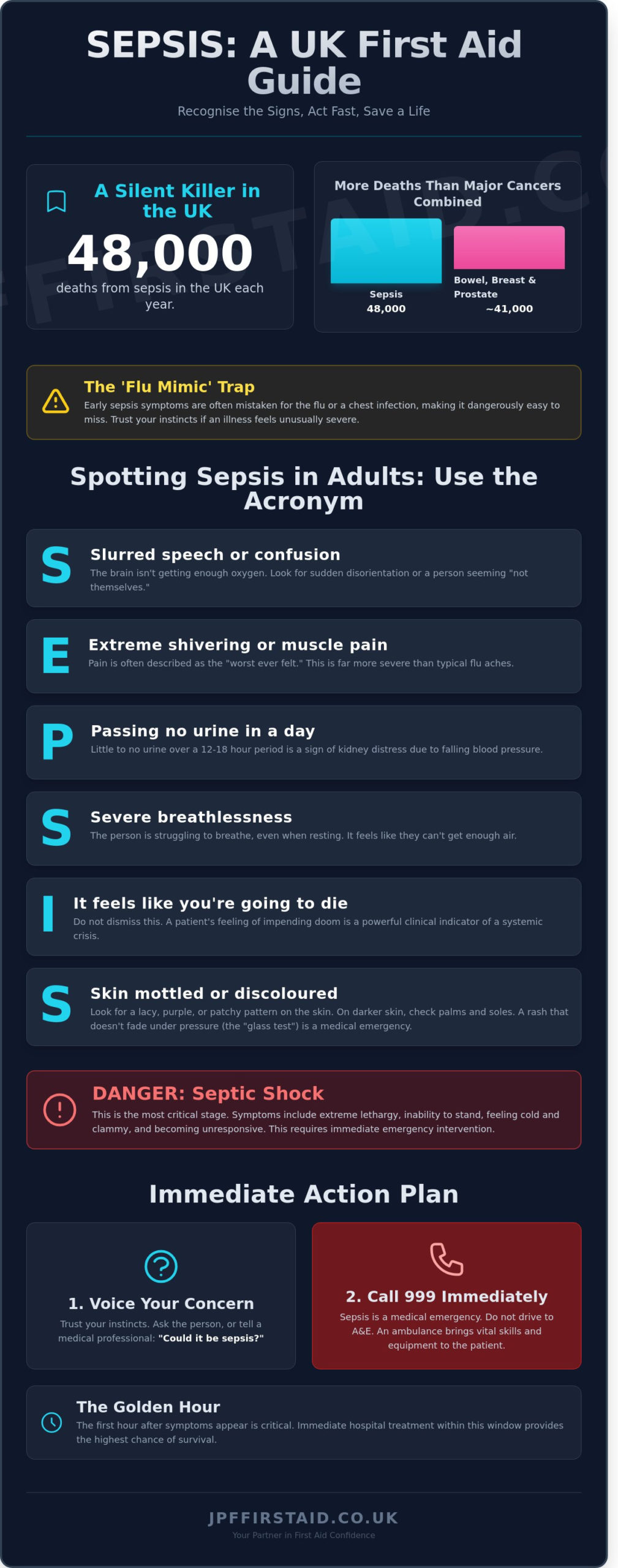
Did you know that sepsis claims approximately 48,000 lives in the UK every single year? This figure, tracked by the UK Sepsis Trust, is actually higher than the combined deaths from bowel, breast, and prostate cancer. It is a sobering statistic, especially since early sepsis symptoms often look just like a bad case of the flu or a common chest infection. You might feel anxious about calling 999 or visiting A&E because you don’t want to waste the NHS’s time, but waiting even four hours can significantly change the outcome of a recovery.
We know you want to protect your family without feeling like you’re overreacting. This guide provides the practical tools to tell the difference between a standard illness and a genuine medical emergency. We’ll walk through the specific red flags for both adults and children, providing you with a clear checklist to use when things don’t feel right. You will gain the peace of mind that comes from knowing exactly what to look for and the confidence to challenge a medical professional with one vital question: “Could it be sepsis?”
Key Takeaways
- Master the UK Sepsis Trust’s gold-standard acronym to quickly identify life-threatening signs and cognitive changes in adults.
- Discover why sepsis looks different in children under five and learn how to use your parental instinct to spot when a child is “not themselves.”
- Understand how to avoid the “flu mimic” trap by recognising dangerous sepsis symptoms triggered by common infections like UTIs or pneumonia.
- Gain the confidence to take immediate action with vital first aid steps, including why you must always call 999 rather than driving to A&E yourself.
Understanding Sepsis: When the Body’s Immune System Goes into Overdrive
Sepsis is a life-threatening condition that occurs when your immune system reacts abnormally to an existing infection. Instead of simply attacking the invading germs, your body begins to damage its own organs and tissues. It is a state of “overdrive” where the very system designed to protect you becomes the primary threat. While you cannot catch sepsis from another person, the underlying infection, such as a urinary tract infection or a chest infection, can be contagious. Sepsis is a medical emergency that requires immediate hospital treatment. Spotting sepsis symptoms early can be the difference between a full recovery and long-term health complications.
The Difference Between Infection and Sepsis
Most infections are localised and manageable. If you have a small, infected cut, your body usually contains the problem. Sepsis happens when that local response fails and the immune reaction spreads throughout your entire system. You might notice a shift from feeling generally unwell to experiencing sudden, severe organ dysfunction. This rapid decline is why speed is so vital in a first aid context. The ‘Golden Hour’ in sepsis treatment refers to the vital sixty-minute window after the onset of symptoms during which immediate hospital intervention provides the highest statistical chance of survival.
Why Sepsis is Often Called the ‘Silent Killer’
It is difficult to identify sepsis symptoms because they often mimic common illnesses like the flu or a heavy chest cold. This subtle start is why the UK Sepsis Trust reports that the condition contributes to approximately 48,000 deaths in the UK every year. Early detection remains the most important factor in survival rates. To combat this, NHS staff and first aid professionals promote a “Could it be Sepsis?” mindset. This approach encourages you to trust your instincts if an illness feels different or more severe than usual. For those looking to understand the clinical background, this Comprehensive guide to sepsis explains the complex physiological changes that occur during an attack. Having the confidence to ask the right questions can save a life when time is against you.
Spotting Sepsis Symptoms in Adults: The Essential SEPSIS Acronym
In the UK, the UK Sepsis Trust provides the gold standard for identifying life-threatening infections. Using the “SEPSIS” acronym helps you act quickly when every second counts. Cognitive changes are often the first sign; Slurred speech or confusion happens because the brain isn’t receiving enough oxygenated blood. If a loved one seems suddenly disoriented or “not themselves,” don’t ignore it. It is a major red flag that requires immediate attention.
Extreme shivering or muscle pain is the second marker. While the flu causes aches, sepsis pain is often described as the worst someone has ever felt, similar to the sensation of bones breaking. Passing no urine for a full day, or even a 12 to 18-hour window, signals that the kidneys are struggling as blood pressure drops. Finally, Severe breathlessness means the person is fighting for air even while sitting still. You can find more specific Sepsis warning signs for parents through global health authorities like the WHO, which highlight how these sepsis symptoms manifest differently across age groups.
Mental State and Physical Discolouration
The “I” in the acronym stands for “It feels like you’re going to die.” This isn’t dramatics; it’s a physiological response to a systemic crisis. Patient intuition is a powerful clinical indicator. Alongside this, look at the skin. Skin mottled or discoloured appears as a lacy, purple, or red pattern. On darker skin tones, check the palms of the hands or soles of the feet for these changes. Use the “glass test” by pressing a clear glass against any rash. If the marks don’t fade under pressure, it’s a medical emergency, just like meningitis.
Recognising Septic Shock
Septic shock is the most dangerous stage, where blood pressure plummets to critical levels. You’ll notice extreme lethargy, an inability to stand, or the person becoming completely unresponsive. Extremities like fingers and toes will feel cold and clammy to the touch because the body is redirecting blood to core organs. If you spot these sepsis symptoms, call 999 immediately. Building your confidence through practical first aid training ensures you can stay calm and provide clear, vital information to emergency operators during these high-pressure moments.
Identifying Sepsis in Children and Babies: Warning Signs for Parents
Sepsis in children under five can be deceptive. Unlike adults, a child’s physiology allows them to maintain a normal blood pressure for longer before they suddenly deteriorate. Data from the UK Sepsis Trust shows that around 25,000 children are admitted to hospital with sepsis every year in the UK. You must trust your parental instinct. If your child seems “off” or “not themselves,” it’s a valid reason to seek urgent medical help. Look for physical sepsis symptoms like skin that appears mottled, bluish, or exceptionally pale. Pay close attention to their breathing. If you notice a “grunting” sound with every breath or see the skin sucking in under their ribcage, these are signs of significant respiratory distress.
Behavioural Changes in Infants
Babies communicate through their behaviour. A high-pitched or weak, whimpering cry that sounds different from their usual hunger cry is a major warning. If they’re difficult to wake or show zero interest in feeding, don’t wait. A critical indicator of organ health is their fluid output. If a baby hasn’t had a wet nappy for 12 hours, their kidneys may be struggling. This is a red flag for sepsis symptoms in infants that requires immediate clinical assessment.
Temperature and Rashes in Children
A child might feel burning hot or abnormally cold to the touch. Look for a non-fading rash, known as petechiae, which doesn’t disappear when pressed with a glass. On darker skin, this is often easier to spot on the palms of the hands or the soles of the feet. When you call 999, stay calm and be direct. Tell the operator: “I am worried about sepsis.” Follow this step-by-step guide to provide the right information:
- State your child’s age and their current temperature.
- Describe any breathing difficulties, such as grunting or rapid breaths.
- Mention specific skin changes or if a rash failed the “glass test.”
- Report exactly how long it’s been since their last wet nappy or successful feed.
Prompt action saves lives. In the UK, the “Sepsis Six” treatment pathway is designed to be started within 60 minutes of arrival at a hospital to give your child the best chance of a full recovery. Don’t worry about being a nuisance; medical professionals would much rather see a healthy child than miss a case of sepsis.
The ‘Flu Mimic’ Trap: Why Sepsis Symptoms are Often Missed
Sepsis is a master of disguise. It often starts with a cough, a sting when you pee, or a small cut that looks a bit red. Because early sepsis symptoms mirror common illnesses like a heavy flu or a stomach bug, many people wait too long to seek help. Data from the UK Sepsis Trust shows that approximately 245,000 cases of sepsis occur in the UK every year. Many of these individuals initially stay at home, hoping to "sleep off" what feels like a nasty virus.
Most cases of sepsis don’t appear out of thin air. They are triggered by everyday infections. Pneumonia, Urinary Tract Infections (UTIs), and infected skin sores are the most frequent culprits. When your body’s immune system overreacts to these infections, it begins to damage its own tissues. Vague signs like extreme shivering, nausea, or feeling "spaced out" are often dismissed as side effects of a fever. By the time the more recognizable sepsis symptoms like mottled skin or a non-fading rash appear, the condition has already become a life-threatening emergency.
High-Risk Groups and Vulnerabilities
Some people have less physiological “reserve” to fight off a systemic overreaction. Children under the age of five and adults over 75 are statistically more vulnerable. Recent figures from 2024 highlight that maternal sepsis remains a critical concern for women during pregnancy or shortly after birth. Chronic conditions like diabetes also complicate the picture. High blood sugar can dampen the immune response and cause nerve damage, meaning a patient might not even feel the pain of a worsening infection until it has already entered the bloodstream.
Safety Netting: What to Do if You Are Sent Home
If you visit a GP or a walk-in centre and they decide you don’t need hospital admission, they should provide “safety netting” advice. This is a clear set of instructions on what to look for next. If your condition changes, don’t feel like you are being a nuisance. Trust your instincts. If you are worried, ask your doctor these specific questions:
- “Could this be sepsis?”
- “What specific signs should I look for that mean I need to call 999?”
- “If I feel worse in the next four hours, what is the best plan of action?”
If you have been sent home but your symptoms worsen or you feel a sense of “impending doom,” return to A&E immediately. It is always better to be checked twice than to miss a critical window for treatment. Building the skills to recognise these emergencies can save lives. You can gain the practical knowledge needed to handle medical crises by booking a regulated first aid course today.
Taking Immediate Action: First Aid Response and Preparedness
When you suspect someone is showing sepsis symptoms, you must treat the situation as a life-threatening emergency. Your first step is to dial 999 immediately. While you wait for help to arrive, keep the patient warm and still. Sepsis can cause a rapid drop in blood pressure and body temperature, so using blankets to maintain their heat is a vital supportive measure.
You should never attempt to drive a person to A&E yourself if you suspect sepsis. An ambulance is much more than a transport vehicle; it’s a mobile treatment centre. Paramedics can begin life-saving interventions like oxygen therapy and fluid resuscitation the moment they arrive. Crucially, they provide a “blue-light pre-alert” to the hospital, which ensures a specialist medical team is standing by to receive the patient. This saves precious minutes that a private car journey would lose in the hospital car park or waiting room.
While waiting for the crew, prepare a quick summary of the following information:
- The exact time the sepsis symptoms first appeared.
- A list of any current medications or recent courses of antibiotics.
- Any recent injuries, surgeries, or infections the patient has had.
- Known allergies and pre-existing health conditions.
Our Emergency First Aid at Work training provides the structured framework you need to gather this information while remaining calm. We focus on practical illness recognition so you can act before a situation escalates.
The Power of the ‘Just Ask’ Protocol
You must be a vocal advocate for the patient. When speaking to a paramedic, nurse, or doctor, use the specific trigger phrase: “Could this be sepsis?” This isn’t just a question; it’s a clinical prompt that requires healthcare providers to formally screen for the condition. In the UK, early intervention can improve survival rates by over 75 percent. It’s always better to ask and be told it’s a minor infection than to stay silent and risk a fatal outcome.
How Training Builds Life-Saving Confidence
JPF First Aid courses in the West Midlands empower everyday people to stay level-headed during a crisis. We move away from dry, clinical theory to deliver training that is engaging and practical. For those working in schools or nurseries, our Paediatric First Aid qualification is essential. It teaches you to spot the subtle signs of sepsis in children, such as a non-blanching rash or extreme lethargy, which can differ from adult presentations. You don’t need to be a medic to save a life; you just need to know the signs and have the confidence to call for help.
Take the Lead in Medical Emergencies
Recognising sepsis symptoms early is the most effective way to prevent the 48,000 deaths caused by this condition in the UK every year. By memorising the SEPSIS acronym and understanding how it mimics common illnesses like the flu, you’re already better prepared to save a life. Quick action is essential; every hour of delay in treatment significantly increases the risk of permanent damage. You’ve now got the knowledge to spot the warning signs that others might miss.
You don’t have to feel anxious about handling an emergency. JPF First Aid provides Ofqual regulated qualifications that replace fear with practical, life-saving skills. We’re a multi-award-winning training provider, and our experts ensure every session is engaging and fun rather than dry or clinical. We’ll give you the “can-do” attitude needed to step up when someone needs help most. Our training is designed to be accessible, local, and tailored to your specific needs.
Book a First Aid Course with JPF First Aid to Build Your Life-Saving Confidence and gain the skills that truly matter. You’re capable of becoming a reliable life-saver in your community today.
Frequently Asked Questions
Can you have sepsis without a fever?
Yes, you can definitely have sepsis without a fever. While a high temperature is a common sign, many patients experience a dangerously low body temperature below 36°C instead. This hypothermic response is often seen in the elderly or very young children. You should look for other sepsis symptoms like shivering, mottled skin, or extreme pain. If you feel “deathly ill” but don’t have a fever, call 999 immediately.
How quickly do sepsis symptoms develop?
Sepsis symptoms can develop incredibly fast, often over just a few hours. It isn’t a condition that lingers for days before becoming serious. Medical research from the UK Sepsis Trust shows that for every hour you delay antibiotic treatment, the risk of death increases by 8%. This is why we teach first aiders to act on their instincts. If someone’s condition worsens rapidly, you must seek urgent medical help.
Is sepsis the same as blood poisoning?
People often use “blood poisoning” to describe sepsis, but they aren’t exactly the same thing. Blood poisoning, or septicaemia, refers specifically to bacteria in the blood. Sepsis is the body’s life-threatening overreaction to that infection, which can lead to organ failure. In the UK, sepsis claims 48,000 lives every year. Understanding this distinction helps you realise why it’s a medical emergency that requires more than just standard infection control.
What should I do if my GP says it’s just a virus but I’m still worried?
You should trust your instincts and ask the doctor “Could it be sepsis?” directly. If your symptoms or those of a loved one get worse after seeing a GP, don’t hesitate to call 999 or visit A&E. Under NICE guideline NG51, healthcare professionals are required to consider sepsis in patients with signs of infection. You know your body best, and being persistent can save a life when an infection isn’t behaving normally.
Can adults get sepsis from a simple urinary tract infection (UTI)?
Yes, a simple urinary tract infection is a very common trigger for sepsis in adults. Data shows that roughly 25% of all sepsis cases start with an infection in the urinary system. This happens when the bacteria from the bladder or kidneys enter the bloodstream. It’s especially common in people over 65. Always monitor for confusion or a drop in urine output if you’re treating a known UTI.
What does a sepsis rash look like on dark skin?
On darker skin, a sepsis rash might not be obvious as a red mark, so you should check lighter areas like the palms, soles of the feet, or the inside of the eyelids. Look for small, purple or dark brown pinpricks that don’t fade when you press a glass against them. This non-blanching rash is a late-stage sign. You should also look for other sepsis symptoms like extreme shivering or severe muscle pain.
Is sepsis reversible if caught early enough?
Sepsis is absolutely reversible and treatable if you catch it in the early stages. When doctors implement the “Sepsis Six” medical interventions within the first 60 minutes, the chance of survival is significantly higher. Most patients make a full recovery if they receive intravenous antibiotics and fluids before organ damage occurs. Early recognition is your most powerful tool. Our training focuses on giving you the confidence to spot these signs early.
What are the long-term effects for sepsis survivors?
Many survivors face a range of long-term challenges known as Post-Sepsis Syndrome (PSS). Statistics indicate that 50% of people who recover from sepsis will experience ongoing physical or psychological issues. These can include extreme tiredness, muscle weakness, or even Post-Traumatic Stress Disorder. Recovery isn’t just about leaving the hospital; it’s a journey. Support groups are essential for the 79,000 people discharged from UK hospitals after sepsis each year.
Recent Comments