
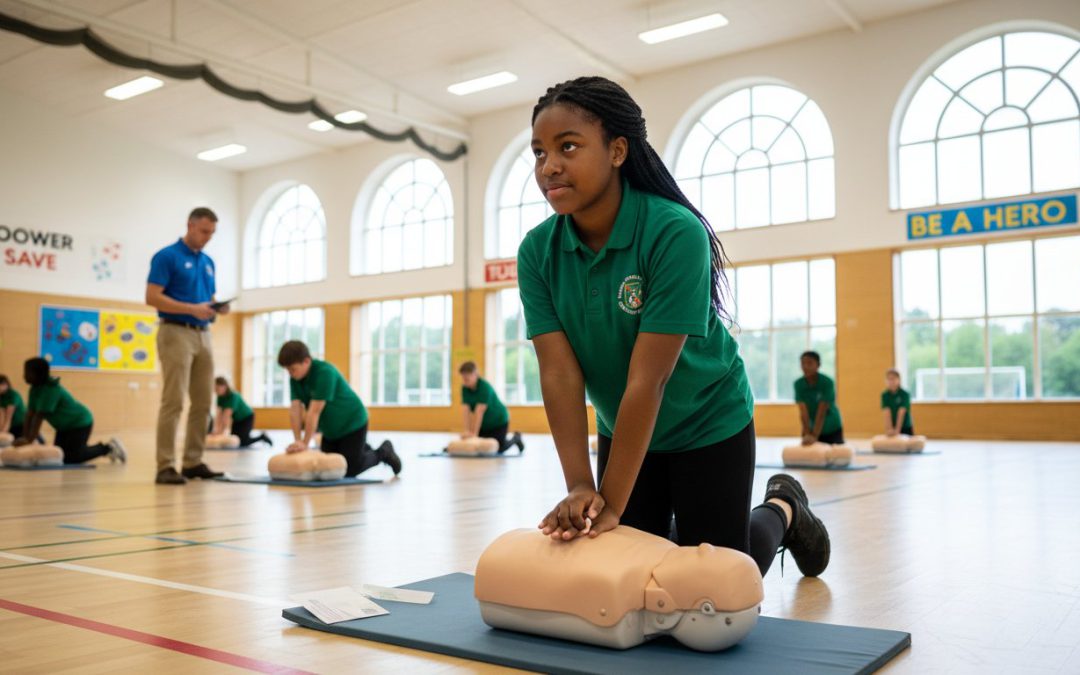
In countries where CPR is taught in schools, survival rates from cardiac arrest are more than double those in the UK. This striking statistic highlights why the student first aid course level 2 is now a fundamental part of the health education curriculum for learners aged 11 and over. You want your students to be prepared for the 400,000 injuries that happen in UK schools annually, yet it’s often difficult to find training that resonates with teenagers. We understand that meeting mandatory DfE requirements while keeping a classroom of young people engaged is a delicate balance.
We believe that learning to save a life should be an empowering and interactive experience rather than a clinical chore. This guide explains how the Level 2 Student First Aid qualification provides students with national certification and the genuine confidence to act when a friend or peer is in need. We will cover the specific skills learners acquire, the impact of upcoming 2026 allergy safety regulations, and how you can bring this expert led training directly to your classroom to create a safer school community.
Key Takeaways
- Master the core syllabus including the primary survey, CPR, and AED usage to prepare students for real-world emergencies.
- Learn why the student first aid course level 2 is the ideal regulated qualification to meet national health education standards for learners aged 11 and over.
- Understand the practical differences between student-specific training and workplace first aid to ensure your school chooses the most age-appropriate curriculum.
- Discover how to implement training seamlessly with flexible delivery options and recommended instructor-to-student ratios for the best learning outcomes.
- Explore how an interactive and supportive training environment builds psychological empowerment, turning passive bystanders into confident first responders.
Why Student First Aid Level 2 is Essential for UK Schools in 2026
Since 2020, basic first aid training has been a mandatory part of the health education curriculum for all state-funded schools in England. This isn’t just another box-ticking exercise for the Department for Education (DfE). It’s a strategic move to ensure every pupil leaves secondary school with the ability to save a life. The student first aid course level 2 is specifically designed to meet these statutory requirements while providing a formal, Ofqual-regulated qualification that carries real weight for a young person’s record of achievement.
By integrating this training into the Relationships and Sex Education (RSE) and health education framework, schools can effectively target learners in Key Stage 3 and 4. This age group, typically 11 and older, is at the perfect stage to handle the physical and psychological demands of emergency response. When you provide this training, you’re helping bridge a massive gap in UK public health. Currently, countries that teach CPR in schools see cardiac arrest survival rates more than double those of the UK. It’s a practical, life-saving investment in your students’ futures that goes far beyond the classroom walls.
The Government Mandate and Health Education
The DfE expects pupils to understand the core concepts of What is First Aid? and be able to perform life-saving skills like CPR and using an AED. By the time they leave school, students should also know how to deal with common injuries and recognize the early signs of medical emergencies. This course fulfills those requirements directly. Over time, this creates a first-aid-literate generation that can act as a national safety net. It reduces the long-term strain on emergency services and improves outcomes for the 400,000 students injured at school each year.
Empowering Young People to Act
We don’t just want students to memorize facts; we want them to feel capable. Many teenagers hesitate to help because of the “bystander effect,” which is a psychological phenomenon where individuals don’t offer help because they assume someone else will. Our student first aid course level 2 shatters this hesitation by replacing uncertainty with practical skill. JPF First Aid focuses on simplifying complex medical procedures into manageable steps that are easy to remember under pressure. This approach builds the confidence needed to intervene during a crisis, ensuring that a lack of knowledge is never the reason a life is lost. We make sure the training is interactive and approachable, so students leave feeling like capable first responders rather than just certificate holders.
What is Covered? The FAA Level 2 Award in Student First Aid Syllabus
The FAA Level 2 Award in Student First Aid isn’t just about reading a manual. It’s a dynamic, hands-on experience designed to give you the practical tools to handle real-world crises. This regulated RQF qualification follows a structured syllabus that ensures every learner meets the standards outlined in the UK Government First Aid Guidance for Schools. Because it’s an official award, the certification remains valid for three years, giving students a long-term credential they can use in their personal lives or even on early job applications.
Unlike more clinical courses, the student first aid course level 2 prioritizes active participation. We move quickly from theory to practice, allowing students to physically practice skills until they feel second nature. This approach is vital because muscle memory often takes over when adrenaline kicks in during a real emergency. We want your students to leave the session feeling capable and ready to help, not just burdened with facts.
Life-Saving Skills: CPR and Defibrillation
Students learn how to recognize when someone is in cardiac arrest and how to respond using the latest resuscitation protocols from the UK Resus Council. Many people wonder if teaching 11-year-olds to use an Automated External Defibrillator (AED) is appropriate, but modern AEDs are designed to be incredibly safe and provide clear voice prompts that even a young learner can follow with ease. The primary survey serves as the essential foundation of all first aid, providing a logical step-by-step sequence to assess any situation safely. By mastering these high-stakes skills, students transform from worried observers into capable responders who can keep a patient stable until professional help arrives.
Managing Common Injuries and Emergencies
While life-saving skills are the headline, the student first aid course level 2 also covers the “everyday” incidents that happen in corridors and on playing fields. Learners spend time mastering the management of:
- Choking: Identifying the signs of a blocked airway and performing the correct abdominal thrusts or back blows.
- Bleeding and Fractures: Learning how to apply pressure to wounds and safely immobilize suspected broken bones or sprains.
- Head Injuries: Recognizing the difference between a minor bump and a serious concussion.
- Shock: Understanding how to identify the physical signs of shock and how to treat it to prevent further deterioration.
We also place a heavy emphasis on the recovery position, ensuring students know exactly how to keep an unconscious, breathing person’s airway clear.
To achieve the qualification, students undergo a simple assessment process. This includes practical observations by the trainer throughout the session and a straightforward multiple-choice paper. We make sure this process feels supportive rather than intimidating, focusing on what the student has successfully learned. If you’re looking to bring these essential skills to your classroom, you can view our full range of student training options to see how we can help.
Student First Aid vs. Workplace First Aid: Which Do You Need?
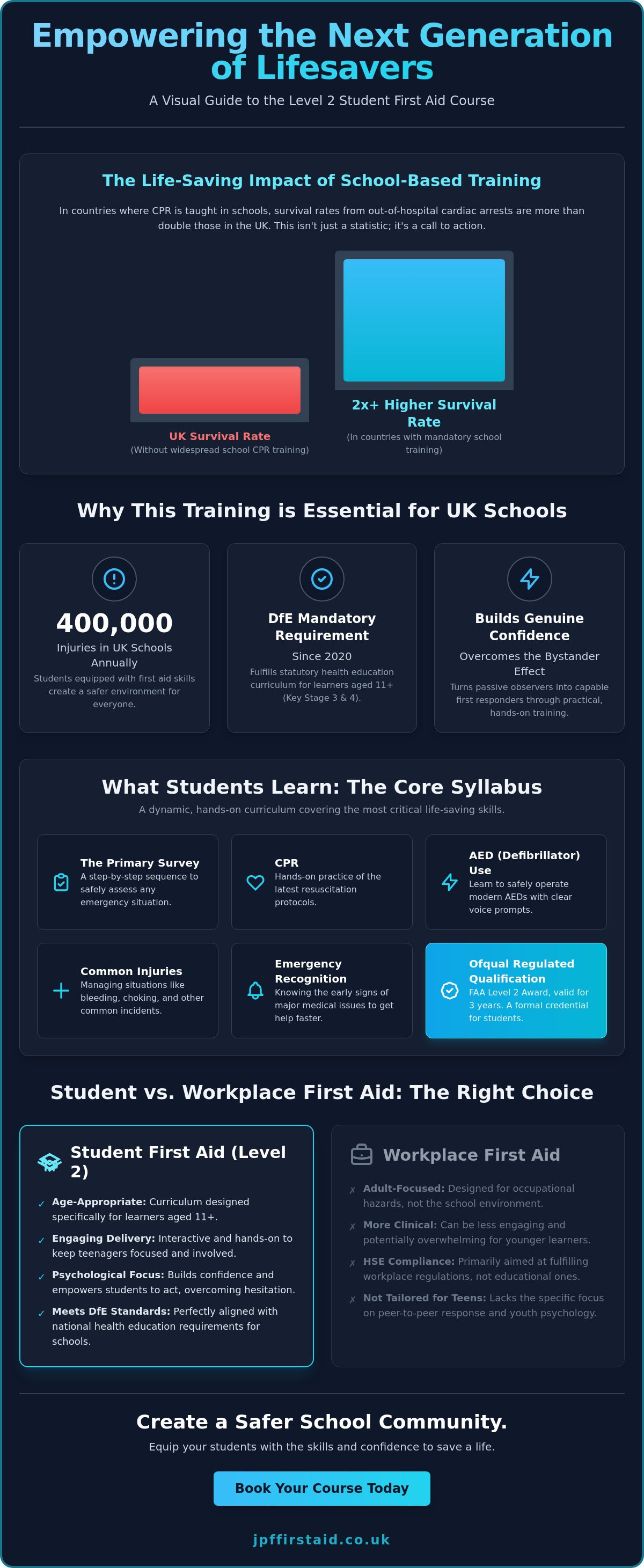
Choosing the right training depends on your environment and the age of your learners. While many adults take the Emergency First Aid at Work course to meet Health and Safety Executive (HSE) requirements, the student first aid course level 2 is built specifically for the school setting. The core difference isn’t the quality of the life-saving skills, which are identical to professional-grade life support, but how the information is delivered. Workplace courses are often tied to rigid six-hour minimum time frames. In contrast, the student-specific curriculum offers much more flexibility, allowing schools to fit training into a busy academic schedule without compromising on the depth of the qualification.
We understand that schools need a partner that works around their timetable. Because the student first aid course level 2 isn’t strictly bound by HSE workplace time constraints, we can tailor the delivery to suit your school year. This portability also benefits the students directly. The certification they earn isn’t just for the classroom; it’s a recognized credential they can take with them to part-time jobs, summer camps, or volunteering roles. It bridges the gap between being a student and becoming a responsible member of the community.
Tailoring the Experience for Young Learners
Teenagers learn differently than corporate delegates. We swap dry presentations for high-energy, interactive sessions that keep students on their feet. Instead of discussing industrial machinery accidents, we focus on relatable scenarios like sports injuries on the pitch or a peer fainting in the canteen. Our approach is intentionally jargon-free and approachable. We act as expert mentors, guiding students through the gravity of emergency response with a calm, capable attitude that builds their confidence rather than their anxiety.
Enhancing the Student CV and Future Prospects
Beyond immediate safety, this qualification is a powerful addition to a young person’s portfolio. Since it’s a regulated Level 2 RQF award, it carries significant weight on college and UCAS applications. It signals to admissions officers that a student is proactive, responsible, and possesses the maturity to handle high-pressure situations. For those participating in the Duke of Edinburgh (DofE) Award, this certification is often a perfect fit for the skills section. Employers in retail, hospitality, and childcare value first aid as a core transferable skill. It shows you’re a team player who can be trusted to look out for others, giving you a distinct advantage in a competitive job market.
How to Implement Student First Aid Training in Your Organisation
Planning a student first aid course level 2 doesn’t have to be a logistical headache for your staff. To maintain the highest standards of safety and engagement, we adhere to a strict 1:12 instructor-to-student ratio. This ensures every learner receives direct feedback during practical exercises, which is vital for building real confidence. You’ll also want to verify that your chosen training provider is Ofqual regulated. The FAA Level 2 Award is a formal qualification, and ensuring your provider meets these compliance standards is the first step toward a successful program.
The 3-hour duration of this specific course makes it incredibly easy to slot into a single morning or afternoon session. We find that schools have the most success when they schedule training during dedicated PSHE days or in the quieter weeks following summer exams. To get the best out of the day, we recommend students wear comfortable clothing, such as their PE kits. Since they’ll be practicing resuscitation and bandaging on the floor, being able to move freely helps them focus on the skills rather than their uniform.
Logistics for Schools and Youth Groups
On-site training is usually the most convenient choice for schools and community centres. We bring all the necessary equipment, from manikins to training AEDs, directly to you. This saves on transport costs and keeps students in a familiar environment. For larger year-group bookings, we can facilitate multiple instructors to run several groups simultaneously. You’ll just need to provide a clear, clean space like a school hall or large classroom where students have enough room to practice the recovery position without feeling cramped.
The Role of Blended Learning in 2026
In 2026, many educational settings are adopting blended learning models to protect valuable classroom time. This approach allows students to complete their theoretical modules through independent remote study before the trainer arrives. Video-link assessments can also be used to verify theoretical knowledge, ensuring that the time spent in person is focused entirely on hands-on practice. This flexibility is perfect for a busy modern school timetable, as it reduces the “out of class” time while still delivering a full RQF qualification.
By choosing a partner who understands the unique rhythm of the school year, you ensure the training is a highlight for the students rather than an interruption. If you’re ready to secure a date for your year group, you can request a tailored quote from us today to get started.
Why Choose JPF First Aid for Your Student Level 2 Course?
JPF First Aid is a multi-award-winning national training provider. We don’t just deliver a student first aid course level 2; we deliver peace of mind to school leaders and students alike. Our trainers act as reliable expert mentors, combining deep technical knowledge with a humble, student-focused attitude. We believe that the best way to learn a serious subject is through an experience that’s far from dry or clinical. By keeping the atmosphere light and interactive, we ensure the skills learned are deeply ingrained and easy to recall when they’re needed most.
Our primary goal is psychological empowerment. While the national certification is a vital credential, the real value lies in how your students feel when they leave our session. We want them to feel safe, capable, and ready to act. We use active, hands-on methods to make the training memorable and enjoyable. We provide flexible mobile delivery across the entire UK, bringing our specialized equipment to your school or community centre. This positions us as a helpful partner rather than just a service provider, ensuring a seamless experience that respects your logistical needs.
A Reassuring and Professional Learning Environment
We know that the thought of an emergency can cause anxiety for young people. Our trainers are experts at striking a delicate balance between the gravity of first aid and a welcoming, approachable atmosphere. This tailored service is designed specifically for schools and youth organizations, ensuring the content is relevant to the age group. If you’re looking for training for your wider school community, we also offer a comprehensive range of first aid courses for staff and parents. We handle the transition from discussing serious legal obligations to the practical nature of the training sessions smoothly, maintaining a consistent pace that feels both efficient and thorough.
Ready to Empower Your Students?
We’re here to help you transform your students into confident first responders. School leaders can contact us today to request a bespoke quote for group training sessions tailored to your specific year-group size. If you’re a parent looking for individual training for your child, we encourage you to check our upcoming public scheduled courses. Taking that first step is easy, and we’ll be with you every step of the way to ensure a smooth, professional experience. You’re in safe, expert hands with a team that cares about the specific needs of your community.
Book your Student First Aid Level 2 course today and give your learners the life-saving skills and national certification they need to make a difference.
Empower Your Students with Life-Saving Skills Today
By choosing the student first aid course level 2, you’re doing much more than simply fulfilling a Department for Education requirement. You’re giving your students a national qualification that transforms them from bystanders into capable, confident first responders. We’ve explored how this regulated FAA Level 2 Award covers essential skills like CPR and AED usage, ensuring your learners are prepared for real-world emergencies both in and out of the school gates. Whether you choose on-site training or a flexible blended learning model, the focus remains on making these serious skills accessible and memorable for every young person.
As a multi-award-winning training provider, JPF First Aid offers expert led, national UK delivery right at your location. We take pride in our ability to alleviate the anxiety of emergency response by creating an encouraging and professional learning environment. It’s about building a safer community where young people feel psychologically empowered to help others. Ready to take the next step for your school? Book your Student First Aid Level 2 course with JPF First Aid today to secure your training dates. We’re excited to help your students gain the skills they’ll carry with them for a lifetime.
Frequently Asked Questions
Is the Student First Aid Level 2 course mandatory for all UK schools?
Basic first aid training is a mandatory requirement for all state-funded schools in England as part of the health education curriculum. While the government doesn’t specify a single provider, the student first aid course level 2 is a preferred choice for many headteachers. It provides a structured, Ofqual-regulated framework that ensures your school meets its statutory obligations while giving pupils a nationally recognized qualification they can use beyond the classroom.
What is the minimum age for a student to attend the Level 2 first aid course?
The minimum age for a learner to attend the student first aid course level 2 is 11 years old. This age requirement ensures that students have the physical strength and cognitive maturity to perform essential tasks like chest compressions and the primary survey. It’s perfectly designed for secondary school pupils in Key Stage 3 and 4, helping them build life-saving skills during their formative years.
How long does the Student First Aid certificate remain valid?
The FAA Level 2 Award in Student First Aid certificate is valid for three years from the date of the assessment. Once this period expires, students should attend a new course to refresh their knowledge and maintain their regulated status. Keeping these skills current is vital, as resuscitation protocols and medical guidelines are updated periodically to reflect the latest life-saving research and best practices.
Does the Level 2 Student First Aid course count towards the Duke of Edinburgh Award?
Yes, this qualification is an excellent choice for students participating in the Duke of Edinburgh (DofE) Award. It’s most commonly used to fulfill the requirements of the “Skills” section at any level. Because it results in a formal RQF certificate, it provides clear, regulated evidence of a student’s commitment to learning a practical skill that has a direct, positive impact on their local community.
Can this course be delivered as part of the PSHE curriculum?
Most schools choose to deliver this training as a core component of their Personal, Social, Health, and Economic (PSHE) education program. The course is designed to be completed in three hours, making it easy to fit into a single morning or afternoon session. This integration helps schools meet their Relationships and Sex Education (RSE) requirements without disrupting the broader academic timetable for several days.
What is the difference between an RQF Level 2 and an SCQF Level 5 qualification?
These terms refer to the regional qualification frameworks used across the UK. RQF (Regulated Qualifications Framework) is used in England and Northern Ireland, while SCQF (Scottish Credit and Qualifications Framework) is used in Scotland. An RQF Level 2 is broadly equivalent to an SCQF Level 5. Both signify a high standard of training that is recognized by educational institutions and employers throughout the country.
What happens if a student fails the multiple-choice assessment?
If a student doesn’t pass the multiple-choice paper on their first attempt, our trainers provide supportive, one-on-one feedback to clear up any confusion. We offer the opportunity for a resit because our primary goal is the student’s success and confidence. We focus on creating a relaxed atmosphere where every learner feels capable of understanding the material and demonstrating their skills effectively.
How many students can be in one training session?
We maintain a maximum class size of 12 students per instructor to ensure everyone receives high-quality, hands-on attention. This ratio is essential for safety and allows our trainers to provide immediate feedback during practical exercises like CPR. For larger schools, we can easily provide multiple instructors to run several groups at the same time, ensuring your entire year group is trained efficiently.
Recent Comments