

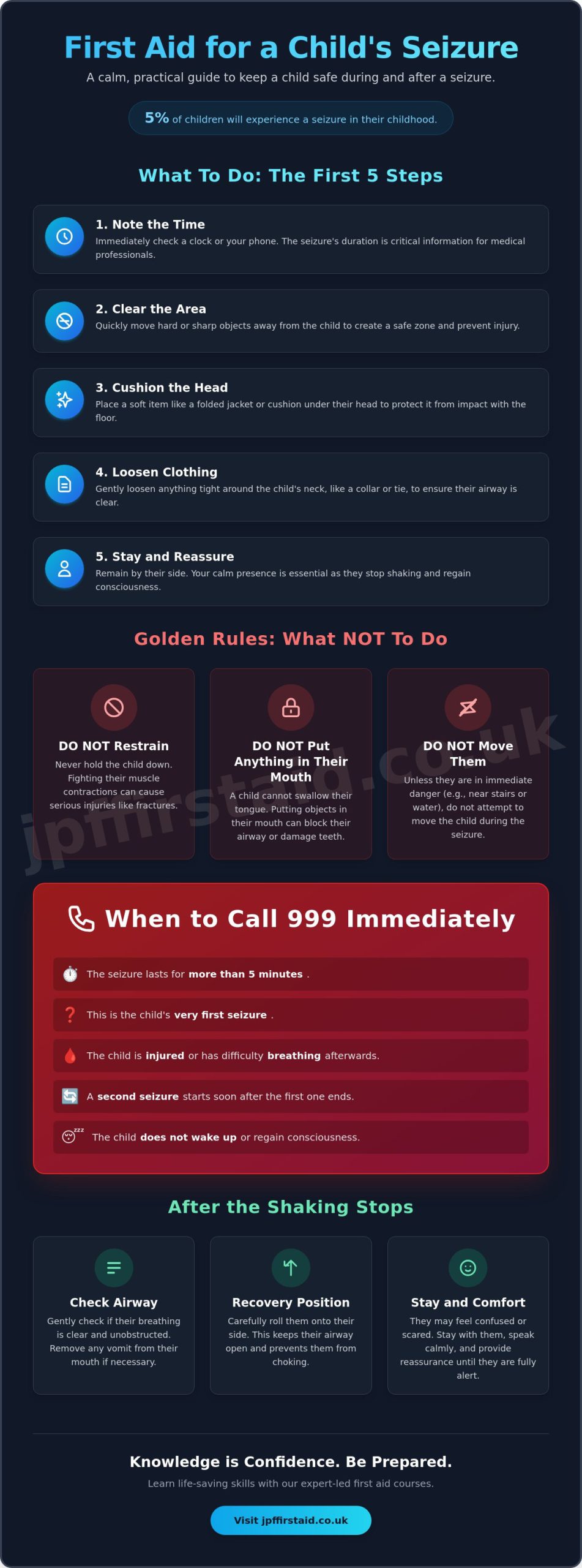
Did you know that 5% of children will experience a seizure at some point during their childhood? Watching a child suddenly shake or lose consciousness is one of the most frightening experiences a parent or carer can face. You might feel a desperate urge to stop the fit or worry about them swallowing their tongue, but knowing exactly what to do if a child has a seizure is the best way to keep them safe.
It’s completely normal to feel helpless in these moments, especially when you’re unsure if a situation is a real emergency or a common fever fit. We’re here to replace that anxiety with a calm, practical action plan. You’ll learn how to protect their head, why you must never use restraints, and the vital signs that mean you should call 999. We will also explain the difference between epilepsy and febrile convulsions so you can monitor their recovery with clarity. By the end of this guide, you’ll have the confidence to manage the environment and provide the right support until expert help arrives.
Key Takeaways
- Learn how to protect a child by clearing hard objects and timing the event from the very first second.
- Discover exactly what to do if a child has a seizure, including why you should never restrain them or put anything in their mouth.
- Understand the differences between a febrile convulsion triggered by a fever and epilepsy to help you stay calm and informed.
- Identify the specific warning signs, such as the 5-minute duration rule, that indicate when you must call 999 immediately.
- Master the recovery position and airway checks to ensure your child remains safe and comfortable once the shaking stops.
Understanding Seizures in Children: Staying Calm in a Crisis
A seizure is essentially a temporary burst of electrical activity in the brain. This sudden surge disrupts the way the brain normally sends messages, which temporarily affects how your child looks, moves, or behaves. While the sight can be incredibly distressing, it is vital to remember that most childhood seizures are brief. They typically end on their own within a few minutes and do not cause long term damage. When you are researching Understanding Epilepsy in Children, you will see that while the causes vary, the immediate first aid priorities remain the same.
At JPF First Aid, we believe your primary role during an event is to be the child’s protector rather than their doctor. You don’t need to diagnose the cause or stop the shaking; you simply need to manage the environment. Your calm presence is the most effective first aid tool you have. When you stay composed, you can think clearly, time the event accurately, and ensure the child remains safe. Learning exactly what to do if a child has a seizure transforms that initial feeling of helplessness into a practical, life saving response.
What a Seizure Actually Looks Like
Seizures manifest in various ways, and they don’t always involve the dramatic shaking often shown in films. Some children experience “absence seizures,” where they appear to be daydreaming or staring blankly into space for a few seconds. Others may have “tonic-clonic” seizures, which involve the body stiffening followed by rhythmic jerking of the arms and legs. You might also notice physical reactions such as blue-tinged lips, foaming at the mouth, or a loss of bladder control. Identifying these signs early helps you stay focused on the specific care the child needs in that moment.
The Psychology of the First Responder
It is entirely normal to feel a “freeze” response when you first realise what is happening. Please don’t feel guilty about feeling scared; it’s a natural human reaction to a high pressure situation. To break out of this freeze, give your brain a logical task to focus on, such as checking the clock or clearing nearby furniture. Your calm presence helps the child’s recovery by ensuring they wake up to a peaceful environment rather than a scene of panic. By focusing on the environment and the timing, you move from a state of fear into a “can-do” mindset that keeps the child safe until the episode passes.
Step-by-Step Guide: What to Do During a Child’s Seizure
When you see the first signs of a fit, your focus must shift to practical safety. Knowing exactly what to do if a child has a seizure allows you to act with precision during those high-pressure minutes. Most episodes look more dangerous than they actually are, so follow these five steps to manage the situation effectively and keep the child protected.
- Step 1: Note the time. Look at your watch or a phone immediately. Tracking the duration is the most critical piece of information you can provide to paramedics or doctors later.
- Step 2: Clear the area. Move hard or sharp objects like coffee tables, toys, or chairs away from the child. You’re creating a “safety zone” to prevent impact injuries while they move.
- Step 3: Cushion the head. Place something soft, like a folded jumper or a small cushion, under their head. This prevents them from hitting their head against a hard floor.
- Step 4: Loosen clothing. If the child is wearing a tie, a tight collar, or a buttoned-up shirt, gently loosen it. This helps ensure their airway remains as clear as possible.
- Step 5: Stay present. Remain by their side until the shaking stops and they’re fully alert. Your presence provides essential reassurance as they regain consciousness.
The ‘Golden Rules’ of Protection
Safety during a seizure is often about what you don’t do. Never attempt to restrain the child or pin their limbs down to stop the jerking. Their muscles are contracting with significant force, and fighting against that movement can lead to fractures or muscle tears. It’s also a myth that a person can swallow their tongue. Never put anything in their mouth, including your fingers or a spoon, as this can cause dental damage or block their breathing. Unless they’re in immediate peril, such as at the top of a flight of stairs or near deep water, don’t try to move them. For more detailed guidance on specific risks, you can refer to clinical resources on Seizure safety issues and how to help.
Managing the Environment
If you’re in a public place or a classroom, you’ll likely have to manage onlookers too. Ask someone to guide other children away and keep the area quiet. High-stimulation environments with bright lights and loud noises can make the recovery phase more confusing for the child. When it comes to physical intervention, remember that “less is more” is your best strategy. You’re there to guide them through the event, not to stop the biological process. If you want to feel even more prepared for these situations, booking a paediatric first aid course can give you the hands-on practice needed to stay calm in real-life scenarios.
Febrile Convulsions vs. Epilepsy: Knowing the Difference
Understanding the underlying cause of a seizure helps you provide the correct follow-up care. While the immediate steps for what to do if a child has a seizure are largely identical regardless of the trigger, the long term management differs significantly between a febrile convulsion and epilepsy. A febrile convulsion is a fit triggered by a fever, often occurring when a child’s temperature rises very rapidly. This happens because the developing brain is sensitive to sudden changes in body heat, causing a temporary electrical surge.
These episodes typically affect children between the ages of 6 months and 6 years. Epilepsy, on the other hand, is characterised by a tendency for recurrent seizures that aren’t specifically triggered by a fever. Whether you are a parent at home or a professional in a nursery setting, our paediatric first aid course provides the practical skills needed to handle both scenarios with confidence. Knowing exactly what to do if a child has a seizure ensures you can support the child’s immediate needs while gathering the right information for medical professionals later.
Spotting a Febrile Convulsion
The most important thing to realise about febrile fits is that the trigger is often how fast the temperature climbs, not necessarily how high it reaches. A child might go from a normal temperature to 39°C in a matter of minutes, which can overwhelm the brain’s electrical pathways. Most of these fits are brief, usually lasting less than five minutes. Once the shaking stops, your priority is to cool the child gently. Remove excess layers of clothing and ensure the room is well ventilated. Avoid using cold water or ice baths; these can shock the child’s system and cause shivering, which actually raises the internal temperature further.
Long-term Outlook and Myths
One of the biggest fears for parents is that a febrile seizure automatically means their child has epilepsy. Fortunately, this is usually not the case. The vast majority of children who have a febrile fit do not go on to develop epilepsy. However, any child who experiences a first time seizure must be seen by a doctor for a specialist referral to rule out other conditions. For more information on keeping your environment safe, check out our guide on what are the first aid essentials for broader childhood safety. Having this knowledge doesn’t just help you act during the event; it gives you the peace of mind to manage the recovery phase without unnecessary panic.
When to Call 999: Identifying a Medical Emergency
While most seizures finish within two minutes, knowing the exact moment a situation shifts from a managed event to a medical emergency is vital. The most critical factor for emergency services is the “5-minute rule.” If the shaking continues for more than five minutes, the brain may struggle to stop the seizure on its own. This state can lead to complications that require professional medical intervention to resolve. Additionally, you must call 999 immediately if this is the child’s very first seizure. Even if they seem to recover quickly, a first-time fit requires an urgent clinical evaluation to identify the underlying cause and ensure there are no hidden triggers.
Another reason to call for an ambulance is if the child experiences a second seizure within the same 24-hour period. This clustering can indicate that the brain’s electrical activity hasn’t fully stabilised yet. If you notice the child is having difficulty breathing or their lips and skin have a blueish tinge after the shaking stops, do not wait for things to improve. These are signs that the airway or oxygen levels are compromised. Knowing exactly what to do if a child has a seizure involves recognising these clear boundaries between a self-limiting episode and a life-threatening crisis.
Emergency Red Flags
Certain environments and physical signs serve as immediate red flags that override the 5-minute rule. If a seizure occurs in water, such as a bath or a swimming pool, call 999 even if the child seems fine. They may have inhaled water during the event, which can lead to secondary complications later on. You should also seek emergency help if the child sustained a visible injury during a fall or if they remain unusually drowsy or unresponsive for more than 60 minutes after the fit ends. In these cases, paramedics can provide the advanced life support and monitoring that a first aider cannot provide at home.
What to Tell the Operator
When you dial 999, staying calm helps you provide the operator with the most useful information for the dispatch team. A helpful framework used by professionals is “SBAR”: Situation (a seizure is happening right now), Background (is this their first one or do they have a diagnosis?), Assessment (how long has it lasted and are they breathing?), and Recommendation (we need an ambulance). If you have it to hand, mention the child’s current temperature and any known medical history or medications. Remember, it is always better to call 999 if you’re in any doubt. To gain the hands-on skills and confidence needed to handle these high-pressure calls, consider booking an Emergency Paediatric First Aid course with our expert team.
After the Seizure: Recovery Position and Monitoring
Once the jerking movements have finished, the child enters what medical professionals call the “post-ictal” phase. This is a period of recovery where the brain slowly resets itself. During this time, your child might feel extremely sleepy, confused, or even a bit irritable. Your calm guidance remains essential here. The first priority is to place them in the recovery position to keep their airway clear. This prevents any saliva or vomit from causing a blockage while they are still semi-conscious. Checking the airway is a simple but vital step; ensure their mouth is clear and they are breathing normally. While this stage can last from a few minutes to over 60 minutes, staying by their side provides the security they need as they slowly wake up.
It is helpful to remember that your role as a protector continues even after the physical shaking stops. Knowing exactly what to do if a child has a seizure includes managing this quiet, often overlooked recovery window. By maintaining a low-stimulation environment and monitoring their breathing, you ensure the transition back to full consciousness is as smooth as possible.
The Recovery Position for Children
Small bodies require a gentle touch when moving them into the side-lying position. Kneel beside them and place the arm nearest to you at a right angle to their body. Bring the far arm across their chest, holding the back of their hand against the cheek nearest to you. Use your other hand to pull their far knee up until the foot is flat on the floor, then gently roll them towards you. This position uses the leg as a prop to stop them rolling onto their stomach. It’s vital for airway protection because it allows the tongue to fall forward and fluids to drain out. Keep them in this position until they are fully alert or until help arrives.
Documenting the Event
Your observations are a goldmine of information for doctors. Once the situation is stable, start a “seizure diary” while the details are fresh. Note exactly what you saw before the fit started. Was the child unusually tired? Had they been ill with a high temperature? Were there bright, flickering lights in the room? Recording the duration and the specific movements you witnessed helps specialists make an accurate diagnosis. This documentation helps distinguish between one-off events and long-term conditions like epilepsy.
Empowering Yourself with Training
Reading a guide is a fantastic first step, but it isn’t a substitute for hands-on practice. True confidence comes from physically rehearsing these life-saving skills in a relaxed, supportive environment. Schools and nurseries have a duty to ensure their staff have paediatric first aid training that meets Ofqual regulations. This ensures every child is protected by someone who knows exactly what to do if a child has a seizure. Don’t wait for an emergency to happen. Book a Paediatric First Aid course with JPF First Aid today and gain the skills that save lives.
Take Charge of Childhood Emergencies with Confidence
Managing a seizure is primarily about controlling the environment rather than the child’s movements. By focusing on the 5-minute rule for emergency calls and ensuring the child is placed in the recovery position once the shaking stops, you provide the essential safety net needed during a vulnerable moment. You now have a clear understanding of what to do if a child has a seizure, whether it’s a brief febrile convulsion or a more complex event. This knowledge replaces the feeling of helplessness with a practical, calm approach that prioritises the child’s airway and physical safety above all else.
While reading a guide is a great start, nothing replaces the hands-on confidence gained through practice. JPF First Aid is a multi-award-winning training provider that delivers expert-led sessions designed to be engaging and fun. Our training is fully compliant with Ofsted and EYFS requirements, making it the perfect choice for both parents and childcare professionals. Build your confidence with our Ofqual-regulated Paediatric First Aid courses and join the many learners who have traded their anxiety for life-saving expertise. You’re now better prepared to protect the children in your care, and that’s the most important step of all.
Frequently Asked Questions
Can a child swallow their tongue during a seizure?
No, it’s physically impossible for a child to swallow their tongue. The lingual frenulum, which is the small fold of tissue under the tongue, keeps it firmly attached to the base of the mouth. You should never put anything in their mouth to try and hold the tongue down. Doing so can cause dental injuries or block their breathing, which creates a much more dangerous situation.
What is the most common cause of seizures in toddlers?
The most common cause of seizures in toddlers is a rapid rise in body temperature, known as a febrile convulsion. These affect approximately 1 in 20 children between the ages of 6 months and 6 years. While they look frightening, they are usually harmless and don’t mean your child has epilepsy. Most of these events happen on the very first day of a child’s illness.
How long does a typical child seizure last?
Most childhood seizures are brief and typically last between 1 and 3 minutes. While those few minutes can feel like an eternity when you’re watching, the brain usually stops the electrical surge on its own. If you’re unsure what to do if a child has a seizure that seems to be dragging on, always look at a clock to get an accurate measurement for the emergency services.
Should I give my child paracetamol during a febrile convulsion?
No, you must never try to give paracetamol or any other liquid medication while a child is actively having a seizure. This poses a serious choking risk because the child cannot swallow properly while their muscles are contracting. Once the fit has completely finished and the child is fully alert, you can use infant paracetamol to help lower their temperature and make them more comfortable.
What happens if a seizure lasts longer than 5 minutes?
If a seizure lasts longer than 5 minutes, you must call 999 immediately as this is a medical emergency. The brain may need help from paramedics to stop the electrical activity, a state that medical professionals refer to as status epilepticus. Having a clear plan for what to do if a child has a seizure of this length ensures they get the necessary specialist treatment as quickly as possible.
Is it safe for a child to sleep after having a seizure?
It is very common and perfectly safe for a child to fall into a deep sleep after a seizure. This is known as the post-ictal phase, where the brain needs time to recover from the intense electrical activity. Place them in the recovery position as described earlier in this guide and stay with them to monitor their breathing until they wake up naturally and feel alert.
Can flashing lights cause seizures in all children?
No, flashing lights only trigger seizures in about 3% of children with epilepsy, a condition known as photosensitive epilepsy. For the vast majority of children, lights are not a trigger at all. Common triggers are much more likely to include a lack of sleep, high stress, or missing a dose of regular medication if they have already received a formal diagnosis from a doctor.
What should I do if a seizure happens while the child is eating?
If a seizure happens while a child is eating, your priority is to prevent choking by clearing the airway. Gently roll them onto their side as quickly as possible to let any food or liquid drain out of their mouth naturally. Do not put your fingers inside their mouth to retrieve food, as their jaw may clench involuntarily, which could cause you a serious injury or push the food further down.
Recent Comments