What if the most important thing you could pack in your diaper bag wasn’t a spare outfit, but the quiet confidence that you can handle a life-threatening emergency? Many parents find themselves paralyzed by the fear of panicking during a crisis or confused by the mountain of conflicting advice found online. It’s natural to worry about the fragility of a newborn, but our first aid for new parents course is designed to transform that hesitation into decisive, life-saving action.
We’ll show you how to master the January 2026 American Heart Association updates, including why the two-finger CPR technique was removed in favor of using two thumbs or the heel of your hand. You’ll also learn the correct way to alternate 5 back blows and 5 abdominal thrusts for a choking infant. This guide previews the essential skills taught in our £20 practical sessions, providing first aid training you can trust and giving you a clear path to becoming a calm, prepared protector for your baby.
Key Takeaways
- Learn how a tailored first aid for new parents course focuses on practical, baby-specific skills rather than overwhelming you with dry medical theory.
- Master the ability to distinguish between minor childhood ailments and genuine emergencies, ensuring you always know when to call for help.
- Decide whether the social atmosphere of a public class or the hassle-free convenience of private at-home training is the best fit for your family.
- Go beyond the classroom by learning how to spot household hazards and assemble a paediatric first aid kit tailored specifically to your child’s needs.
- Discover how engaging, expert-led training builds the instinctive confidence required to act calmly and effectively during a crisis.
What is a First Aid for New Parents Course?
A first aid for new parents course isn’t just a medical lecture; it’s a practical, hands-on workshop tailored specifically for the unique needs of infants and children up to age 12. While general resources explaining What is First Aid? provide a foundation for helping adults, this training focuses on the specific household emergencies parents face most often. It’s designed to be non-clinical and welcoming, stripping away the intimidating medical jargon to focus on what actually works in your living room or kitchen. This training acts as a vital bridge between your natural parental instinct and professional medical protocol.
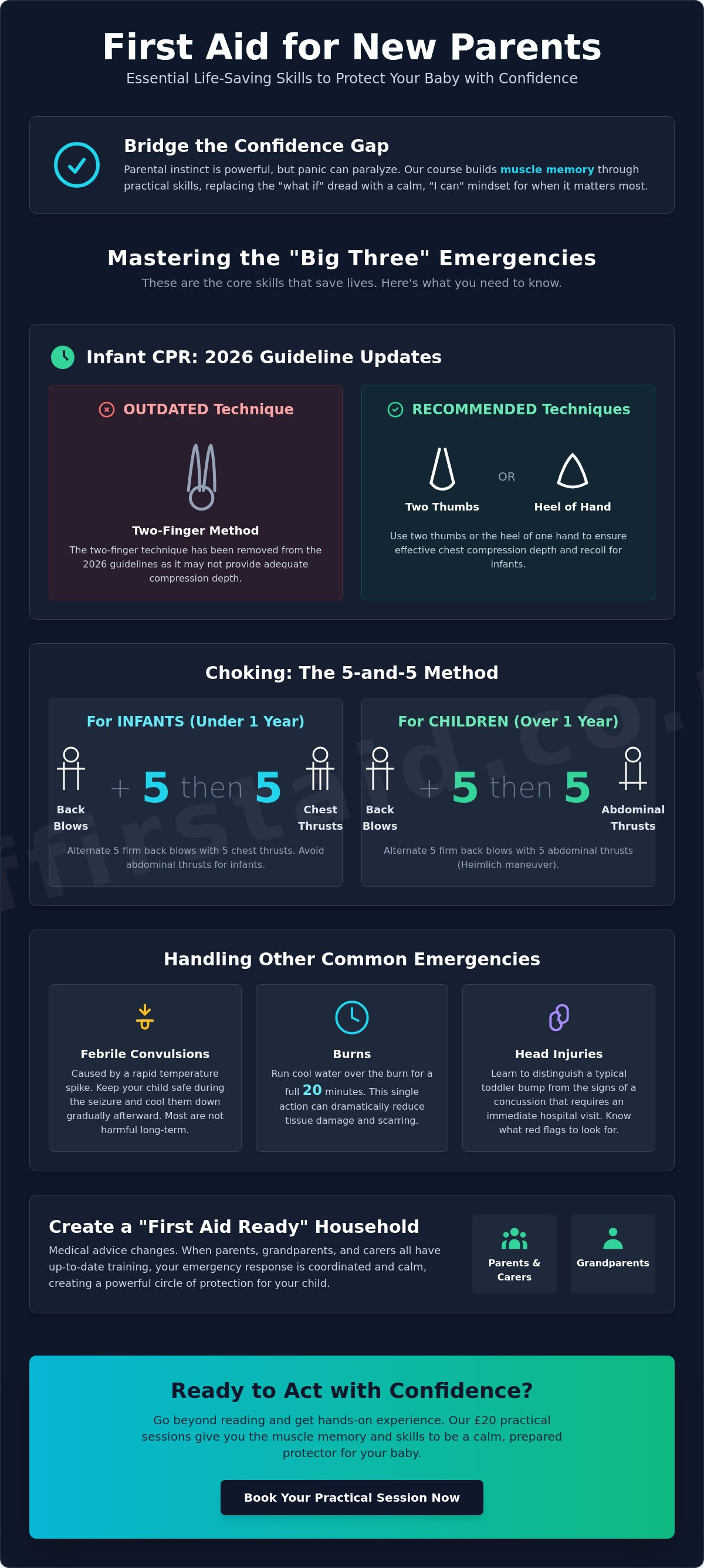
The requirements for paediatric care are far more delicate than standard adult first aid. You aren’t just dealing with a smaller person; you’re dealing with different physiology and specific risks. For example, the January 2026 American Heart Association updates now recommend using two thumbs or the heel of one hand for infant CPR, moving away from the older two-finger technique. Understanding these nuances ensures you don’t inadvertently cause harm while trying to help. Our approach prioritizes these practical distinctions, making the learning process feel manageable rather than overwhelming.
The Confidence Gap: Why Instinct Isn’t Always Enough
When a crisis occurs, your “fight or flight” response takes over. This surge of adrenaline can actually hinder effective first aid by causing your mind to go blank or your hands to shake. Muscle memory, built through practical practice on manikins, is the only way to bypass this panic. By rehearsing the specific steps for choking or resuscitation, you train your body to react even when your brain is racing. There is a massive psychological benefit to knowing you have a plan. It replaces that nagging “what if” dread with a calm, “can-do” attitude that keeps you in control during those first few minutes before help arrives.
Who Should Attend a Parental First Aid Class?
Expectant parents often spend months planning for the birth, but preparing for the “fourth trimester” and the active toddler years is just as crucial. It’s also vital for grandparents and regular carers to attend, as medical advice has evolved significantly over the last decade. For instance, the 2026 standards for choking now emphasize alternating 5 back blows and 5 abdominal thrusts for children, a change from previous years. When both parents and the wider support network are on the same page, the emergency response is coordinated and quiet. This shared knowledge creates a “First Aid Ready” household where everyone feels empowered to protect the newest member of the family.
Essential Life-Saving Skills for Every New Parent
Knowing when to act is the first hurdle. A minor ailment like a slight sniffle is worlds apart from a medical emergency, yet the fear of “getting it wrong” often causes hesitation. In a first aid for new parents course, we teach you to look for the red flags, such as abnormal breathing patterns or extreme lethargy, that signal a need for immediate intervention. By January 2026, emergency departments have adopted new “Pediatric Readiness” standards to better handle these cases, but your actions in the first few minutes remain the most critical link in the chain of survival.
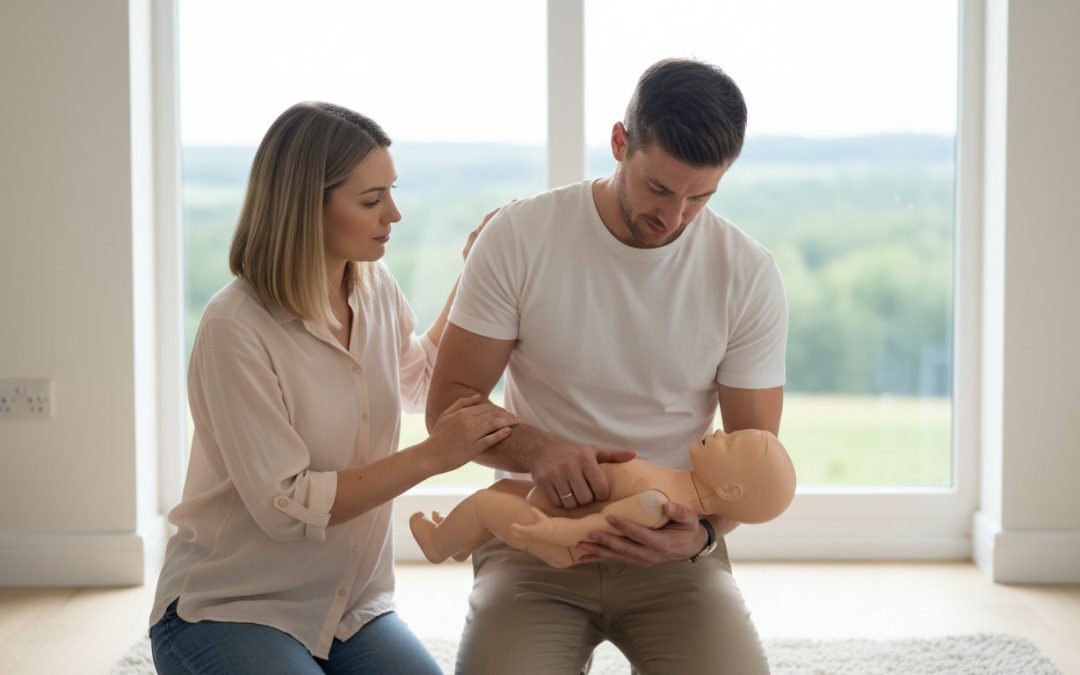
Mastering infant and child CPR is a core pillar of our training. Following the updated guidelines that took effect in January 2026, we’ve phased out the two-finger technique for infants. Rescuers should now use two thumbs wrapped around the chest or the heel of one hand to ensure effective depth and recoil. These essential steps for emergencies are best learned through physical practice on manikins, where you can feel the resistance of the chest and perfect your rhythm. If you want to move beyond reading and start practicing, you can book a local session to get hands-on experience with these techniques.
Febrile convulsions, triggered by a rapid rise in temperature, can look terrifying as a child twitches or loses consciousness. While usually not harmful long-term, you must know how to keep them safe during the seizure and cool them down gradually afterward. Similarly, immediate first aid for burns involves running cool water over the area for a full 20 minutes. This simple, persistent action can drastically reduce scarring and tissue damage. We also cover head injuries, teaching you how to distinguish between a typical toddler bump and a concussion that requires a hospital visit.
The “Big Three”: Choking, CPR, and Bleeding
Choking is a top fear for parents, especially during the weaning phase. For a child, the current 2026 recommendation is to alternate between 5 back blows and 5 abdominal thrusts. If you’re dealing with an infant under one year old, we use chest thrusts instead of abdominal thrusts to protect their fragile internal organs. For significant bleeding, the priority is firm, direct pressure and elevation. We’ll show you how to use whatever is at hand to stem the flow while waiting for emergency services to arrive.
Recognising Silent Threats: Meningitis and Sepsis
Speed is the most critical factor when treating meningitis or sepsis. These conditions can mimic a common cold at first, but they escalate with terrifying speed. You should always trust your gut; if your child seems “off” in a way you can’t explain, seek help. We’ll teach you the “glass test” to identify a non-blanching rash, but don’t wait for a rash to appear if other sepsis symptoms like mottled skin or a high-pitched cry are present.
Choosing the Right Format: Private vs. Public Training
Finding the time for a first aid for new parents course can feel like a challenge when you’re balancing feeds and sleep schedules. We offer two distinct paths to help you gain these vital skills without the stress. Public courses are a brilliant way to meet other local parents in a structured environment. These sessions are often social and relaxed, providing a space to share concerns with people in the same boat. If you prefer a more personal touch, private at-home training offers the ultimate convenience. We bring the manikins and expertise to your living room, so you can learn while your baby stays in their familiar routine.
One of the biggest questions we hear is the difference between an awareness session and a regulated qualification. It’s an area where many providers are vague, but the distinction is simple. An awareness course is designed for parents and family members who want the knowledge and confidence to handle an emergency without the pressure of a formal exam. If you’re looking for professional certification for work, you’ll need a Regulated Level 3 qualification. These are more structured and meet the specific legal requirements updated in early 2026. For those short on time, blended learning allows you to tackle the theory online before joining us for a focused practical assessment of your life-saving techniques.
The Benefits of Private Group Training
Learning in your own home is incredibly effective because we can address the specific hazards in your environment. We can look at your stairs, your kitchen layout, or even how you’d manage an emergency around the family dog. It’s a bespoke experience that feels less like a classroom and more like a helpful chat with a mentor. Plus, it’s often more cost-effective if you get a group of friends or grandparents together to share the session.
Regulated Qualifications for Childminders and Nannies
If you’re hiring a nanny or becoming a childminder, a simple awareness session isn’t enough to satisfy Ofsted. Professional carers must hold a formal certificate to prove they meet national safety standards. Our paediatric first aid course provides this regulated qualification in an engaging, hassle-free way. We ensure every learner walks away with both the official paperwork and the genuine, instinctive skills needed to protect the children in their care.
Beyond the Course: Building Your Home Safety Strategy
Completing a first aid for new parents course provides the skills to react, but your home environment determines how often you’ll need them. In 2026, the “Buy Less, Buy Smarter” trend is reshaping how we approach nursery setups. Instead of cluttering your home with every gadget on the market, focus on high quality, multi functional safety tools that actually reduce risk. Creating a “First Aid Ready” household starts with a proactive sweep of every room from a crawling baby’s perspective. It’s about identifying the heavy furniture that needs anchoring or the loose charging cables that pose a strangulation risk before they become a headline.
Communication is the often overlooked second pillar of home safety. It’s not enough for you to know the plan; every person who steps into your home to care for your child must be on the same page. This includes grandparents, nannies, and even older siblings who might be tempted to share their small toys. We recommend keeping a clear, written emergency protocol in a central location. While digital tools like smart baby monitors with AI assisted alerts are popular in 2026, they can’t replace a physical reference guide if your Wi-Fi drops or your phone battery dies during a crisis. If you want to ensure your entire support network is prepared, you can organise a bespoke home safety consultation to get everyone trained together.
The Ultimate Parent First Aid Kit Checklist
Your kit shouldn’t just be a box of plasters. A paediatric focused kit needs infant specific thermometers, such as tympanic or rectal versions, for the most accurate readings. Include medicine syringes rather than spoons to ensure precise dosing, as 2024 data suggests 2.3 million newborn deaths worldwide were often linked to preventable healthcare gaps. You’ll also need sterile dressings, age appropriate antiseptic wipes, and a pair of sharp tuff cut scissors. Store this kit in a high, accessible spot. Avoid the cupboard under the sink where it might be blocked by cleaning supplies or reached by inquisitive toddlers.
Preventative Safety: The First Line of Defence
Statistics from 2024 show that unintentional injuries remain a leading cause of death for children. Many of these occur in the kitchen, where common choking hazards like whole grapes or popcorn are easily reached. Always cut grapes lengthwise and keep hot beverages far from the edges of counters. Safe sleep is another critical area. Ensure you’re following the 2026 standards for sleep sacks and firm surfaces to prevent SIDS. By encouraging a “safety first” culture, you’re not just preparing for accidents; you’re actively preventing them from happening in the first place.
Why JPF First Aid is the Reliable Expert Mentor for Your Family
Choosing the right provider for your first aid for new parents course is about more than just finding a date that fits your calendar. You need a mentor who understands that while the subject is serious, the learning environment doesn’t have to be intimidating. We’ve built our reputation on a “can-do” and reassuring attitude, striking a balance between professional medical training and a welcoming atmosphere. Our multi-award-winning approach is designed specifically to alleviate the anxiety new parents feel. We don’t just teach you how to follow a manual; we help you build the instinctive confidence to act when every second counts.
One of our core promises is that our sessions are engaging and fun. We’ve moved away from the dry, clinical lectures of the past to provide practical, hands-on experiences that stick in your memory. Our Ofqual-regulated trainers are experts in their field, but they’re also human beings who recognize the unique pressures of the “fourth trimester” and beyond. We understand that you’re likely tired and perhaps a little overwhelmed, which is why we prioritise clarity and functional advice over complex academic phrasing. If you can’t make it to a public venue, our flexible “on-site” options mean we can bring the entire first aid for new parents course directly to your doorstep.
Training You Can Trust: Our Pedigree
With over two decades of experience in the training and assessment industry, JPF First Aid offers a level of reliability that is hard to match. We’ve spent 20 years refining our methods to ensure they provide hassle-free solutions for busy UK households. Whether you are looking for a relaxed awareness session or a more structured qualification, we provide a steady and logical path to competence. For a broader look at how our training fits into the wider medical landscape, you can explore our first aid courses in 2026 guide to find the perfect fit for your specific needs.
Your Journey to Confidence Starts Here
The JPF First Aid promise is simple: you’ll leave our session with the skills to save a life. Our support doesn’t end when the class finishes, as we provide ongoing resources to keep your knowledge fresh. We value your success and safety above all else, focusing on the practical application of skills rather than just ticking boxes for a certificate. Don’t let the fear of the unknown hold you back from being the protector your baby needs. Book your session today and gain the peace of mind that comes from being truly prepared.
Empower Your Family with Life-Saving Confidence
Parenthood is a journey filled with joy, but it’s also one where being prepared for the unexpected is your greatest asset. You’ve seen how mastering the January 2026 CPR updates and building a “First Aid Ready” household can replace fear with proactive competence. By choosing a first aid for new parents course, you’re not just earning a certificate; you’re gaining the instinctive ability to protect your child during those critical first minutes of an emergency. This transition from anxiety to calm action is the most valuable gift you can give your growing family.
As a multi-award-winning training provider, JPF First Aid focuses on making these essential skills accessible and stress-free. Our expert-led sessions, delivered by John Fogarty, offer both Ofqual regulated qualifications and relaxed awareness training tailored to your specific needs. Whether we meet you in a public workshop or come directly to your home, we ensure the experience is engaging, practical, and entirely hassle-free. Don’t leave your baby’s safety to chance or conflicting internet advice.
Book Your Relaxed and Engaging First Aid for New Parents Course Today and take the first step toward becoming a calm, capable, and confident parent. We’re here to support you every step of the way.
Frequently Asked Questions
When is the best time to take a first aid for new parents course?
The ideal time to attend a first aid for new parents course is during the third trimester of pregnancy or within the first three months after your baby arrives. Attending before the birth allows you to focus fully on the techniques without the distractions of a newborn. If you’ve already welcomed your little one, joining a class before they start weaning at around six months is a smart move to prepare for potential choking hazards.
Can I bring my baby with me to the first aid training session?
Yes, we welcome pre-crawling babies at our public training sessions. We understand that finding childcare is a common hurdle for new families, and our relaxed atmosphere is designed to be accommodating. If your baby is more mobile or you’d prefer a quieter environment, our private at-home training is an excellent alternative that allows you to learn in your own space without any stress.
How long does a typical baby and child first aid class last?
A typical first aid for new parents course lasts approximately 3.5 hours. This duration is carefully structured to cover essential life-saving skills like CPR and choking without becoming overwhelming or clinical. It’s a manageable segment of time that fits easily into a weekend or a weekday morning, ensuring you leave with practical knowledge you can actually use in a household crisis.
Will I receive a certificate after completing the parents first aid course?
You’ll receive a certificate of attendance upon completing our parental first aid classes. While this isn’t a regulated professional qualification, it serves as proof of your commitment to your child’s safety. For those who require formal certification for work, such as nannies or childminders, we also offer Ofqual-regulated Level 3 courses that meet the specific legal and compliance standards updated in early 2026.
What is the difference between a baby first aid course and a standard one?
The primary difference lies in the focus on paediatric physiology and common household emergencies. Standard courses often prioritise adult care, whereas this training focuses entirely on infants and children up to age 12. We cover specific techniques for smaller bodies, such as the 2026 thumb-wrap CPR method, and address age-appropriate risks like weaning, febrile convulsions, and common nursery hazards.
Do I need any prior medical knowledge to attend the training?
No prior medical knowledge is required to attend any of our sessions. We’ve designed the curriculum to be accessible for everyone, regardless of their background or previous experience. Our trainers use everyday language and practical demonstrations to ensure the information is clear, making our mentor-led approach feel supportive rather than academic or intimidating.
How often should I refresh my parental first aid skills?
We recommend refreshing your skills every 12 to 24 months. Medical guidelines evolve, and regular practice ensures your muscle memory remains sharp. With significant changes introduced in January 2026 regarding choking and resuscitation, staying current is vital. A quick refresher every couple of years ensures your response remains instinctive and aligned with the latest life-saving research from the American Heart Association.
Is this course suitable for grandparents and other family members?
Absolutely, grandparents and extended family members are encouraged to attend. Many childcare practices have changed significantly over the last few decades, and it’s important that everyone in your support network follows the same protocols. Providing grandparents with updated knowledge on safe sleep and modern choking techniques creates a consistent and safe environment for your child across multiple households.
Recent Comments